
Indoor humidity problems can lead to mold growth, musty odors, and poor air quality. That’s why more homeowners are turning to a home dehumidifier, also known as a moisture absorber, humidity control unit, or air drying device.especially in such as basements, bathrooms, bedrooms, or other application scenarios.
But have you ever wondered: how does a dehumidifier work internally, and what are the key parts that make it effective?
In this guide, we’ll provide a detailed breakdown of home dehumidifier components, helping you understand how each part contributes to efficient moisture removal and better indoor air quality.
What is a dehumidifier?
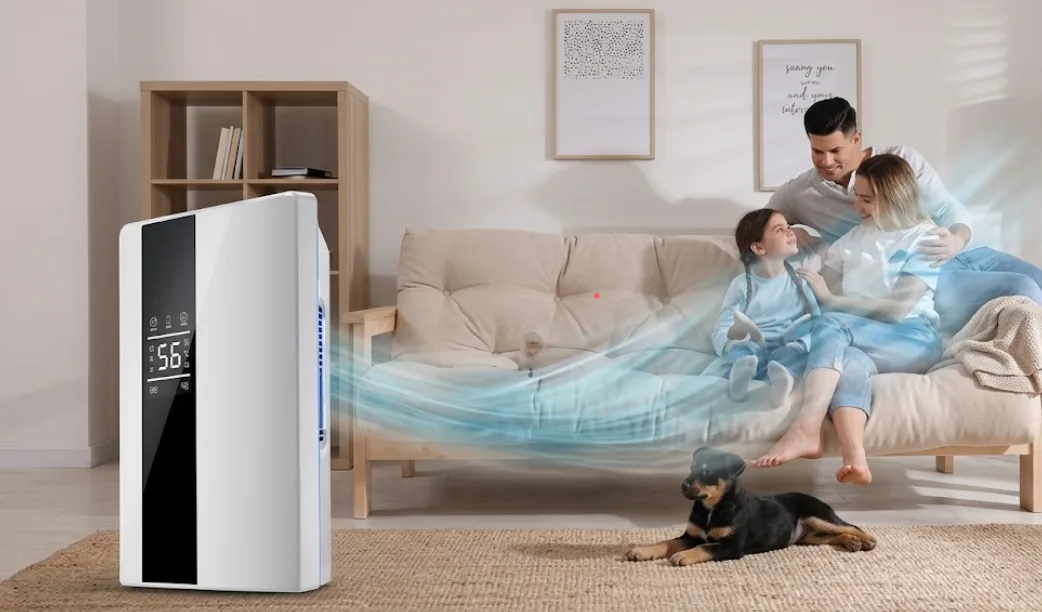
A dehumidifier is an appliance designed to remove excess moisture from an environment. It consists of an air filter and a sophisticated system that processes unpurified air and extracts water vapor from it; it also includes vents and a water tank for draining collected water. Various types of dehumidifiers are available on the market, each with different processing capacities and suitable for different environments.
Understand Dehumidifier Structure
Knowing the main parts of a dehumidifier is essential if you want to:
-
Improve moisture removal efficiency
-
Choose the best unit for your home
-
Troubleshoot common problems
-
Extend the lifespan of your humidity control system
This is especially useful for users searching for:
-
how a home dehumidifier works inside
-
dehumidifier components and functions explained
Main Parts of a Home Dehumidifier
1. Air Intake Vent and Filter System
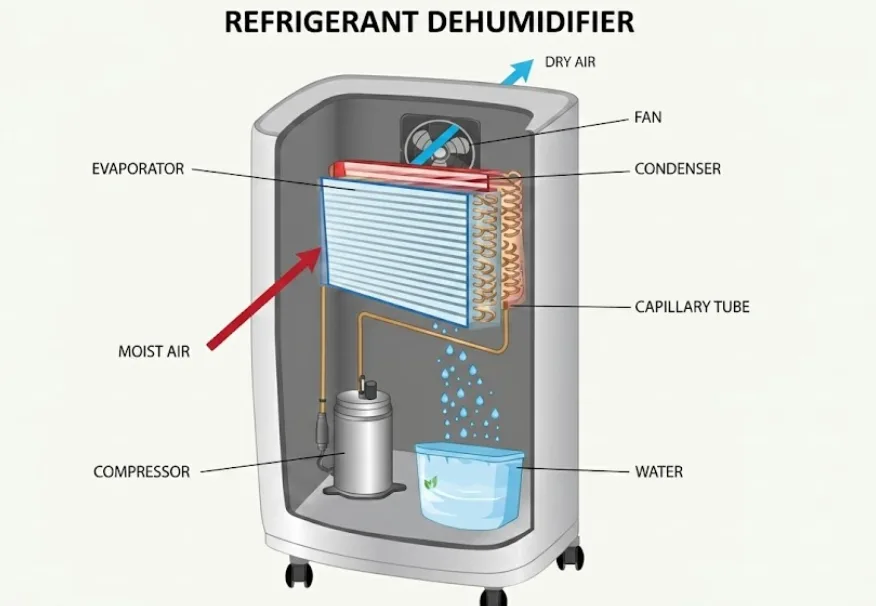
Every home air moisture control device starts with an air intake system. A fan draws humid air into the unit through a filter.
The filter captures dust, allergens, and debris, ensuring cleaner air and protecting internal components of your household moisture absorber.
2. Evaporator Coils (Cooling Coils)
The evaporator coils are one of the most critical dehumidifier components. They cool incoming air to condense moisture.
This step is the core function of any indoor humidity reduction system.
3. Condenser Coils
After moisture is removed, air passes over condenser coils where it is slightly reheated before being released.This ensures your home humidity control unit maintains a comfortable room temperature.
4. Water Collection Tank or Drainage System
The extracted moisture is stored in a built-in tank or drained through a hose.Modern moisture removal machines often include auto shut-off when the tank is full.
5. Compressor (For Compressor-Based Units)
The compressor powers the cooling cycle, making it a key part of many home dehumidifiers.This component is essential in high-capacity air drying systems used in humid climates.
6. Fan and Motor System
The fan circulates air through the unit, ensuring continuous airflow.Proper airflow improves the efficiency of your indoor moisture control device.
7. Humidistat (Humidity Sensor)
A humidistat monitors and controls humidity levels automatically.This feature allows your smart humidity control unit to operate efficiently without constant manual adjustment.
8. Control Panel and Smart Features
The control panel allows users to adjust settings such as humidity level, fan speed, and timers.Advanced models may include Wi-Fi connectivity, making your home moisture control system even more convenient.
How a Home Dehumidifier Works Step by Step
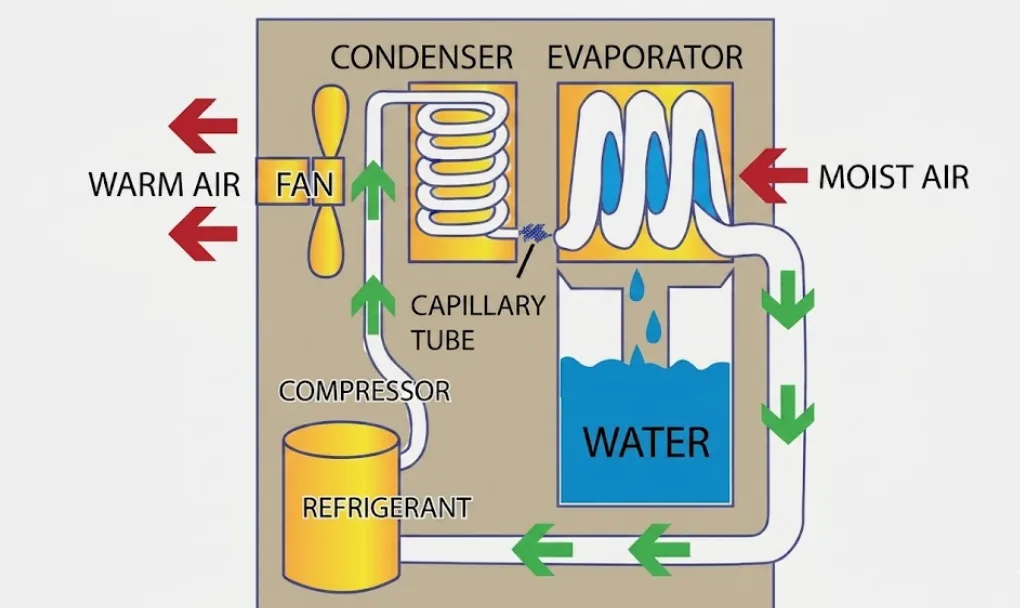
A dehumidifier works like a vacuum cleaner, sucking up dust particles from its location. It draws in air from the room and processes it through cooling coils, where water droplets freeze and eventually fall into a water tank integrated at the bottom of the unit.For a more detailed explanation, you can refer to this page about working principle of home dehumidifier.
Then, the air is processed by a heater before being drawn into the room. Because the air has already been processed, it undergoes a different treatment process when it re-enters the room due to the lower relative humidity. This is why dehumidifiers are more efficient and energy-saving the longer they run.
As mentioned earlier, dehumidifiers have a tray/container at the bottom to collect the moisture extracted from the air. Portable or small dehumidifiers come with a standard-sized water tank, while industrial-grade dehumidifiers have large-capacity water tanks and hoses that can handle several liters of water and discharge it directly outdoors.
For example, Cetus offers portable dehumidifiers with dehumidification capacities ranging from 4 to 20 liters per hour—devices that can easily and effectively handle a variety of humidity levels.
Want your dehumidifier to last longer?
After understanding the basic components of a dehumidifier, you should be able to use it correctly. However, to use a dehumidifier for a long time, you also need to pay attention to the following maintenance points.
1. Clean the filter regularly.
Filters easily accumulate dust, which can clog them and affect airflow and dehumidification efficiency. It’s recommended to check them every two weeks, gently rinse them with clean water, let them dry, and then reinstall them.
2. Clean the water tank promptly.
Water left in the tank for too long can easily breed bacteria and odors. Empty the tank after each use and regularly wipe the inside with a mild detergent.
3. Keep the air inlet and outlet unobstructed.
Don’t pile up clutter around the dehumidifier to avoid affecting heat dissipation and air circulation. Maintaining a certain distance between the machine and the wall will result in more stable operation.
4. Regularly check the power supply and wiring.
After long-term use, the power cord may age or loosen. If you notice abnormal heating, damage, or an unusual odor, stop using the machine immediately and have it inspected and repaired.
5. Proper storage and maintenance during seasonal changes.
When not in use for an extended period, thoroughly clean and dry the inside of the machine. Then place it in a dry and ventilated place and cover it with a dust cover to prevent dust from entering the machine.
Final Thoughts: Choosing the Right Moisture Control Solution
Understanding the structure of a home dehumidifier helps you get the most out of your device. Whether you call it a moisture absorber, air drying device, or humidity control unit, each component plays a vital role in maintaining a healthy indoor environment.
If you’re dealing with damp rooms, mold issues, or high humidity levels, investing in the right home dehumidifier system—and understanding how it works—can significantly improve your comfort and air quality.