
Introduction
Excess humidity in your home is more than just uncomfortable—it can lead to serious problems over time. High moisture levels often cause:
- Mold and mildew growth
- Musty odors in rooms and closets
- Damage to furniture and walls
- Increased dust mites and allergy symptoms
If you live in a humid region or deal with seasonal moisture (like rainy seasons), a dehumidifier isn’t a luxury—it’s a necessity.
However, not all dehumidifiers are created equal. The right choice depends heavily on your specific home environment and usage scenario. In this guide, you’ll learn exactly how to choose the best dehumidifier for your needs.
Dehumidifier Basics: What You Need to Know
Before choosing a unit, it’s important to understand how dehumidifiers work and what key specifications mean.
How Dehumidifiers Work
There are two main types:
1. Compressor (Refrigerant) Dehumidifiers
- Work like air conditioners by cooling air to condense moisture
- Best for warm and humid environments
- Most common for home use
2. Desiccant (Rotor) Dehumidifiers
- Use moisture-absorbing materials instead of cooling
- Perform better in low temperatures
- Ideal for colder climates or winter use
Key Features Explained
Dehumidification Capacity (Liters per Day)
This tells you how much moisture the unit can remove daily. It’s the most important spec.
- 8–12L/day → small rooms
- 12–20L/day → medium spaces
- 20L+/day → large or very damp areas
Coverage Area
Usually listed by manufacturers, but should be adjusted based on humidity level.
Water Tank Size
- Small tank → frequent emptying
- Large tank → more convenience
Noise Level (dB)
- Bedrooms: under 40 dB recommended
- Living areas: 40–50 dB acceptable
Energy Efficiency
Important if you plan to run the unit for long periods.
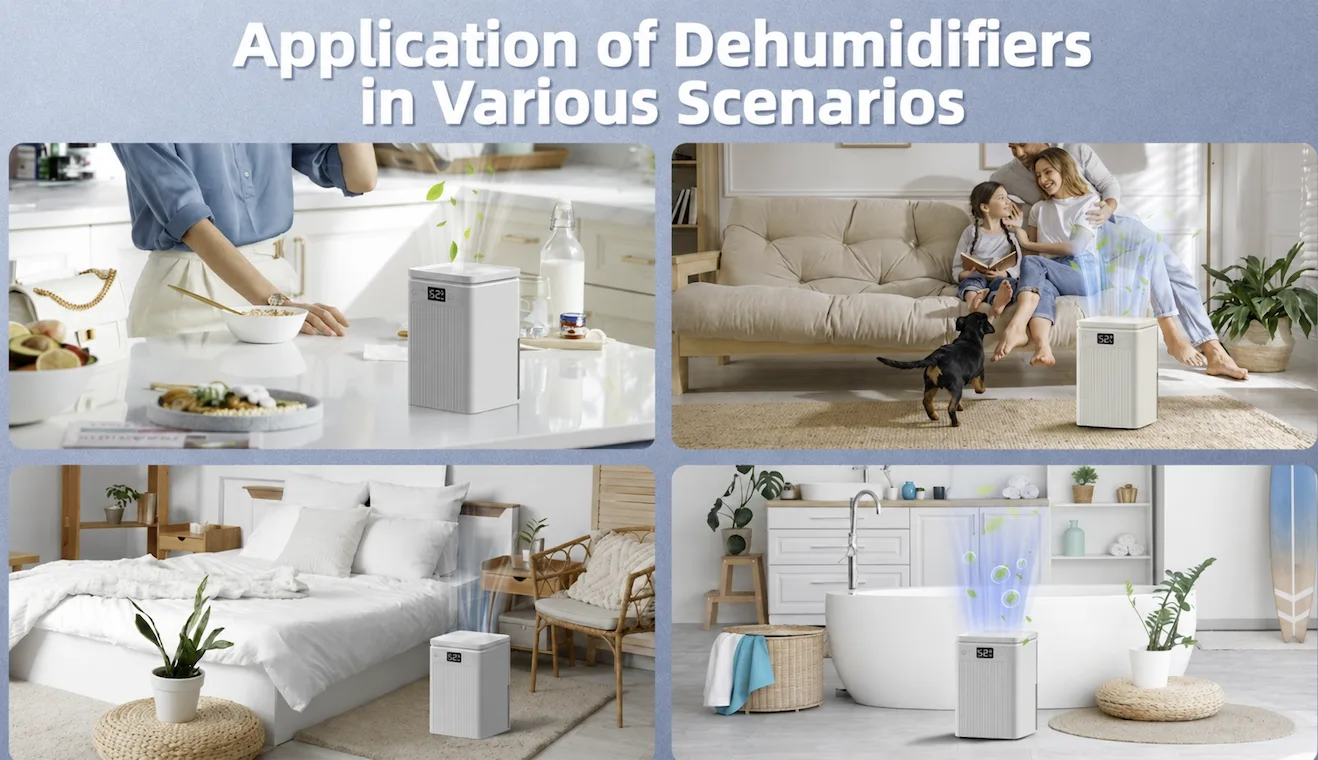
Choosing a Dehumidifier by Home Scenario
Different spaces have very different moisture challenges. Here’s how to match your dehumidifier to each situation.
1. Bedroom or Small Apartment
Key Needs:
- Quiet operation
- Compact size
- Energy efficiency
Recommended Specs:
- 8–12L/day capacity
- Noise level ≤ 40 dB
- Sleep mode or timer
Tips:
A noisy unit can disrupt sleep, so prioritize ultra-quiet models. Portability is also useful if you want to move it between rooms.
2. Living Room or Large Open Space
Key Needs:
- Strong airflow
- Fast humidity reduction
- Wide coverage
Recommended Specs:
- 20L/day or higher
- Auto humidity control
- বড় fan speed settings
Tips:
Place the unit in an open area for better circulation. Consider models with air purification if you want improved air quality.
3. Basement or Storage Area
Key Needs:
- Continuous operation
- High moisture removal
- Mold prevention
Recommended Specs:
- 25L/day or more
- Continuous drainage (hose connection)
- Anti-mold features
Tips:
This is one of the most demanding environments. Choose durability and performance over design.
4. High-Humidity Regions or Rainy Seasons
(Common in places like coastal cities or regions with long rainy periods.)
Key Needs:
- Long-term stability
- Automatic humidity control
- Energy efficiency
Recommended Specs:
- 15–25L/day
- Smart humidity sensor
- Eco mode
Tips:
Look for models that automatically turn on/off to maintain a consistent humidity level (ideally 40–60%).
5. Bathroom or Laundry Room
Key Needs:
- Quick moisture removal
- Compact design
- Clothes drying support
Recommended Specs:
- Fast drying mode
- Splash-resistant design
- Portable size
Tips:
Many modern dehumidifiers include a “laundry mode,” which is extremely useful for drying clothes indoors.
Types of Dehumidifiers Compared
Compressor Dehumidifiers
Pros:
- Energy efficient
- Powerful in warm conditions
Cons:
- Less effective in cold environments
Desiccant Dehumidifiers
Pros:
- Works well in low temperatures
- Lightweight and quiet
Cons:
- Higher energy consumption
Portable vs Fixed Units
| Type | Advantages | Best For |
|---|---|---|
| Portable | Easy to move | Apartments, multi-room use |
| Fixed | More powerful | Basements, large areas |
Buying Guide: What to Look For
1. Match Capacity to Room Size
Choosing too small a unit is the most common mistake.
Quick guide:
- 10㎡ → 8–10L
- 20㎡ → 12–15L
- 30㎡+ → 20L+
2. Continuous Drainage Option
Essential for:
- Basements
- Long operating hours
Optional for casual use.
3. Noise Considerations
Always check decibel ratings if you plan to use it in bedrooms or offices.
4. Extra Features Worth Considering
- Air purification filters
- Smart app control
- Laundry drying mode
- Auto defrost
5. Brand and After-Sales Support
Look for:
- Warranty coverage
- Replacement parts availability
- Reliable customer service
Common Mistakes to Avoid
- Choosing based on price alone
- Buying a unit with insufficient capacity
- Ignoring noise levels
- Not considering room temperature
- Overlooking drainage options
Maintenance Tips for Long-Term Use
To keep your dehumidifier running efficiently:
- Clean the filter every 2–4 weeks
- Empty and clean the water tank regularly
- Keep humidity between 40%–60%
- Place the unit at least 20 cm away from walls
- Ensure airflow is not blocked
Conclusion: Choose Based on Your Real Needs From Cetus
The best dehumidifier isn’t the most expensive one—it’s the one that fits your space and usage.
Quick recap:
- Small rooms → quiet, compact units
- Large spaces → high-capacity models
- Basements → continuous drainage + heavy-duty performance
- Humid climates → smart, energy-efficient systems
By focusing on capacity, environment, and features that actually matter, you can make a smart investment that improves your home comfort and air quality.