
Introduction
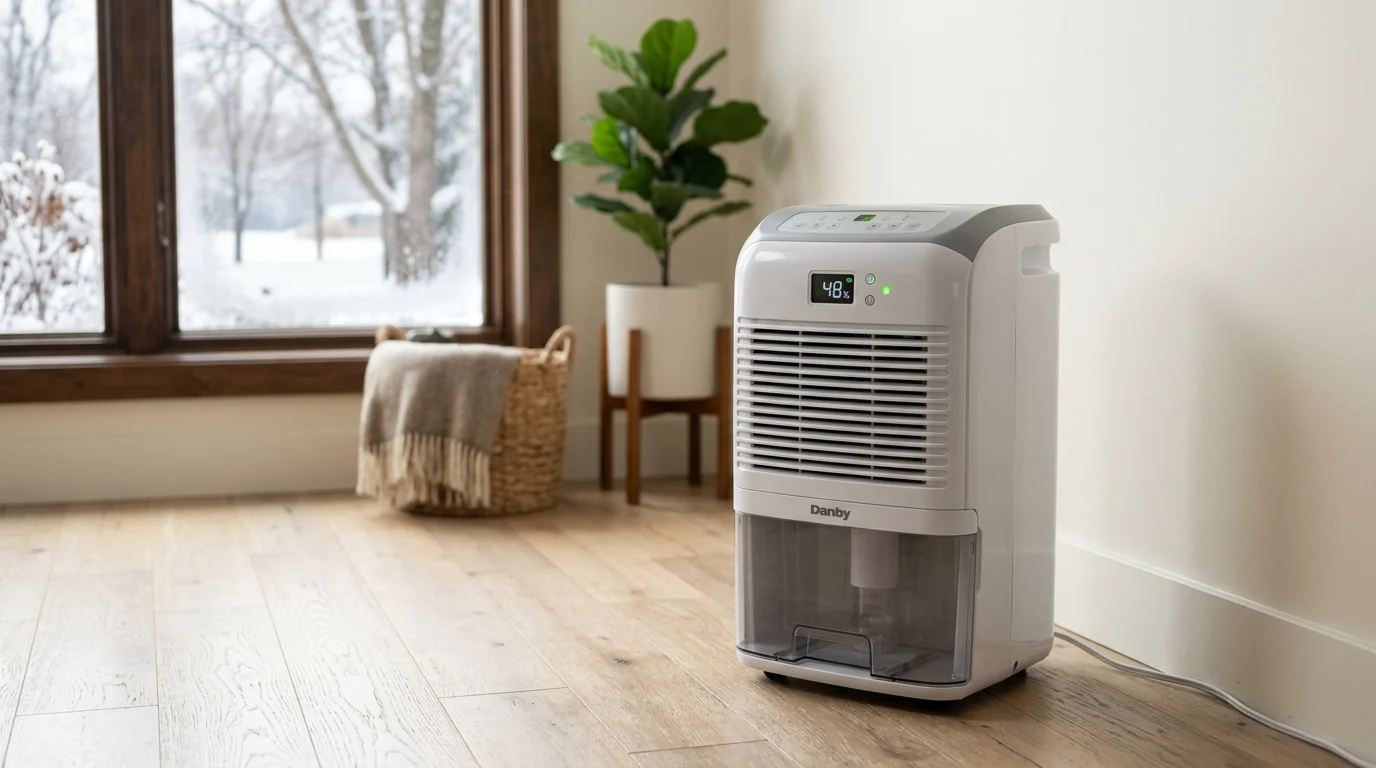
Winter no longer guarantees dry indoor air, especially in newer, more airtight homes built to stricter energy standards. Everyday activities like cooking, showering, and even breathing can trap moisture inside, raising humidity levels enough to cause window condensation, musty odors, mold growth, and damage to walls or furnishings. A dehumidifier helps control that hidden buildup when ventilation alone is not enough. This article explains why winter humidity is a growing issue in 2026, how a dehumidifier improves comfort and protects your home, and what to consider when deciding whether you need one during the colder months.
Why Use a Dehumidifier in Winter
The necessity of indoor moisture management during the winter months has evolved significantly as building standards advance toward the 2026 energy codes. While winter air is traditionally associated with dry exterior conditions, the reality of modern structural engineering dictates a highly specialized approach to indoor air quality and structural preservation.
Historically, leaky building envelopes allowed indoor moisture to escape naturally. Today, the push for maximum thermal retention has fundamentally altered psychrometric dynamics within residential and commercial structures, making mechanical moisture extraction a critical component of winter facility management.
Winter humidity patterns and airtight buildings
Contemporary building envelopes prioritize thermal efficiency, frequently achieving airtightness ratings below 3.0 Air Changes per Hour at 50 Pascals (ACH50), with passive house standards demanding even stricter thresholds below 0.6 ACH50. While this drastically reduces heating loads and energy consumption, it effectively traps anthropogenic moisture inside the structure.
Moisture generated through routine activities—such as cooking, bathing, industrial processes, and human respiration—has no passive exit route in an airtight building. Without adequate mechanical intervention, this trapped water vapor leads to elevated indoor humidity levels despite the arid exterior climate, creating an environment primed for structural degradation.
Benefits for comfort, condensation, and mold prevention
Maintaining optimal relative humidity (RH) is paramount for both occupant health and building integrity. Industry standards strongly recommend maintaining indoor RH between 40% and 50% during winter months. When indoor humidity exceeds the 60% threshold for more than 48 hours, the probability of microbial and mold proliferation increases exponentially.
Implementing a dedicated dehumidifier mitigates this risk by actively extracting excess grains of moisture from the air volume. This process prevents destructive window condensation, protects hygroscopic building materials from swelling, and stabilizes the indoor environment to ensure long-term structural resilience and occupant comfort.
When a Dehumidifier Is Needed Indoors

Determining the exact moment mechanical dehumidification becomes necessary requires continuous environmental monitoring rather than relying on subjective human comfort levels. Facility managers and property owners must utilize calibrated hygrometers and psychrometric data to identify critical moisture thresholds before irreversible material damage occurs.
Humidity thresholds and warning signs
The relationship between indoor temperature, relative humidity, and the dew point dictates the precise risk of condensation. For example, in an indoor environment maintained at 68°F (20°C) with a relative humidity of 55%, the dew point rests at approximately 51°F (10.5°C).
If the surface temperature of exterior walls, thermal bridges, or window glass drops below this 51°F threshold due to freezing winter weather, airborne water vapor will undergo a phase change and condense into liquid water on those surfaces. Continuous monitoring of these thermal differentials is the most accurate method for determining when dehumidification hardware must be activated to suppress the dew point.
Condensation, dampness, and mold indicators
Beyond psychrometric calculations, physical indicators provide immediate, undeniable evidence of excessive moisture loads. Persistent condensation on multi-pane windows, blistering interior paint, and efflorescence on masonry foundation walls are primary warning signs of a failing moisture management strategy.
In professional building assessments, envelope specialists utilize calibrated moisture meters to test structural components. A Wood Moisture Equivalent (WME) reading exceeding 16% in framing materials or subflooring signals a critical, immediate need for heavy-duty moisture extraction to prevent dry rot, structural compromise, and costly remediation protocols.
Dehumidifier vs Ventilation and Heating
A prevalent misconception in winter climate control is that heating systems or mechanical ventilation can independently resolve high indoor humidity issues. While both play vital roles in overall environmental management, they possess distinct psychrometric limitations compared to dedicated mechanical dehumidifiers.
When dehumidification is the better option
Elevating the indoor temperature reduces relative humidity by increasing the air's capacity to hold moisture, but it does not alter the absolute humidity—the actual mass of water vapor in the air, typically measured in grains per pound (gr/lb) or grams per kilogram (g/kg). The moisture remains trapped in the environment.
Conversely, mechanical ventilation relies on exchanging indoor air with outdoor air. In specific coastal or temperate winter climates, such as the Pacific Northwest or Western Europe, ambient outdoor air frequently possesses a higher absolute moisture content than the indoor air. In these scenarios, introducing outside air exacerbates the moisture load, making closed-loop mechanical dehumidification the only viable method for actual water extraction.
Key trade-offs by space type
The efficacy of these systems varies drastically by spatial application. Subterranean spaces, such as basements and sealed crawlspaces, benefit minimally from ventilation due to continuous earth contact temperatures and a total lack of solar gain, making dehumidifiers strictly essential for these zones.
Above-grade living areas with high sensible heat loads may rely on Energy Recovery Ventilators (ERVs) as a primary strategy. However, modern ERVs typically cap moisture transfer efficiency at roughly 60% to 70%. During peak moisture generation events—such as extended commercial kitchen operations or high-occupancy gatherings—ERVs cannot expel moisture rapidly enough, requiring supplemental dehumidification to prevent spike loads.
How to compare system options
To accurately specify a moisture control system, stakeholders must evaluate the operational mechanics and absolute extraction capabilities of each available option.
| System Type | Primary Mechanism | Absolute Humidity Reduction | Ideal Winter Application |
|---|---|---|---|
| Compressor Dehumidifier | Refrigeration cycle / condensation | High (extracts liquid water) | Basements, sealed crawlspaces, indoor pools |
| Heat Recovery Ventilator (HRV) | Air exchange with sensible heat transfer | Variable (depends on outdoor air absolute humidity) | Airtight above-grade living spaces in dry climates |
| Standard HVAC Heating | Sensible heating | Zero (only lowers RH, not mass) | General temperature control |
Selecting the appropriate system requires analyzing the specific internal environmental loads alongside the building's geographic and climatic realities.
How to Choose and Run a Dehumidifier
Specifying the correct dehumidification hardware for winter operations requires a nuanced understanding of low-temperature thermodynamics. Standard residential units designed for summer operation frequently fail or operate at severe efficiency deficits under cold winter conditions.
Capacity and low-temperature performance
The primary technological divergence in the industry lies between compressor (refrigerant) and desiccant dehumidifiers. Standard compressor units suffer severe efficiency losses when ambient temperatures drop below 65°F (18°C) and face evaporator coil freezing below 60°F (15°C) unless equipped with a specialized hot gas bypass defrost system.
Desiccant systems, which utilize a chemical affinity for water via a silica or zeolite rotor, maintain a flat extraction curve even at near-freezing temperatures.
| Technology | Minimum Optimal Temp | Energy Efficiency (Standard) | Winter Performance Profile |
|---|---|---|---|
| Standard Compressor | 65°F (18°C) | High (at 80°F ambient) | Poor; high risk of coil freezing |
| Compressor w/ Hot Gas Defrost | 41°F (5°C) | Moderate | Adequate for conditioned basements |
| Desiccant Rotor | 33°F (1°C) | Lower (requires heat for regeneration) | Excellent; consistent extraction in unheated spaces |
For unconditioned spaces in winter, desiccant technology is the undisputed industry standard.
Sizing, placement, and humidity settings
Proper sizing relies on the Association of Home Appliance Manufacturers (AHAM) standards, which have been updated to test units at 65°F and 60% RH to better reflect real-world operating conditions. A baseline metric for moderately damp spaces requires 10 to 14 pints of extraction capacity per 500 square feet.
Placement is equally critical for operational success. Hardware must be placed centrally within the target zone with a strict minimum clearance of 12 to 24 inches from vertical surfaces to ensure unimpeded volumetric airflow. To maintain a safe winter environment, humidistats should be calibrated to a strict 45% setpoint, balancing moisture removal with energy conservation.
Common problems and how to avoid them
Operational failures during winter typically stem from improper specification and installation rather than hardware defects. Short-cycling is a frequent issue, occurring when oversized units rapidly dehumidify the immediate air volume and shut off before establishing whole-room circulation, leaving peripheral areas dangerously damp.
Frost accumulation on compressor coils is another critical failure point. This is avoided by utilizing units with integrated thermal sensors that trigger defrost cycles when coil temperatures drop below 32°F (0°C). Additionally, if continuous drainage is utilized, gravity drain lines must be heavily insulated or heat-traced if routed through unconditioned zones to prevent ice blockages and subsequent water damage.
Cost and Decision Framework
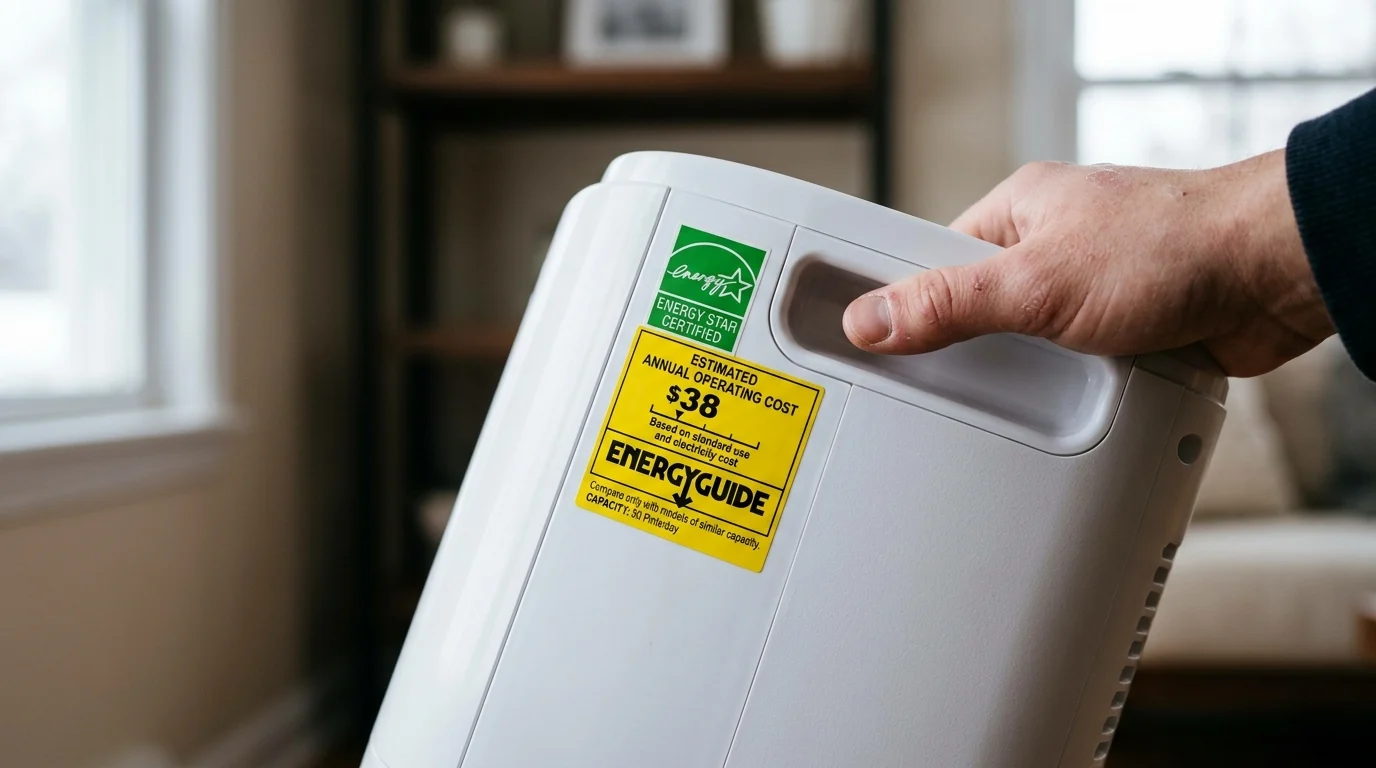
The procurement of dehumidification systems involves balancing initial capital expenditures against long-term operational costs and structural risk mitigation. In 2026, stringent energy efficiency mandates and rising utility rates require facility managers to execute strict financial modeling before deployment.
Upfront cost, energy use, and maintenance
Capital expenditure (CAPEX) varies significantly by system architecture and capacity. Portable, high-capacity desiccant units range from $300 to $600, whereas whole-structure, ducted compressor systems demand $1,500 to $3,500 excluding professional installation labor.
Operating expenses (OPEX) are dictated by the unit's efficiency, measured by its Energy Factor (EF). Current Energy Star 5.0 specifications require an EF of at least 1.90 liters of water extracted per kilowatt-hour (L/kWh) for units under 75 pints, and 2.80 L/kWh for high-capacity models. Factoring in an average utility rate of $0.16 per kWh, continuous winter operation of a non-compliant unit can add $30 to $50 monthly to utility overhead, making high-EF specification critical for controlling lifecycle costs.
Use cases that justify investment
The financial justification for winter dehumidification extends far beyond basic environmental control; it acts as a primary mechanism for real estate asset protection. By strictly maintaining indoor relative humidity below 50%, property owners eliminate the risk of interstitial condensation, which routinely causes tens of thousands of dollars in hidden structural rot and hazardous mold remediation costs.
Furthermore, dry air features a lower specific heat capacity than humid air. This physical property dictates that heating systems consume measurably less energy to raise the ambient temperature of dry air. In many well-insulated structures, this reduction in the sensible heating load frequently offsets the OPEX of the dehumidifier, yielding a net-positive financial return over the course of the winter season.
Key Takeaways
- The most important conclusions and rationale for dehumidifier in winter
- Specs, compliance, and risk checks worth validating before you commit
- Practical next steps and caveats readers can apply immediately
Frequently Asked Questions
Why would I need a dehumidifier in winter if outdoor air is dry?
Modern airtight homes trap moisture from cooking, showers, and breathing. A dehumidifier removes that trapped moisture and helps keep indoor RH near 40%–50%.
What indoor humidity level is too high in winter?
If RH stays above 60% for more than about 48 hours, mold and condensation risks rise quickly. Aim to keep winter humidity around 40%–50%.
What signs show I need a dehumidifier indoors?
Watch for window condensation, musty smells, damp spots, peeling paint, or efflorescence on basement walls. These are practical signs that indoor moisture is too high.
Can heating or ventilation replace a dehumidifier in winter?
Not always. Heating lowers relative humidity on paper but doesn’t remove water, and ventilation may be limited in cold weather. A dehumidifier actively extracts moisture from the air.
Where should I run a dehumidifier most in winter?
Place it in moisture-prone areas like basements, laundry rooms, bathrooms, or near condensation-heavy windows. Keep doors open when possible so damp air can circulate to the unit.