
Introduction
A dehumidifier that freezes up is usually reacting to a problem with temperature, airflow, or the sealed cooling system—not just “working too hard.” When ice forms on the evaporator coils, the unit can run continuously, collect little water, and lose efficiency fast. This article explains why freeze-ups happen, how to recognize the most likely cause, and which fixes are practical to try at home before calling for service. It also helps you tell the difference between normal light frost and a fault that can lead to repeated icing, poor performance, or compressor strain.
Why a Dehumidifier Freezes Up
Understanding the thermodynamics of mechanical dehumidification is essential to grasp why freeze-ups occur. Compressor-based dehumidifiers operate by drawing humid ambient air across a refrigerated evaporator coil. As the air cools below its dew point, moisture condenses into liquid water and drains away. However, this phase change relies on a delicate balance of ambient temperature, airflow, and refrigerant pressure.
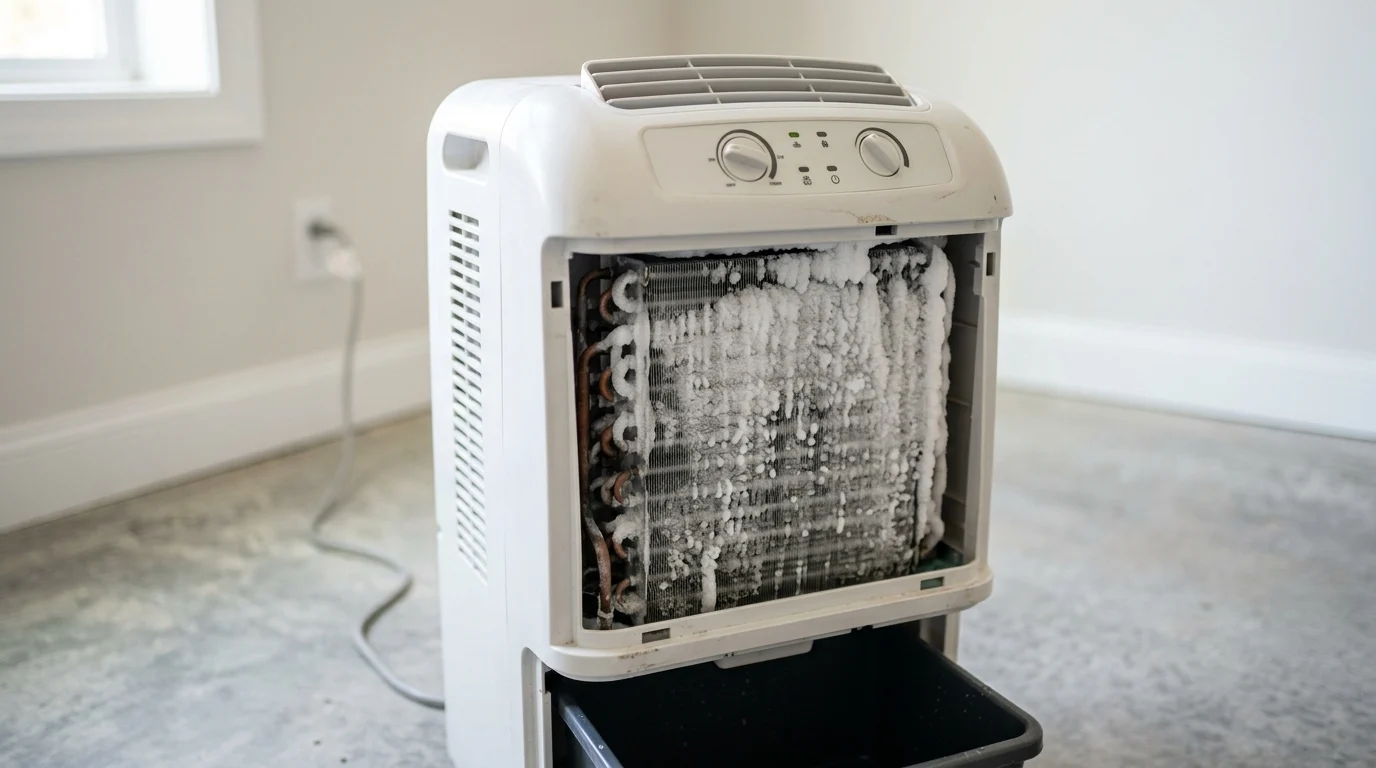
When the surface temperature of the evaporator coil drops below 0°C (32°F), the condensed moisture bypasses the liquid phase or freezes immediately upon contact, forming frost. While a marginal amount of frost is a recognized byproduct of operation in cooler environments, widespread ice accumulation disrupts the thermodynamic heat exchange, initiating a compounding cycle of freezing that entirely halts moisture extraction.
Common signs of coil icing
The most immediate indicator of coil icing is a severe drop in moisture extraction efficiency. An iced-over unit may experience a 50% to 80% reduction in water collection, despite continuous compressor operation. Operators typically notice the collection bucket remaining dry while the unit runs incessantly.
Visual inspection provides the definitive confirmation. Frost often begins at the bottom of the evaporator coil—where the refrigerant first enters the expansion valve—and propagates upward. In severe cases, the entire finned surface becomes encased in a solid block of ice, insulating the coil and completely obstructing the passage of air. Secondary symptoms include an altered acoustic profile, as the fan struggles against the static pressure of the blocked coil, often producing a strained or higher-pitched hum.
Normal defrost vs a real problem
Not all ice accumulation signifies a systemic failure. Most modern residential and commercial dehumidifiers are equipped with an auto-defrost mechanism designed to manage intermittent frost. When ambient temperatures fall below 18°C (65°F), it is entirely normal for light frost to form.
During a standard auto-defrost cycle, a sensor detects the temperature drop and shuts down the compressor while leaving the fan running. This draws ambient room air across the coils to melt the frost, a process that typically concludes within 5 to 15 minutes. A true mechanical or environmental problem is indicated only when the ice persists, thickens into solid blocks, or when the defrost cycle fails to clear the coil after 45 to 60 minutes.
| Operating State | Typical Duration | Ice Characteristics | Compressor Status |
|---|---|---|---|
| Normal Defrost | 5–15 minutes | Light, uniform white frost | Off (Fan continues running) |
| Faulty Freeze-Up | > 45 minutes | Thick, clear, or solid ice blocks | Running continuously |
Main Causes of Freeze-Up

Identifying the root cause of a frozen dehumidifier requires categorizing the failure into one of three domains: environmental conditions, airflow restrictions, or sealed-system mechanical faults. Each domain alters the baseline operating parameters, forcing the evaporator coil temperature below the freezing threshold.
Low room temperature
Standard compressor-based dehumidifiers are engineered to operate optimally within a specific thermal band, typically between 15°C and 32°C (60°F to 90°F). When the ambient room temperature drops below 15°C (60°F), the baseline temperature of the air passing over the evaporator coil is already dangerously close to the freezing point.
As the refrigerant absorbs heat, the coil temperature naturally drops by an additional 5°C to 10°C. In a 12°C (54°F) basement, this temperature differential pushes the coil surface well below 0°C (32°F). Without sufficient ambient heat to melt the resulting frost during off-cycles, the ice accumulates rapidly, overwhelming standard defrost protocols.
Restricted airflow and dirty filters
Adequate airflow, measured in Cubic Feet per Minute (CFM), is the primary mechanism for delivering heat to the evaporator coil. If the airflow is restricted, the refrigerant absorbs less heat from the environment, causing the internal pressure and temperature of the coil to plummet.
The most frequent culprit of restricted airflow is particulate accumulation. A dirty, clogged air filter or fouled coil fins can reduce total CFM by 30% to 40%. This severe reduction in air volume destroys the heat transfer rate. Consequently, the coil supercools, and the minimal moisture that does contact the fins freezes instantly. Obstructed air intake vents, often caused by placing the unit too close to walls or furniture, produce the exact same thermodynamic failure.
Refrigerant or fan problems
When environmental factors and airflow are optimal, persistent freezing points to mechanical failures within the sealed refrigerant system or the blower assembly. A partial loss of refrigerant charge—due to micro-leaks in the copper tubing—causes a paradoxical reaction: the reduced pressure in the evaporator coil causes the remaining refrigerant to boil at a much lower temperature, leading to localized, severe freezing, usually starting at the expansion device.
Alternatively, a failing fan motor or a damaged blower wheel can drop the CFM to near zero. If the compressor continues to pump refrigerant while the fan fails to move air across the heat exchanger, the system enters a rapid freeze state, encasing the coil in solid ice within minutes of operation.
How to Diagnose the Issue
Effective diagnostics minimize equipment downtime and prevent unnecessary component replacement. A systematic approach, utilizing objective measurements and standard HVAC diagnostic principles, is required to isolate the exact cause of the freeze-up.
Basic inspection steps
Initial diagnostics should always begin with the simplest, non-invasive checks. First, verify the ambient temperature and relative humidity of the space using a calibrated digital psychrometer; if the dry-bulb temperature is below 15°C (60°F), the environment itself is the primary suspect.
Next, disconnect the unit from its power source and perform a visual and tactile inspection. Extract the air filter and hold it up to a light source; if light cannot penetrate the media, airflow is severely compromised. Inspect the evaporator coil fins for physical damage, such as bent aluminum fins, which can create localized airflow blockages. Finally, manually spin the blower wheel to ensure the motor bearings are not seized and that the fan rotates without resistance.
Key measurements to check
Quantitative measurements provide definitive data for diagnosing mechanical faults. Technicians should measure the temperature differential (Delta T) across the evaporator coil. Under normal operation, the air exiting the unit should be roughly 5°C to 8°C (10°F to 15°F) warmer than the intake air, due to the heat added by the condenser coil and compressor.
If the unit is equipped with service valves, manifold gauges can be attached to read suction line pressure. For a standard R-410A dehumidifier, suction pressures dropping significantly below 100 PSI indicate either a severe airflow restriction or a low refrigerant charge. An anemometer can also be utilized to verify that the exhaust airflow meets the manufacturer's specified CFM rating, which typically ranges from 150 to 300 CFM for residential models.
| Diagnostic Parameter | Expected Normal Range | Indicator of Freeze-Up Risk |
|---|---|---|
| Ambient Temperature | 15°C – 32°C (60°F – 90°F) | < 15°C (60°F) |
| Airflow Volume | 150 – 300 CFM | < 100 CFM (or 30% below spec) |
| Delta T (Intake vs Exhaust) | 5°C – 8°C (10°F – 15°F) increase | < 2°C (3°F) increase |
| R-410A Suction Pressure | 110 – 130 PSI | < 100 PSI |
How to Fix a Frozen Dehumidifier
Implementing corrective measures requires matching the intervention to the diagnosed fault. Before any repairs are attempted, the dehumidifier must be completely thawed. Disconnect the power supply and allow the unit to sit at room temperature for 2 to 4 hours. Do not use sharp instruments to chip away the ice, as the thin aluminum fins and copper tubing are easily punctured, which would permanently destroy the sealed system.
Corrective actions for common causes
For environmentally induced freezing, the immediate corrective action is to elevate the ambient temperature of the space above 18°C (65°F) using supplemental heating, or to elevate the unit off cold concrete floors. Repositioning the dehumidifier to ensure a minimum clearance of 12 to 18 inches around all air intakes will resolve spatial airflow restrictions.
If the diagnosis points to filtration, wash reusable mesh filters with mild detergent and warm water, ensuring they are entirely dry before reinstallation. For units utilizing pleated MERV 8 or HEPA filters, replacement is mandatory if the media is visibly fouled. Cleaning the bare evaporator coil with a specialized, non-acidic foaming coil cleaner can restore baseline heat transfer efficiency by removing microscopic dust and biological buildup.
Repair vs replacement
When mechanical failures are identified, a cost-benefit analysis must dictate the approach. Electrical components, such as a faulty thermistor (defrost sensor) or a worn fan motor, are relatively inexpensive. A replacement fan motor typically costs between $50 and $150, making it an economically viable repair for high-capacity units.
Conversely, sealed-system failures present a significant economic hurdle. Repairing a refrigerant leak requires recovering the remaining gas, brazing the micro-leak, replacing the filter drier, pulling a deep vacuum, and weighing in a precise new charge. This specialized labor and materials often exceed $200 to $300. For standard residential dehumidifiers with capacities under 50 pints per day, sealed-system repairs are rarely cost-effective, and full unit replacement is the recommended industry standard.
How to Prevent Future Freeze-Ups
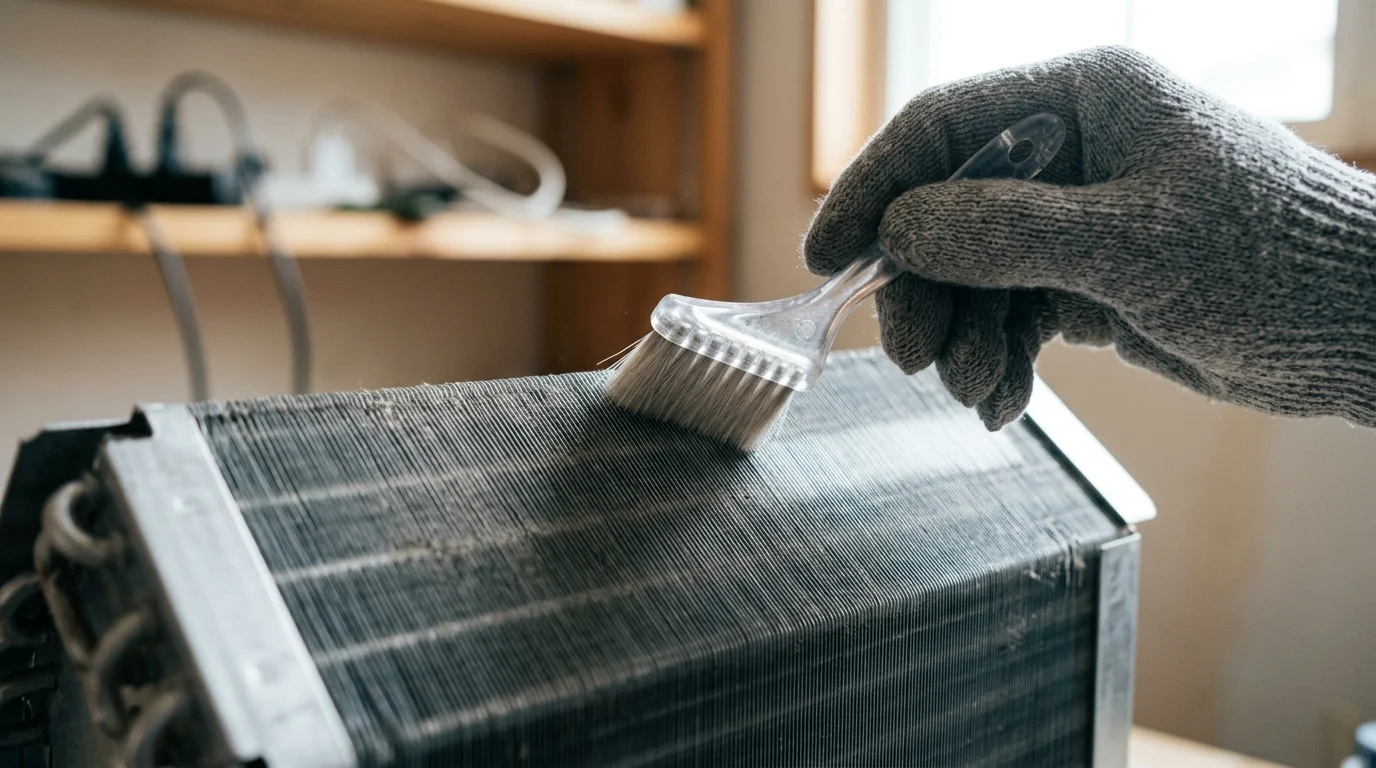
Strategic equipment management and proactive maintenance are the most effective methods for maximizing the 5- to 10-year lifecycle of dehumidification equipment. Preventing freeze-ups requires a combination of disciplined operational habits and selecting hardware engineered for the specific environmental demands of the space.
Maintenance and operating best practices
Routine preventative maintenance schedules are critical. Facility managers and homeowners should implement a bi-weekly filter inspection protocol during peak humidity seasons. Even a 15% reduction in airflow over time can incrementally lower coil temperatures, pushing the unit closer to the freezing threshold.
Operators should also monitor the relative humidity setpoint. Attempting to drive a space below 40% relative humidity in a cool environment forces the compressor into continuous duty cycles. Setting a realistic target—typically between 45% and 55%—allows the compressor to cycle off, providing natural intervals for the evaporator coil to shed minor frost accumulations before they harden into restrictive ice blocks.
Choosing the right unit features
Choosing the right technology at the point of purchase is the ultimate preventive measure. For spaces that consistently hover between 10°C and 15°C (50°F to 60°F), buyers must select compressor units equipped with advanced hot-gas bypass defrost systems, rather than basic fan-only defrost. Hot-gas bypass actively routes heated refrigerant directly into the evaporator, clearing ice in a fraction of the time.
For environments that routinely drop below 10°C (50°F), such as unconditioned garages, cold-storage facilities, or deep basements, traditional compressor technology should be abandoned entirely. Desiccant dehumidifiers offer the definitive solution in these scenarios. Because desiccant models utilize a moisture-absorbing silica rotor and a thermal heater rather than a refrigerated coil, they boast a freezing threshold of absolute zero, effectively operating without failure in sub-freezing conditions down to 1°C (34°F).
Key Takeaways
- The most important conclusions and rationale for dehumidifier freezes up
- Specs, compliance, and risk checks worth validating before you commit
- Practical next steps and caveats readers can apply immediately
Frequently Asked Questions
Why does my dehumidifier freeze up in a basement?
Basements often stay below 60°F, which can drop coil temperature under freezing. Raise room temperature, switch to a low-temp model, or run the unit only when the space is warmer.
Is some frost on a dehumidifier coil normal?
Yes. Light frost during auto-defrost can be normal, especially below 65°F. If ice stays longer than 45–60 minutes or becomes thick blocks, there’s likely an airflow or mechanical problem.
Can a dirty filter make a dehumidifier freeze?
Yes. A clogged filter restricts airflow, causing the evaporator coil to get too cold and ice over. Clean or replace the filter, clear dust from coils and grilles, and leave space around the unit.
How do I safely fix a frozen dehumidifier?
Turn it off, unplug it, and let the ice melt completely. Clean the filter and airflow path, then restart it in a room above 60°F. If it freezes again, the defrost system or refrigerant may need service.
When should I call for dehumidifier repair?
Call for service if the fan runs but little water collects, the coil re-freezes after cleaning, or ice persists after a full defrost cycle. These signs can point to a bad sensor, fan issue, or low refrigerant.