
Why Use a Home Dehumidifier?
Have you noticed a persistent dampness in your home? Musty smells, clothes that won’t dry, damaged furniture, clothing, and items, and even damage to the house itself—these are all signs of excessive humidity.
To restore a healthy indoor environment, an air dehumidifier may be the ideal choice. But how do you choose the right model? Cestu will guide you step-by-step through the entire process, bringing you cleaner, more comfortable air.
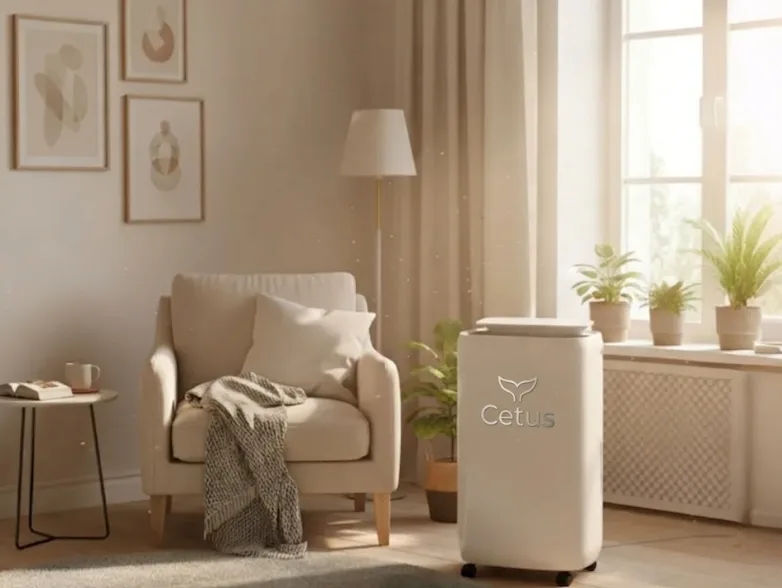
Why is regulating indoor humidity so important?
High indoor humidity not only causes discomfort but also harms your health and home environment. The French Agency for Ecological Transition (ADEME) states that the ideal indoor humidity range is 40% to 60%.
1. Health Problems
Mold and dust mites thrive there, potentially triggering or worsening respiratory illnesses such as allergic rhinitis and asthma.
Skin discomforts such as itching and eczema may also occur.
2. Furniture and Home Damage
Wooden furniture is prone to warping, mold, and even rotting.
Walls may blister, peel, and in severe cases, turn black and grow mold.
Floors (especially wooden floors) may warp and buckle.
3. Clothing and Item Damage
Clothing and bedding are prone to mold and unpleasant odors.
Books and documents may become damp, wrinkled, and even moldy.
Electronic products are more likely to malfunction or have a shorter lifespan in high humidity environments.
4. Pest Problems
Damp environments attract cockroaches, mites, anchovies, and other insects.
5. Deteriorating Air Quality
High humidity makes the air stuffy and stagnant, leading to fatigue and discomfort.
Factors to Consider When Choosing a Dehumidifier
When selecting the most suitable dehumidifier, consider the following criteria:
Dehumidification Capacity: Measured in liters per day (L/day), this defines the device’s dehumidification efficiency.
Room Size: Measured in cubic meters (m³), allowing you to choose a model that effectively handles the air in your space.
By considering these criteria, you can optimize the device’s efficiency while ensuring clean and comfortable air.
| Product | Capacity (L/day) | Power | Area Coverage(m³/h) |
| MAIDI | 20L | 275W | 160 m³/H |
| MAIDI-2 | 20L | 320W | 160m³/H |
| ANUODAN | 12L | 240W | 160m³/H |
| R290 | 10L | 230W | 160m³/H |
All our dehumidifiers also feature a dedicated automatic temperature and humidity detection system that automatically switches operating intensity according to environmental changes, improving air quality in addition to regulating humidity.
Thanks to this filtration system, our appliances have a dual function: reducing excess moisture and promoting cleaner, healthier indoor air.
Understand your room size and daily dehumidification needs.
The first step in choosing the right indoor dehumidifier is to accurately assess the size of the space that needs dehumidification and the severity of the moisture problem, and then calculate the dehumidification capacity suitable for your home to ensure the unit matches your actual needs.
In 2026, home dehumidifiers come in a wide range of capacities, from compact 6L mini units suitable for small closets and wardrobes to 25L commercial-grade high-capacity models designed for large basements, open-plan living areas, and large-space applications.
In general, a 10L dehumidifier is suitable for spaces of about 25–40 square meters, making it especially ideal for small apartments or compact living spaces; a 16L unit can easily handle 40–80 square meters, while a 20–25L dehumidifier is best suited for areas of 80–125 square meters.
Prioritize Energy Efficiency and Smart Humidity Control
With rising energy costs and increased environmental awareness, energy efficiency is one of the most important considerations when choosing a home dehumidifier in 2026. Modern home dehumidifiers equipped with inverter compressors and smart humidity controllers adjust their output based on the current humidity level, consuming significantly less electricity than older fixed-speed models. When purchasing, choose a model that clearly displays power consumption—typically 150 watts for mini models and 320 watts for larger models—and features such as automatic shutdown, programmable timers, and sleep mode. An adjustable humidity controller with a clear LED display is especially important, as it allows you to set a target humidity level (ideally between 40% and 60%) and let the machine adjust automatically. Over a year, an energy-efficient dehumidifier can save you hundreds of dollars in electricity bills, making the slightly higher initial investment well worth it compared to less efficient models.
Assess noise levels, portability, and user-friendly design.
An overly noisy dehumidifier not only disrupts your daily life but can also be counterproductive. Therefore, low-noise operation has become a hallmark of the best home dehumidifiers for 2026. Dehumidifiers with optimized fan blades, shock-absorbing brackets, and silent compressors operate at only 35-40 decibels—equivalent to a whisper—ideal for bedrooms, nurseries, and home offices. Beyond noise, design is equally important: wheels or integrated handles make it easy to move the dehumidifier between rooms; a moderately sized water tank (1.5-5 liters) with a convenient handle makes emptying easy. A continuous drain hose connection is also practical for basements or long-term use, eliminating the need for frequent manual draining. The best dehumidifiers of 2026 not only boast powerful dehumidification capabilities but also feature a user-friendly, human-centered design that seamlessly integrates into any living environment.
Find Trustworthy Core Components and Reliable Manufacturing Quality
In the vast dehumidifier market, not all dehumidifiers possess the same intrinsic quality. The durability and long-term performance of any indoor air dryer highly depend on the quality of its internal components, especially the compressor. In 2026, leading manufacturers like Cetus specify compressors from well-known brands like MAIDI to ensure consistent cooling performance, faster dehumidification, and longer product lifespan. Automatic defrosting technology is another key feature ensuring reliable operation year-round, preventing ice buildup on the evaporator coils in low-temperature environments. Before purchasing, check for authoritative safety certifications such as CE, RoHS, and UL, and carefully read the manufacturer’s warranty terms—standard warranties are typically one to two years. Dehumidifiers manufactured with high-quality materials, rigorous quality control, and proven components offer years of reliable service, far superior to cheap alternatives that may fail in the first quarter.
Compare Top Brands and Read Real User Reviews
With numerous dehumidifier brands and models on the market in 2026, thorough research is crucial for making an informed choice. First, narrow down your options based on dehumidification capacity, energy efficiency, and noise levels. Then, compare key competing products side-by-side. Verified customer reviews provide valuable, authentic information about a dehumidifier’s long-term performance—pay particular attention to feedback on durability, ease of maintenance, and the effectiveness of customer support. Independent review websites, video demonstrations, and comparison articles can also help you find models that consistently outperform competitors. If you are purchasing for a commercial space or need to buy in bulk for resale, consider working directly with OEM/ODM manufacturers, who can provide customized specifications, competitive bulk pricing, and professional after-sales service. Taking the time to thoroughly compare various brands will help you find a dehumidifier that strikes the perfect balance in performance, value, and reliability.
The First Step to Lowering Home Humidity
Before buying a dehumidifier, adopting some simple habits can help lower humidity in your home:
Ventilate frequently, especially after showering, doing laundry, or cooking.
Cover pots and pans and use a range hood to reduce steam.
Hang clothes outdoors or in a well-ventilated room.
Ensure your home is well-insulated and well-ventilated: a good mechanical ventilation heat recovery system and high performance windows make a significant difference.
In addition, a dehumidifier effectively dries the air, improving your comfort.
Where should a dehumidifier be installed? How should it be installed?
To ensure maximum efficiency, please follow these recommendations:
Place the unit in an enclosed room (close doors and windows during operation).
To ensure optimal air circulation, leave at least 20 cm of clearance around the appliance and 50 cm of clearance above it.
Avoid outdoor installation or placing it in areas with excessive ventilation.
To ensure safe and efficient operation, ensure the ambient humidity does not exceed 80%.
FAQ
What size dehumidifier is best for a 1000 square foot room?
For a space of approximately 90 square meters (1000 square feet) with moderate humidity, a dehumidifier with a daily dehumidification capacity of 16-20 liters is usually the best choice. If the area is particularly humid or poorly ventilated, consider upgrading to a 25-liter model for more powerful humidity control.
How much will a good home dehumidifier cost in 2026?
In 2026, the price of a good home dehumidifier typically ranges from $80 for a 6-liter mini model to over $350-$500 for a 20-25 liter large-capacity model with advanced features. Energy-efficient models with inverter compressors and intelligent control systems are slightly more expensive, but offer significant long-term savings.
Can dehumidifiers reduce mold growth?
Yes. By maintaining indoor humidity between 40% and 60%, a dehumidifier can create an environment where mold spores and mold cannot grow. Continuous use of dehumidifiers in basements, bathrooms, and laundry rooms is one of the most effective ways to prevent health problems and property damage caused by mold.
Is it better to run a dehumidifier continuously or on a timer?
This depends on your local humidity levels. In consistently humid environments, continuous operation with a humidity controller is ideal—the device automatically cycles on and off as needed. In more stable environments, a programmable timer can help reduce energy consumption by running the dehumidifier only during peak humidity periods.
What is the difference between a compressor dehumidifier and an adsorption dehumidifier?
Compressor dehumidifiers use a refrigeration cycle to condense moisture in the air and work best in warm, humid environments. Adsorption dehumidifiers use desiccants to absorb moisture and perform better in cooler environments, but consume more energy at higher temperatures.