
Introduction
Indoor humidity affects far more than comfort: it shapes how warm a room feels, how easily airborne microbes spread, and how well building materials hold up over time. When moisture levels drift too low or too high, the result can be dry skin, irritated airways, condensation, mold risk, and added strain on HVAC systems. This article explains the science behind ideal indoor humidity levels, including how relative humidity is measured, why the commonly recommended range matters, and what happens when conditions fall outside it. By the end, readers will have a clearer basis for evaluating indoor air quality and making practical humidity-control decisions.
Why indoor humidity matters
Indoor environmental quality (IEQ) relies heavily on precise moisture management, which directly dictates both a facility's structural integrity and its occupants' physiological well-being. While thermal comfort often dominates HVAC design discussions, indoor humidity serves as the critical variable regulating latent heat loads, airborne pathogen viability, and material degradation. Achieving optimal indoor humidity is not merely a matter of occupant preference; it is a rigorous engineering requirement governed by standards such as ASHRAE Standard 55 for thermal environmental conditions.
Deviations from acceptable moisture parameters can trigger cascading failures across mechanical systems and negatively impact human health. Consequently, modern building science treats humidity control as a primary design parameter rather than a secondary byproduct of sensible cooling.
Effects on occupant health and comfort
The physiological impact of indoor humidity is primarily mediated through human thermoregulation and respiratory mucous membrane function. At relative humidity (RH) levels below 30%, occupant evaporative cooling accelerates. This often leads to complaints of thermal discomfort even at standard operative temperatures (e.g., 22°C or 72°F). Furthermore, desiccated mucous membranes suffer reduced mucociliary clearance, increasing susceptibility to respiratory infections.
Conversely, the Sterling Chart of indoor air quality demonstrates that maintaining RH between 40% and 60% minimizes the viability and aerodynamic transmission of bacteria, viruses (including SARS-CoV-2), and fungi. Within this optimal 20-percentage-point band, the decay rate of lipid-enveloped viruses is maximized, while allergic rhinitis triggers, such as dust mites, remain suppressed.
Differences by building type
Moisture control requirements vary drastically depending on a structure's primary function and internal load profile. Commercial office buildings typically target a broad 30% to 60% RH band to balance energy efficiency with baseline occupant comfort. However, healthcare facilities are bound by stricter regulatory codes. For example, ASHRAE Standard 170 mandates that operating rooms maintain RH between 20% and 60%. Specific design points are often tightly calibrated around 40% to mitigate electrostatic discharge risks around volatile anesthetics while preventing surgical site infections.
Industrial and technological facilities face entirely different constraints. Data centers, governed by ASHRAE TC 9.9 guidelines, historically required narrow moisture bands. Today, they operate within wider allowable ranges (20% to 80% RH) to leverage economizers, provided the absolute humidity does not exceed 0.011 kg of water per kg of dry air. In these environments, the priority shifts from human comfort to preventing condensation on server blades and mitigating static electricity on semiconductor components.
What ideal indoor humidity means
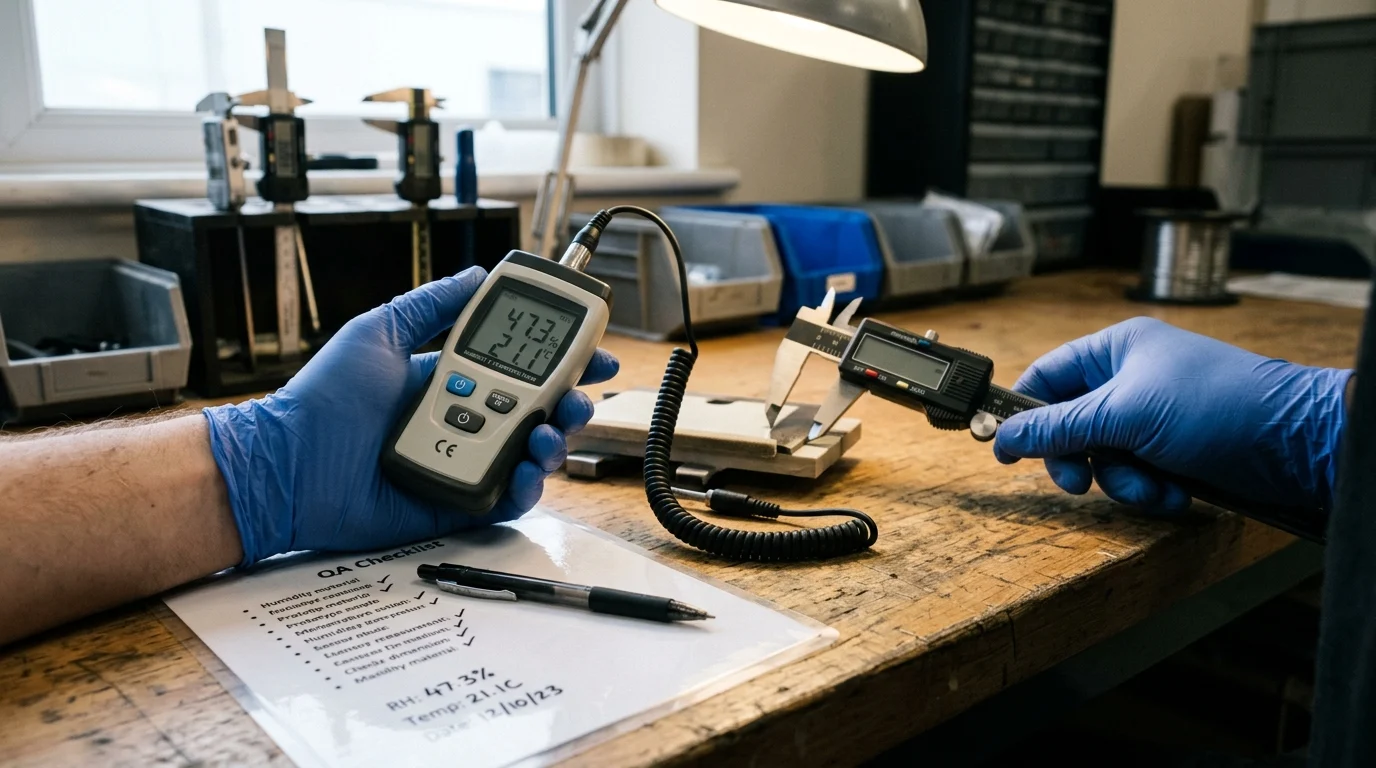
Defining the ideal indoor humidity requires moving beyond subjective perception and utilizing precise thermodynamic metrics. Building engineers analyze the state of indoor air using psychrometrics, the study of the physical and thermal properties of gas-vapor mixtures. Establishing a target requires understanding the interplay between temperature, moisture mass, and saturation limits.
Relative humidity, dew point, and absolute humidity
Relative humidity (RH) is the most commonly referenced metric, expressing the ratio of the partial pressure of water vapor to the equilibrium vapor pressure of water at a given temperature. Because RH is temperature-dependent, a space at 20°C (68°F) with 50% RH contains approximately 8.6 grams of water vapor per cubic meter. If the temperature drops without removing moisture, the RH will spike.
Absolute humidity measures the actual mass of water vapor present in a given volume of air (grams per cubic meter), independent of temperature. Dew point, perhaps the most critical metric for building envelope design, is the temperature at which air becomes fully saturated (100% RH). If indoor surfaces drop below the dew point—for instance, a poorly insulated window frame chilling to 10°C in a room with a 12°C dew point—condensation will inevitably form, bypassing latent cooling systems entirely.
Typical acceptable indoor ranges
Regulatory bodies and building science consensus dictate specific operational bands to balance biological safety, material preservation, and energy consumption. The table below outlines standard acceptable metrics across different scientific parameters.
| Metric Type | Typical Acceptable Range | Engineering Significance |
|---|---|---|
| Relative Humidity (RH) | 30% – 60% | Balances pathogen suppression with occupant thermal comfort. |
| Dew Point Temperature | 10°C – 15°C (50°F – 59°F) | Prevents interstitial condensation within standard commercial building envelopes. |
| Absolute Humidity | 5 to 12 g/m³ | Governs the latent load calculations for HVAC dehumidification sizing. |
Operating outside these ranges for more than 48 consecutive hours drastically increases the probability of IEQ failure, whether through microbial proliferation at the high end or electrostatic discharge at the low end.
Measurement and sensor placement
The accuracy of humidity management is entirely dependent on the fidelity of the sensory feedback loop. Capacitive polymer sensors are the industry standard for indoor environments, offering an accuracy tolerance of ±2% to ±3% RH. However, these sensors are highly susceptible to drift over time and require annual calibration.
Sensor placement dictates the validity of the data. Hygrometers and thermostats must be installed strictly within the breathing zone—typically 1.1 to 1.7 meters (43 to 67 inches) above the finished floor. They must be isolated from direct solar radiation, exterior thermal bridges, and the immediate discharge path of supply air diffusers. A sensor placed directly in the path of a variable air volume (VAV) terminal will register an artificially low temperature and high RH, causing the building automation system (BAS) to unnecessarily engage energy-intensive reheat protocols.
How humidity affects buildings and systems
The interaction between water vapor, building materials, and mechanical systems dictates the lifecycle and operational efficiency of a facility. Because moisture naturally migrates from areas of high vapor pressure to areas of low vapor pressure, building envelopes and HVAC systems must continuously manage this thermodynamic drive to prevent structural degradation.
Problems caused by low humidity
When indoor relative humidity drops below 30%, the lack of ambient moisture eliminates the natural conductive film that normally dissipates electrical charges. This leads to severe electrostatic discharge (ESD) risks. In manufacturing or server environments, ESD spikes exceeding 3,000 volts can destroy microprocessors and disrupt sensitive medical telemetry.
Structurally, low humidity causes hygroscopic materials to surrender moisture to the dry air. Hardwood flooring, millwork, and structural timber will contract, leading to dimensional instability, warping, and acoustic failures in architectural finishes. In extreme cases, sustained RH below 20% can cause off-gassing of volatile organic compounds (VOCs) from adhesives as they dry out and become brittle.
Risks linked to high humidity
Elevated humidity presents a more immediate threat to building integrity. When indoor RH exceeds 60% for prolonged durations, the environment crosses the threshold for aggressive mold and fungal proliferation. At 70% RH, the germination rate of localized spores accelerates exponentially, posing severe respiratory risks and requiring costly remediation.
High vapor pressure also drives moisture into the building envelope. If the vapor barrier is compromised or improperly placed relative to the climate zone, moisture will migrate into wall cavities. Upon reaching the dew point within the insulation layer, this moisture condenses, leading to hidden rot, corrosion of steel fasteners, and a catastrophic reduction in the thermal resistance (R-value) of the insulation.
Impact on materials and HVAC performance
Humidity directly dictates the latent load placed on an HVAC system. Sensible heat changes the temperature of the air, while latent heat is the energy required to remove moisture. In high-humidity scenarios, the Sensible Heat Ratio (SHR)—the ratio of sensible cooling to total cooling—can drop below 0.70. This means more than 30% of the system's energy is expended solely on condensing water.
If an HVAC system lacks dedicated dehumidification sequences, it may struggle to handle high latent loads without overcooling the space. This forces the system to run supply air at extremely low temperatures (e.g., 10°C/50°F) to wring out moisture, necessitating energy-intensive terminal reheat to bring the air back to a comfortable 22°C (72°F) before it reaches the occupants. This simultaneous cooling and heating destroys system efficiency and inflates operational expenditures.
What makes humidity control difficult
Maintaining a stable indoor humidity profile is notoriously complex due to the dynamic interplay of external weather conditions, internal occupancy loads, and the physical limitations of the building itself. Engineers must account for continuous moisture generation from human respiration, processes, and infiltration, making precise control a moving target.
HVAC design and ventilation factors
A primary failure point in mechanical humidity control is the oversizing of direct expansion (DX) air conditioning units. An oversized compressor satisfies the sensible thermostat setpoint too rapidly, resulting in short-cycling. Because the evaporator coil does not remain cold long enough to extract meaningful amounts of water vapor, the space is left cool but clammy—a classic high-RH failure.
To combat this, modern facilities increasingly rely on Dedicated Outdoor Air Systems (DOAS). By decoupling ventilation from sensible cooling, a DOAS handles 100% of the latent load from incoming fresh air. The DOAS conditions outdoor air to a specific dew point (often around 10°C to 12°C) before delivering it to the space, allowing the primary HVAC units to cycle strictly based on sensible temperature demands.
Climate, envelope, and retrofit constraints
The geographic climate zone establishes the baseline vapor pressure differential between the indoors and outdoors. In humid subtropical climates (ASHRAE Climate Zones 1A and 2A), the relentless inward drive of moisture requires impermeable vapor retarders on the exterior face of the building envelope. Conversely, in cold climates (Zones 6 and 7), the vapor barrier must be on the warm interior side to prevent winter moisture from condensing inside the walls.
Retrofitting older buildings presents massive constraints due to high envelope leakage. A facility with an infiltration rate exceeding 5.0 ACH50 (Air Changes per Hour at 50 Pascals of pressure) will constantly leak conditioned air and draw in unconditioned ambient air. No mechanical dehumidification system can efficiently maintain 50% RH if the building envelope continuously introduces massive latent loads through uncontrolled drafts.
Diagnosing root causes
When humidity spirals out of control, diagnosing the root cause requires isolating mechanical failures from architectural defects. Engineers typically deploy data loggers to map the psychrometric performance of the space over a two-week period. If the data shows RH spiking concurrently with the introduction of outdoor air, the economizer dampers or DOAS enthalpy wheels are likely failing.
If mechanical systems are operating within design parameters but humidity remains high, engineers must conduct a blower door test combined with infrared thermography. This diagnostic approach identifies thermal bridging and air leaks in the envelope. Isolating whether the moisture is internally generated (e.g., high occupant density without adequate exhaust) or externally driven (e.g., negative building pressure drawing in humid outdoor air) is the critical first step in formulating a remediation strategy.
How to set and maintain humidity targets
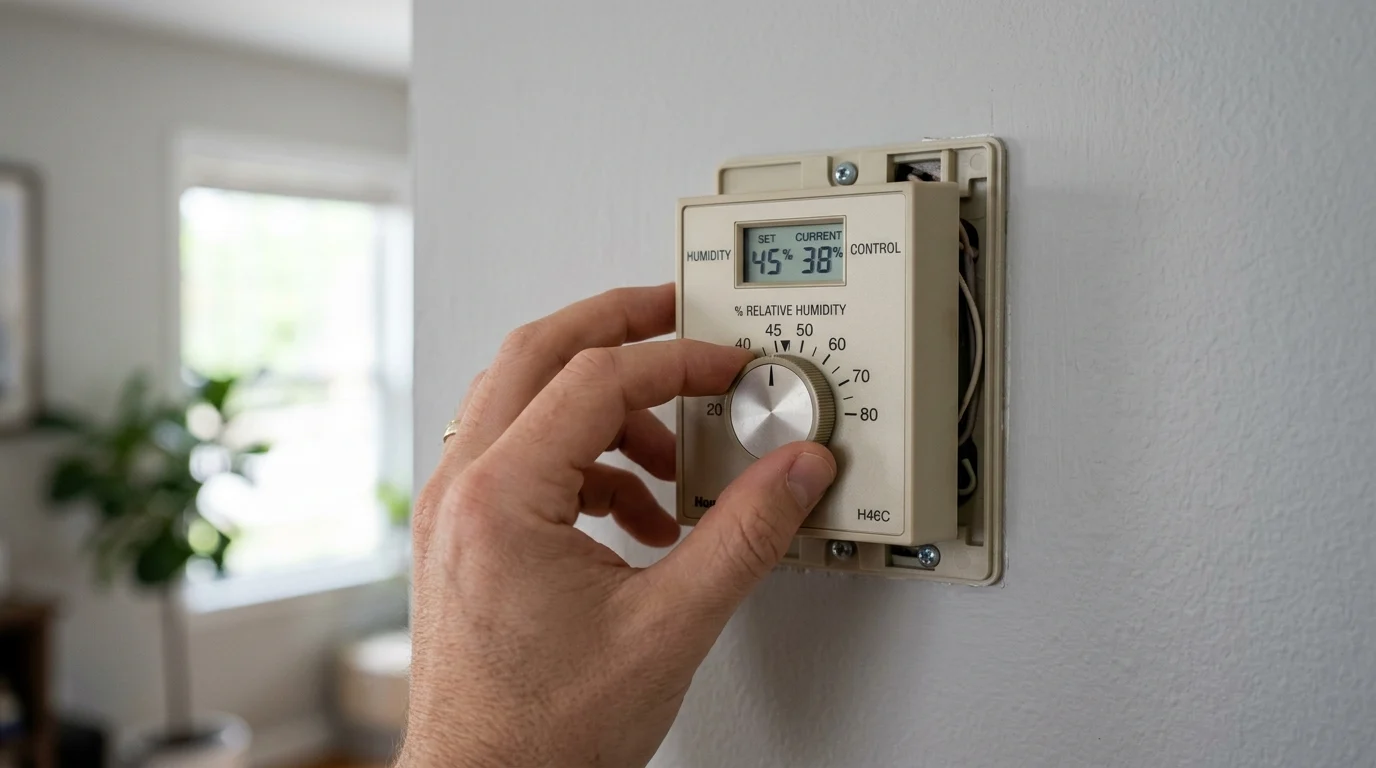
Transitioning from theoretical psychrometrics to actionable facility management requires establishing definitive targets, implementing rigorous monitoring protocols, and utilizing a data-driven framework for capital expenditures. Facility managers must balance the ideal scientific parameters with the physical and financial realities of their specific building.
Targets by application
Target humidity levels cannot be uniformly applied across a portfolio; they must be localized to the specific application of the space. The operational tolerance dictates the type of mechanical equipment required, from simple DX cooling to precision desiccant wheels.
| Facility Type | Target RH Range | Critical Constraint / Driver |
|---|---|---|
| Archival / Museums | 45% – 55% (±5%) | Strict prevention of dimensional changes in hygroscopic artifacts; requires tight deadbands. |
| Inpatient Hospitals | 30% – 60% | Infection control and mitigation of airborne pathogen transmission per ASHRAE 170. |
| Commercial Offices | 40% – 60% | Occupant thermal comfort (PMV/PPD indices) and general IAQ maintenance. |
| Microelectronics | 35% – 45% | Prevention of electrostatic discharge (ESD) on silicon wafers and photolithography errors. |
Establishing these targets requires configuring the Building Management System (BMS) with appropriate deadbands—typically a 5% to 10% RH buffer—to prevent mechanical systems from constantly hunting for a setpoint, which accelerates equipment wear.
Monitoring and maintenance
Proactive maintenance of humidity control infrastructure is non-negotiable.
Key Takeaways
- The most important conclusions and rationale for indoor humidity levels
- Specs, compliance, and risk checks worth validating before you commit
- Practical next steps and caveats readers can apply immediately
Frequently Asked Questions
What indoor humidity level is best for most buildings?
Aim for 40% to 60% RH for the best balance of comfort, pathogen control, and material protection. A broader acceptable range is 30% to 60% RH in many commercial spaces.
Why is humidity below 30% a problem?
Air that dry can irritate eyes, skin, and airways, increase static electricity, and make rooms feel cooler than they are. Use a humidifier or adjust HVAC controls to raise RH.
What happens when indoor humidity is too high?
High humidity increases the risk of condensation, mold growth, and material damage. Check for poor ventilation, cooling issues, or hidden moisture sources if RH stays above 60%.
How is relative humidity different from dew point?
Relative humidity changes with temperature, while dew point shows when air will condense on cold surfaces. Use dew point to assess condensation risk near windows, walls, and ducts.
Do all buildings need the same humidity range?
No. Offices often use 30% to 60% RH, healthcare spaces may follow stricter code limits, and data centers can allow wider ranges if condensation and static are controlled.