
In the quest for a healthier and more comfortable indoor environment, homeowners often encounter a variety of appliances designed to improve air quality. Among the most common are air purifiers and dehumidifiers. While both aim to enhance your living space, they serve fundamentally different purposes and operate on distinct principles. A common misconception is that these devices are interchangeable or perform similar functions. However, understanding their unique roles is crucial for making informed decisions about which appliance best suits your specific needs. This comprehensive guide will delve into the core differences between air purifiers and dehumidifiers, their respective benefits, and how they contribute to a truly healthy home environment.
What is an Air Purifier, and How Does It Improve Indoor Air Quality?
An air purifier is an appliance designed to remove contaminants from the air in a room, thereby improving indoor air quality. Its primary function is to clean the air you breathe by trapping or neutralizing airborne particles and pollutants. Air purifiers are particularly beneficial for individuals suffering from allergies, asthma, or those living in areas with high levels of pollution.
How Do Air Purifiers Work to Clean Your Air?
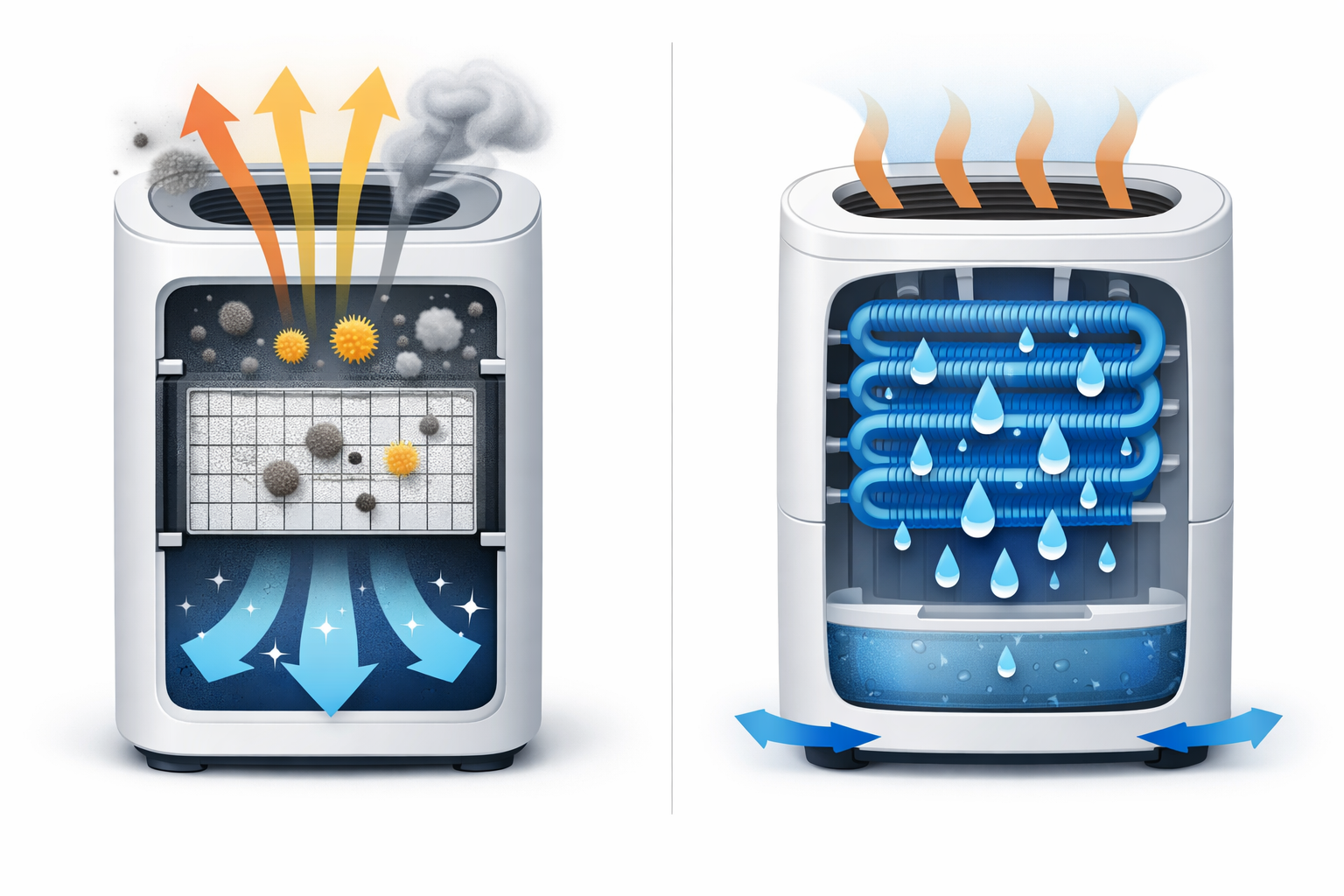
The operational mechanism of an air purifier typically involves a fan that draws air into the unit, where it passes through a series of filters. The most common types of filtration include:
•HEPA Filters (High-Efficiency Particulate Air): These mechanical filters are designed to capture at least 99.97% of airborne particles 0.3 microns in size, including dust, pollen, pet dander, mold spores, and some bacteria and viruses .
•Activated Carbon Filters: These filters are highly effective at absorbing odors, gases, and volatile organic compounds (VOCs) through a process called adsorption.
•UV-C Light: Some purifiers incorporate UV-C lamps to kill airborne bacteria, viruses, and mold spores by damaging their DNA.
•Ionizers/Electrostatic Precipitators: These technologies release charged ions into the air, which attach to airborne particles, causing them to clump together and fall out of the air or be attracted to a charged plate within the unit.
By continuously circulating and filtering the air, air purifiers reduce the concentration of harmful substances, leading to a fresher and healthier indoor atmosphere. For more insights into air quality, visit Cetusdry Website blog.
What is a Dehumidifier, and How Does It Control Moisture Levels?
A dehumidifier is an appliance that reduces the level of humidity in the air, primarily by removing excess moisture. Its main goal is to create a drier environment, which is crucial for preventing issues associated with high humidity, such as mold growth, musty odors, and discomfort. Dehumidifiers are essential in damp climates, basements, bathrooms, or any area prone to excessive moisture.
How Do Dehumidifiers Work to Extract Moisture from the Air?
Most dehumidifiers operate using a refrigeration process, similar to an air conditioner, but with a different objective:
•Fan and Coils: A fan draws humid air over a set of cold coils (evaporator coils). As the warm, moist air comes into contact with these cold surfaces, the water vapor condenses into liquid water droplets.
•Collection Tank: The condensed water drips into a collection tank or is drained away through a hose.
•Reheating: The now drier, cooler air then passes over warm coils (condenser coils) to be reheated to near its original temperature before being released back into the room.
This cycle effectively removes moisture from the air without significantly altering the room’s temperature. For high-quality dehumidifier solutions, explore Cetusdry’s products.
Is an Air Purifier the Same as a Dehumidifier?
Despite both contributing to a healthier home, air purifiers and dehumidifiers are not the same. Their core functions, operational mechanisms, and the problems they address are distinct.
What are the Fundamental Differences in Their Functions?
The primary distinction lies in what they target:
•Air Purifier: Focuses on removing airborne particulate matter (e.g., dust, pollen, smoke, allergens, viruses) and gaseous pollutants (e.g., VOCs, odors) from the air.
•Dehumidifier: Focuses on reducing the relative humidity by extracting water vapor from the air.
How Do Their Mechanisms of Action Differ?
Their internal workings reflect their different goals:
•Air Purifier: Utilizes various filtration technologies (HEPA, activated carbon, UV-C, ionization) to physically capture or neutralize contaminants.
•Dehumidifier: Employs a refrigeration cycle to condense water vapor into liquid, effectively drying the air.
What Problems Do They Each Solve?
Each device addresses a specific set of environmental challenges:
|
Feature
|
Air Purifier
|
Dehumidifier
|
|
Primary Goal
|
Remove airborne pollutants and allergens
|
Reduce excess moisture and humidity
|
|
Targets
|
Dust, pollen, pet dander, smoke, odors, VOCs, bacteria, viruses
|
Water vapor, mold, mildew, musty odors, dust mites
|
|
Mechanism
|
Filtration (HEPA, Carbon), UV-C, Ionization
|
Refrigeration (condensation), desiccant absorption
|
|
Impact on Air
|
Cleans air, removes irritants
|
Dries air, prevents moisture-related growth
|
|
Impact on Comfort
|
Reduces allergy/asthma symptoms, eliminates odors
|
Prevents sticky feeling, reduces clamminess, makes air feel cooler
|
|
Energy Use
|
Generally low to moderate
|
Moderate to high (depending on capacity and usage)
|
|
Maintenance
|
Filter replacement, occasional cleaning
|
Water tank emptying, coil cleaning, filter cleaning
|
|
Best For
|
Allergies, asthma, pet owners, smokers, urban environments
|
Damp basements, humid climates, preventing mold, protecting belongings
|
When Should You Use an Air Purifier, and When is a Dehumidifier Necessary?
Choosing between an air purifier and a dehumidifier, or deciding if you need both, depends on the specific issues you’re facing in your home.
When is an Air Purifier Your Best Bet?
Consider an air purifier if your primary concerns revolve around air quality and airborne irritants:
•Allergies and Asthma: If you or family members suffer from respiratory conditions exacerbated by pollen, dust mites, pet dander, or mold spores.
•Pet Owners: To manage pet dander and odors.
•Smokers: To remove smoke particles and associated smells.
•Urban Living: To filter out outdoor pollutants that infiltrate your home.
•General Air Freshness: To maintain a consistently clean and fresh indoor atmosphere.
When Does a Dehumidifier Become Indispensable?
A dehumidifier is essential when dealing with excess moisture and its consequences:
•High Humidity: If your home consistently has a relative humidity above 60%, leading to a sticky feeling or condensation on windows.
•Mold and Mildew: To prevent the growth of mold and mildew, especially in damp areas like basements, bathrooms, or laundry rooms .
•Musty Odors: To eliminate the unpleasant, earthy smell often associated with dampness.
•Protecting Belongings: To safeguard wooden furniture, electronics, books, and other items from moisture damage.
•Comfort in Humid Climates: To make your home feel cooler and more comfortable without over-relying on air conditioning.
Can an Air Purifier and a Dehumidifier Work Together for Optimal Indoor Environment?
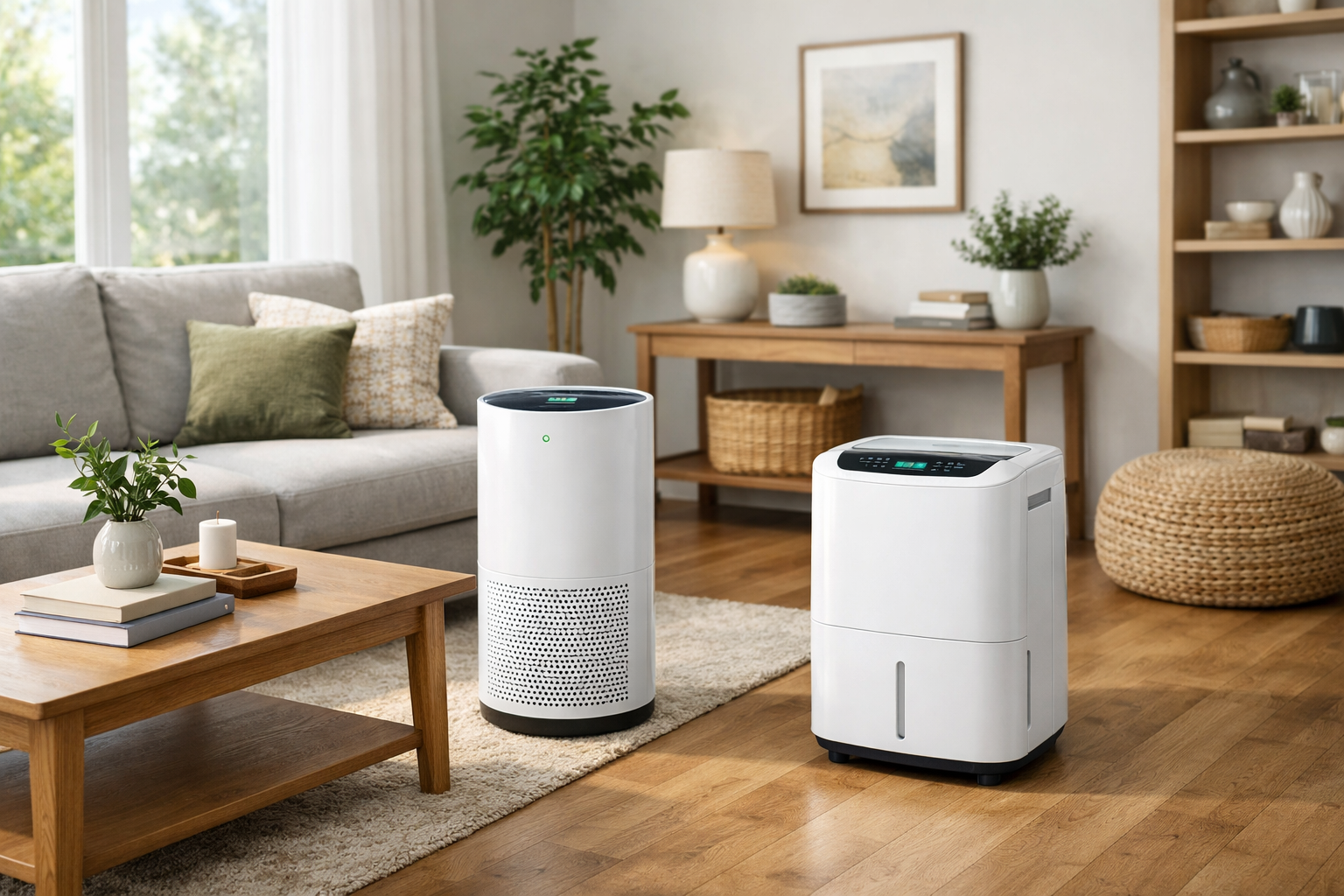
Absolutely. In many homes, particularly those in humid regions or with specific air quality challenges, using both an air purifier and a dehumidifier can provide the most comprehensive solution for a healthy and comfortable indoor environment. They complement each other by addressing different aspects of indoor air quality.
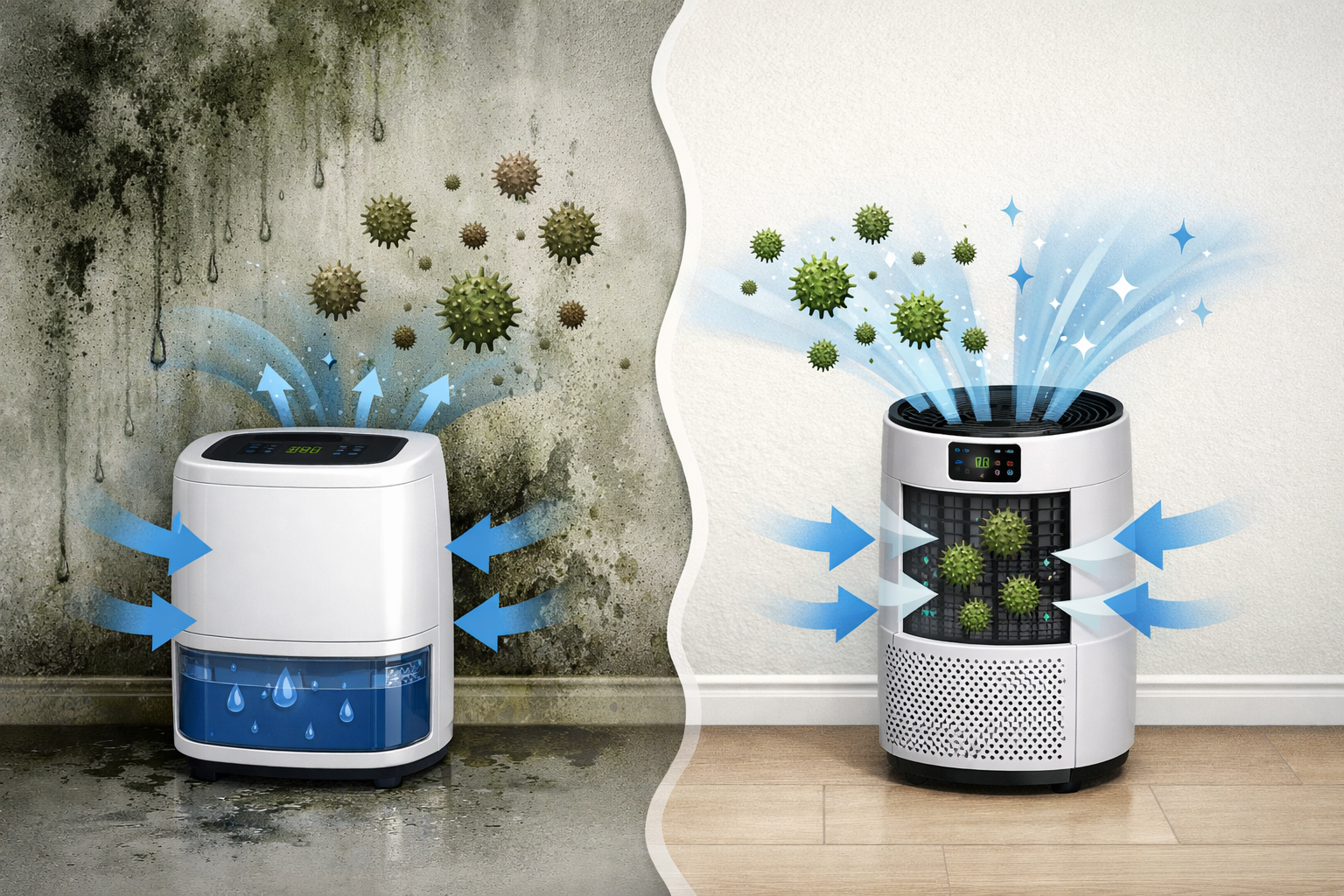
•Dehumidifier First: By reducing humidity, the dehumidifier prevents the conditions that allow mold and dust mites to thrive. This proactive approach minimizes the source of many airborne allergens.
•Air Purifier Second: Once humidity is controlled, the air purifier can then effectively remove any remaining airborne particles, including existing mold spores that might still be circulating, dust, pollen, and other pollutants.
This synergistic approach ensures that your home is not only free from excessive moisture but also clean from airborne contaminants, creating an optimal living space. For more information on preventing mold, explore Cetusdry’s blog on dehumidifiers and mold.
Conclusion: Tailoring Your Approach to a Healthier Home
While both air purifiers and dehumidifiers are invaluable tools for improving indoor environments, they are distinctly different appliances designed to tackle separate problems. An air purifier cleans the air by removing pollutants and allergens, while a dehumidifier dries the air by extracting excess moisture. Understanding these fundamental differences allows you to choose the right device—or combination of devices—to meet your home’s specific needs. By addressing both air purity and humidity control, you can create a truly healthy, comfortable, and protected living space for yourself and your family. Invest wisely in your indoor environment, and breathe easier knowing you’ve made the right choice.
FAQ
What is the ideal humidity level for preventing mold and dust mites?
The ideal indoor relative humidity level for preventing mold growth and dust mite proliferation is typically between 40% and 55%. Maintaining humidity within this range is crucial for a healthy indoor environment .
Can an air purifier remove odors caused by high humidity?
An air purifier equipped with an activated carbon filter can effectively remove odors, including musty smells caused by high humidity. However, it will not address the root cause of the humidity itself. For persistent musty odors, a dehumidifier is also necessary to remove the excess moisture.
Do dehumidifiers also clean the air?
Dehumidifiers primarily remove moisture from the air. While some models may have a basic filter to protect their internal components from large dust particles, they are not designed to purify the air from microscopic pollutants, allergens, or gases like a dedicated air purifier.
Is it possible to have good air quality with high humidity?
It is challenging to maintain good air quality with consistently high humidity. High humidity promotes the growth of mold, mildew, and dust mites, which release spores and allergens into the air, significantly degrading air quality. Therefore, controlling humidity is a foundational step for achieving good indoor air quality.
Which device should I buy first if I have both allergies and high humidity?
If you experience both allergies and high humidity, it’s often recommended to prioritize a dehumidifier first, especially if mold or musty odors are present. Reducing humidity will inhibit the growth of common allergens like mold and dust mites. Once humidity is under control, an air purifier can then effectively tackle remaining airborne allergens and pollutants, providing a comprehensive solution.