
Introduction
A home dehumidifier can run reliably for years, but only if routine care prevents dust buildup, airflow restriction, and unnecessary strain on the compressor. Small maintenance tasks—such as cleaning the filter, checking the water collection system, inspecting coils, and monitoring drainage—have a direct effect on moisture removal, energy use, and overall lifespan. This guide explains which parts need attention, how often to service them, and which warning signs suggest performance is slipping. With a clear maintenance routine, you can keep the unit working efficiently, reduce wear on key components, and avoid the common problems that lead to early replacement.
Why Dehumidifier Maintenance Matters
A standard compressor-based home dehumidifier is engineered for a lifecycle of five to eight years. However, rigorous and systematic maintenance can extend this operational window to ten years or more. Neglecting routine care accelerates mechanical degradation, leading to premature component failure, compromised indoor air quality, and significantly inflated energy expenditures.
How regular service preserves efficiency
Regular service directly correlates with sustained energy efficiency and operational cost control. A standard 50-pint dehumidifier typically consumes between 500 and 700 watts during continuous operation. When pre-filters clog and evaporator coils accumulate particulate matter, the system must operate for extended durations to extract the same baseline volume of moisture.
This restricted airflow forces the refrigeration cycle to work harder, which can degrade the unit's Energy Factor (EF) from a highly efficient 1.9 L/kWh down to 1.4 L/kWh. Consequently, power consumption can spike by 15% to 25% over a single humid season, transforming a high-efficiency appliance into a severe drain on household electrical resources.
Common failure patterns that shorten lifespan
The most prevalent failure patterns in dehumidification systems stem from poor airflow management and sensor degradation. Restricted airflow forces the compressor to run at elevated temperatures, exponentially increasing the risk of thermal overload and premature compressor burnout.
Additionally, dirt accumulation on the evaporator coils impedes necessary heat transfer, frequently causing the coils to freeze over into a solid block of ice. Another critical failure point is the humidistat sensor; biological or particulate buildup on the sensor array can cause drift, resulting in a ±10% relative humidity (RH) reading error. This drift forces the machine into a continuous duty cycle, overriding the auto-shutoff protocols and drastically shortening the lifespan of all moving parts.
What to Inspect First
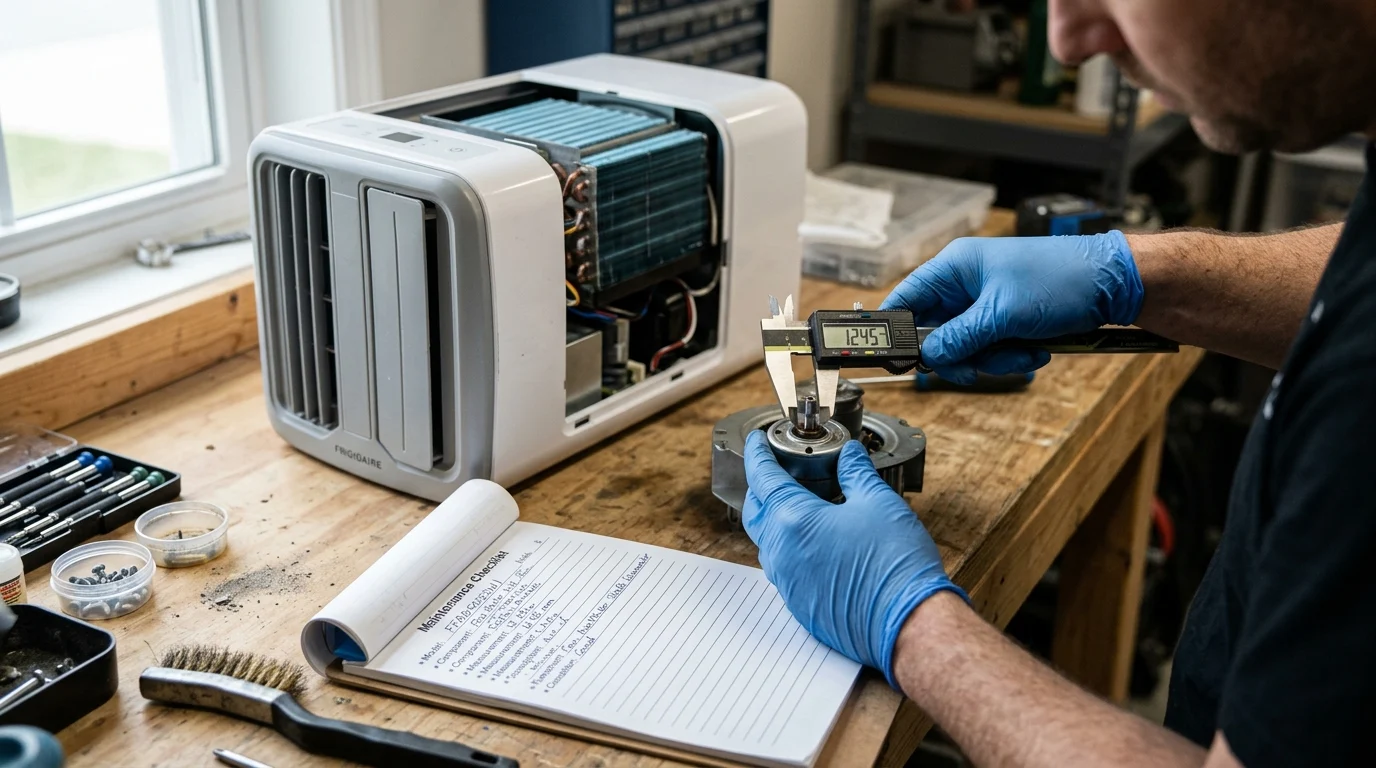
Effective maintenance requires rigorous, systematic inspection before any disassembly or cleaning begins. Disconnecting the unit from the power supply is the mandatory first step to prevent electrical hazards and accidental compressor activation during the diagnostic phase.
Core components that need routine inspection
Routine inspection must prioritize the primary air and water pathways. The air filter, the condensate collection bucket, and the float switch assembly demand immediate and frequent attention. The float switch, which prevents overflow by interrupting the compressor circuit when the bucket reaches maximum capacity, is particularly susceptible to mechanical binding from mineral deposits.
Furthermore, the intake and exhaust grilles must be inspected to ensure the unit maintains the manufacturer-specified spatial clearance. Most standard units require 12 to 18 inches of unobstructed space from any wall or furniture to guarantee adequate airflow and prevent the recycling of exhaust air.
How capacity, duty cycle, room conditions, and installation affect wear
Environmental factors and equipment sizing fundamentally dictate component wear rates and maintenance frequency. Deploying an undersized 30-pint unit in a 1,500-square-foot damp basement often forces the machine into an 80% to 90% duty cycle. In contrast, an appropriately sized unit operates at an optimal 40% to 60% duty cycle, allowing the compressor adequate thermal recovery intervals.
| Operational Factor | Optimal Condition | High-Wear Condition | Expected Compressor Impact |
|---|---|---|---|
| Duty Cycle | 40% – 60% | > 85% | Lifespan reduced by up to 40% |
| Ambient Temperature | 70°F – 85°F | < 60°F (no auto-defrost) | High risk of severe coil freezing |
| Spatial Clearance | > 15 inches | < 6 inches | Overheating and rapid thermal cycling |
Step-by-Step Home Dehumidifier Maintenance
Executing a comprehensive maintenance protocol requires specific attention to both the airflow and water management systems of the dehumidifier. Adhering to strict cleaning schedules minimizes the risk of biological contamination and mechanical stress.
How to clean filters and the bucket correctly
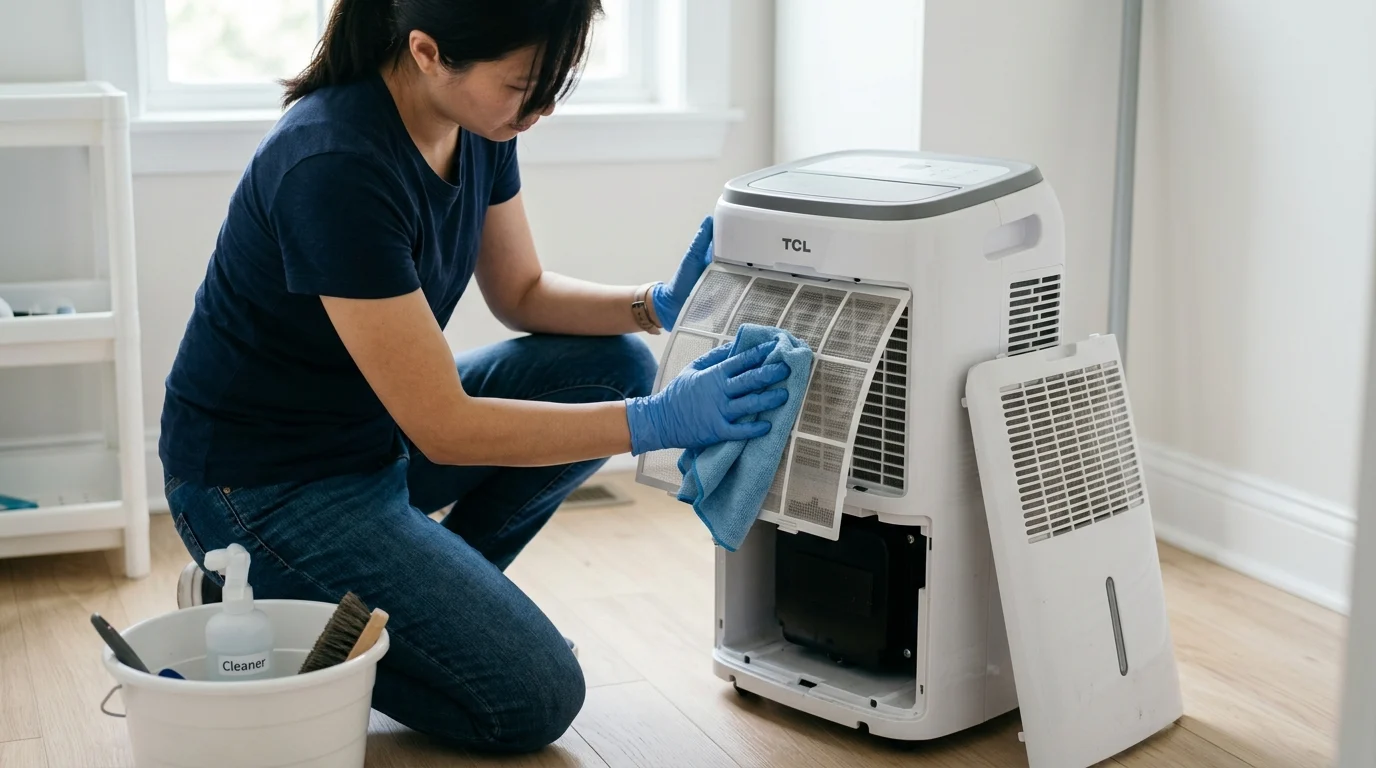
Air filters should undergo cleaning every 250 hours of operation, which translates roughly to an interval of two to four weeks during peak humidity seasons. Most residential units utilize washable nylon mesh filters that can be safely rinsed under lukewarm water and air-dried.
The condensate bucket requires equal vigilance to prevent biological growth. Washing the bucket monthly with a 5% white vinegar solution or a mild antimicrobial detergent neutralizes mold spores and prevents the formation of biofilms. Left unchecked, these slimy biofilms can easily migrate into the drain ports, causing systemic blockages and internal water damage.
When to service coils, drains, pumps, and electrical parts
Internal components require less frequent but highly technical servicing. Evaporator and condenser coils should be inspected bi-annually. Because coil fins are densely packed—often numbering 14 to 18 fins per inch—they are highly susceptible to bending and should only be cleaned with a soft-bristle brush, compressed air, or a specialized fin comb.
For units equipped with internal condensate pumps, the pump mechanism and check valves must be flushed annually to ensure they can maintain their rated vertical lift, which typically ranges from 12 to 15 feet. Electrical contacts and the main control board should also be periodically cleared of dust using low-pressure compressed air to maintain sensor accuracy and prevent short circuits.
Maintenance mistakes that reduce airflow and raise energy use
The most detrimental maintenance error is neglecting the unit's operating environment, specifically running standard compressor-based units in ambient temperatures below 65°F (18°C) without active defrost capabilities. This practice guarantees coil frost, severely restricting airflow and spiking energy consumption as the compressor struggles against the ice barrier.
Additionally, utilizing harsh, caustic chemicals on the aluminum evaporator coils can initiate galvanic or pitting corrosion. This chemical degradation often leads to microscopic refrigerant leaks (typically involving R-410A or R-32 refrigerants) that permanently disable the sealed system and render the unit unrepairable.
Maintenance by Dehumidifier Type
Maintenance regimens must be tailored to the specific thermodynamic architecture of the dehumidifier. The internal mechanisms vary drastically across different form factors, dictating unique service requirements and operational tolerances.
Differences between portable, desiccant, and whole-home units
Portable compressor-based units rely on standard refrigeration cycles, making coil hygiene and filter airflow paramount to survival. Desiccant dehumidifiers, conversely, utilize a rotating wheel of moisture-absorbing material (such as silica gel) and an internal thermal heater to regenerate the desiccant.
Because they lack a compressor, desiccant units operate efficiently in temperatures down to 34°F (1°C), but they require strict pre-filter maintenance to prevent particulate dust from permanently blinding the microscopic pores of the desiccant wheel. Whole-home units integrate directly with HVAC ductwork; these commercial-grade systems, typically boasting 70 to 130 pints-per-day extraction capacities, utilize higher-efficiency MERV 8 to MERV 11 filters and require professional-grade condensate trap inspections to prevent ductwork flooding.
Recommended intervals, warning signs, and corrective actions
Recognizing warning signs early prevents catastrophic failure. A portable unit vibrating excessively often indicates an imbalanced fan blade or a failing motor bearing, while a whole-home unit failing to lower humidity despite continuous operation points to a refrigerant leak or a clogged expansion valve.
| Dehumidifier Type | Primary Maintenance Focus | Recommended Service Interval | Critical Warning Sign |
|---|---|---|---|
| Portable (Compressor) | Filter washing, bucket sanitization | 2-4 weeks | Ice on coils, short-cycling |
| Desiccant | Pre-filter cleaning, rotor inspection | 4-6 weeks | Burnt odor, reduced extraction |
| Whole-Home (HVAC) | MERV filter replacement, trap flush | 3-6 months | Duct moisture, continuous running |
Long-Term Performance and Replacement Decisions
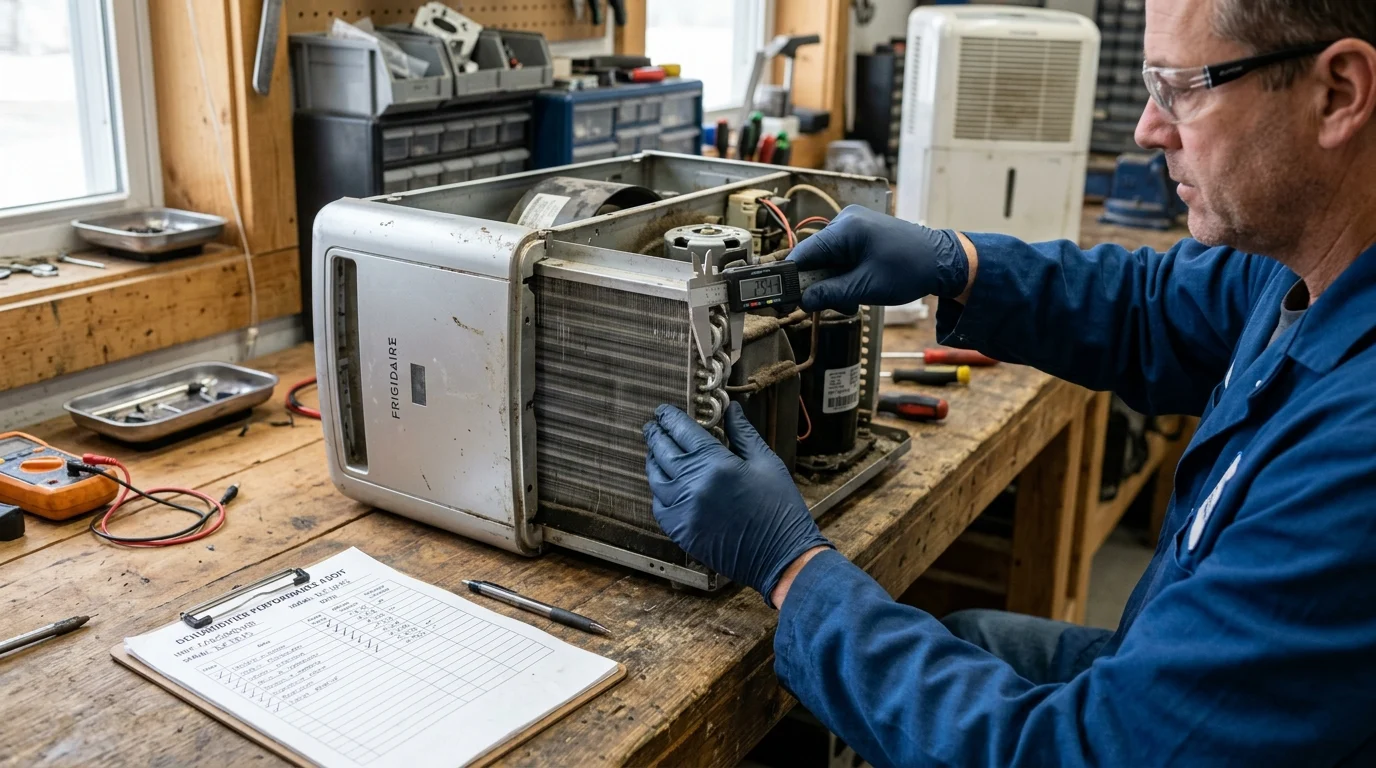
Strategic maintenance ultimately feeds into long-term asset management. Property owners must routinely evaluate when ongoing maintenance yields diminishing returns compared to total equipment replacement.
When maintenance is more cost-effective than repair or replacement
The decision to repair or replace hinges on the industry-standard '50% rule.' If a unit is beyond its manufacturer warranty period—typically 1 to 5 years depending on the sealed system coverage—and repair costs exceed 50% of a new unit's price, replacement is the fiscally sound choice.
For example, repairing a sealed system refrigerant leak involves specialized brazing, vacuuming, and recharging, a process frequently costing between $150 and $250 in labor and materials. For a standard residential unit originally priced at $200 to $300, this repair is economically irrational. Conversely, replacing a $15 float switch, a $20 humidistat sensor, or a $25 fan blade is highly cost-effective and can restore full functionality for years.
An annual checklist for reliable performance
To ensure reliable performance across the equipment's entire lifecycle, operators should implement a strict end-of-season decommissioning checklist. Before placing the unit in winter storage, drain all residual water from the internal reservoir, gravity drain ports, and pump lines.
Allow the machine to run on a 'fan-only' mode for 24 to 48 hours to thoroughly dry the evaporator coils and internal plastic ducting, mitigating the risk of dormant mold proliferation. Finally, store the unit in an upright position within a climate-controlled environment above 40°F (4°C), covered with a breathable tarp to prevent dust ingress into the motor housing and delicate electronics.
Key Takeaways
- The most important conclusions and rationale for maintain dehumidifier
- Specs, compliance, and risk checks worth validating before you commit
- Practical next steps and caveats readers can apply immediately
Frequently Asked Questions
How often should I clean my dehumidifier filter?
Clean the filter about every 250 hours of use, usually every 2 to 4 weeks in humid months. Rinse with lukewarm water and let it air-dry fully before reinstalling.
What should I check before cleaning a home dehumidifier?
Unplug the unit first. Then inspect the filter, water bucket, float switch, and intake and exhaust grilles for dirt, blockage, or mineral buildup.
Why is my dehumidifier running constantly?
A clogged filter, dirty coils, bad airflow clearance, or a drifting humidistat can keep it running too long. Clean the unit and keep 12 to 18 inches of space around it.
How can I prevent my dehumidifier coils from freezing?
Keep the filter clean, maintain good airflow, and avoid using standard units in rooms below 60°F unless they have auto-defrost. Dirty coils and cold rooms are common causes.
How long can a well-maintained home dehumidifier last?
Most compressor models last 5 to 8 years, but consistent maintenance can extend service life to 10 years or more. Regular cleaning also helps reduce energy use and wear.