
A damp basement is more than just an inconvenience; it’s a breeding ground for mold, mildew, and a potential threat to your home’s structural integrity and indoor air quality. While dehumidifiers are often the go-to solution for managing basement humidity, many homeowners seek alternative, often more passive or permanent, methods to achieve a dry and healthy subterranean space. This comprehensive guide explores effective strategies to keep your basement dry without relying solely on a dehumidifier, focusing on proactive measures and long-term solutions.
Why is a Dry Basement Crucial for Your Home’s Health?
The basement, being below ground level, is inherently susceptible to moisture intrusion. Excess moisture can lead to a cascade of problems, impacting both your property and your well-being. Understanding these risks underscores the importance of effective moisture control:
•Mold and Mildew Growth: High humidity creates an ideal environment for mold and mildew, which can trigger allergies, asthma, and other respiratory issues . These fungi also produce unpleasant musty odors.
•Structural Damage: Persistent moisture can weaken wooden structures, corrode metal components, and degrade concrete over time, potentially compromising your home’s foundation.
•Poor Indoor Air Quality: Air from the basement often circulates throughout the rest of the house. A damp basement can introduce mold spores, allergens, and unpleasant smells into your living spaces, affecting overall indoor air quality .
•Pest Infestations: Damp, dark basements attract pests like insects, rodents, and termites, which can cause further damage and health concerns.
•Damage to Stored Items: Valuables, documents, and furniture stored in a humid basement are prone to damage, warping, and spoilage.
Controlling moisture in your basement is not just about comfort; it’s a critical aspect of maintaining a healthy, safe, and valuable home. For more insights into maintaining optimal humidity, visit Cetusdry’s blog.
Understanding the Sources of Basement Moisture: What Are You Up Against?
Before implementing solutions, it’s vital to identify how moisture enters your basement. Common culprits include:
•Foundation Cracks: Even hairline cracks in walls or floors can allow water to seep in, especially during heavy rains or snowmelt.
•Hydrostatic Pressure: When soil around the foundation becomes saturated, it exerts pressure on basement walls, forcing water through any weak points.
•Condensation: Warm, moist air coming into contact with cooler basement surfaces (walls, pipes) can condense into liquid water, mimicking a leak.
•Poor Exterior Drainage: Inadequate grading, clogged gutters, or improperly directed downspouts can channel water directly towards your foundation.
•Plumbing Leaks: Leaky pipes, water heaters, or washing machines can contribute significantly to basement dampness.
Proactive Exterior Solutions: Preventing Water Entry from the Outside
The most effective way to keep your basement dry is to stop water from entering in the first place. These exterior strategies address the root causes of moisture problems.
Is Proper Grading and Landscaping Your First Line of Defense?
Absolutely. The ground around your home should slope away from the foundation at a rate of at least one inch per foot for the first six feet. This simple measure ensures that rainwater drains away from your house rather than pooling near the foundation. Regrading can be a cost-effective solution for many homeowners .
How Do Gutters and Downspouts Protect Your Basement?
Well-maintained gutters and downspouts are crucial for diverting thousands of gallons of rainwater away from your foundation annually. Ensure they are:
•Clean and Free of Debris: Clogged gutters overflow, sending water directly to your foundation.
•Properly Sized: To handle the volume of water from your roof.
•Equipped with Extensions: Downspouts should extend at least 5-10 feet away from the foundation, or connect to an underground drainage system. Consider Cetusdry’s dehumidifiers for managing any residual indoor humidity.
Can Exterior Waterproofing Systems Offer a Permanent Fix?
For persistent water intrusion, exterior waterproofing can be a highly effective, albeit more intensive, solution. These methods typically involve excavating around the foundation to apply sealants and install drainage systems.
•French Drains: An exterior French drain system involves digging a trench around the perimeter of your basement, installing a perforated pipe wrapped in filter fabric, and covering it with gravel. This system collects groundwater and directs it away from the foundation .
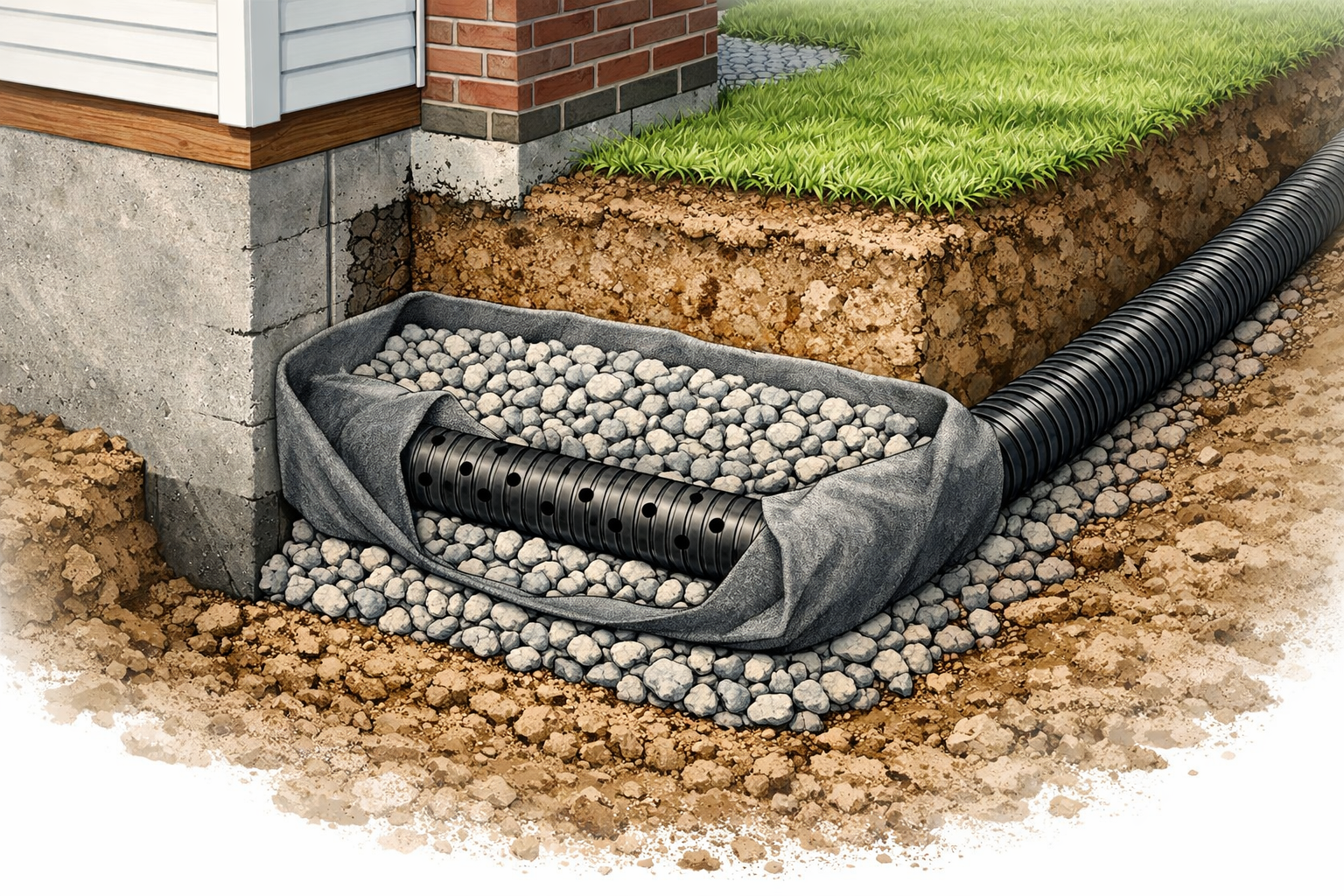
•Waterproof Coatings/Membranes: After excavation, a waterproof coating or membrane can be applied to the exterior of the foundation walls, creating an impermeable barrier against moisture. This is often combined with a French drain system for comprehensive protection.
Effective Interior Strategies: Managing Moisture Within Your Basement
Even with robust exterior measures, some moisture can still find its way in. Interior solutions focus on managing this moisture and preventing its accumulation.
What Role Do Sealants and Coatings Play in Basement Dryness?
Interior sealants and waterproof coatings can be a cost-effective way to manage minor seepage and condensation. These are typically applied directly to basement walls and floors.
•Waterproof Paint: Specialized waterproof paints, often latex or epoxy-based, can be applied to interior masonry walls to block moisture. While effective for minor dampness, they are not a substitute for addressing major leaks .
•Crack Injections: For small cracks in concrete walls or floors, epoxy or polyurethane injections can seal them, preventing water entry. This is a targeted solution for specific problem areas .
How Can Improved Ventilation Reduce Basement Humidity?
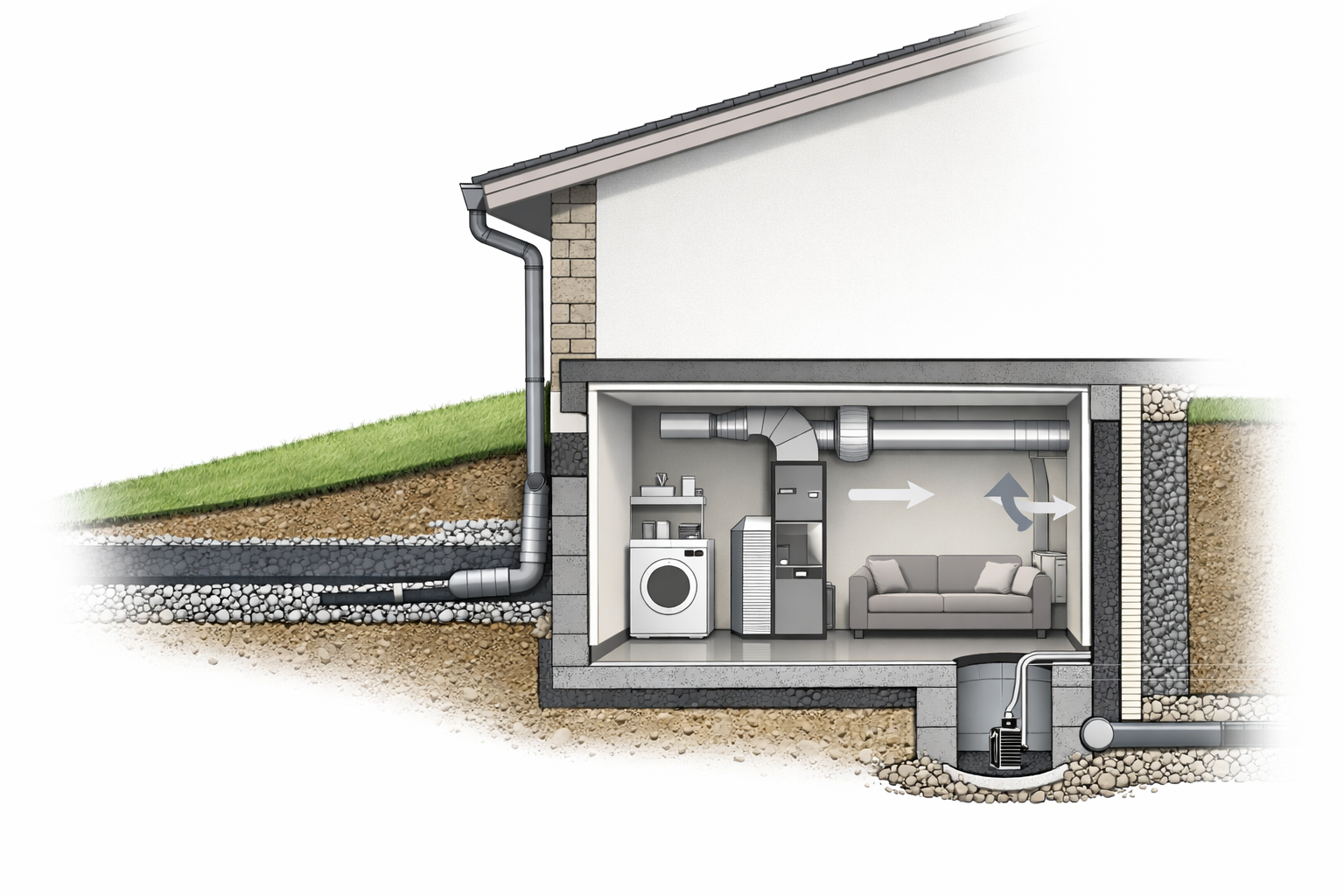
Ventilation is key to preventing condensation and circulating air, which helps dry out dampness. Unlike dehumidifiers that actively remove moisture, ventilation replaces humid air with drier air.
•Natural Ventilation: If your basement has windows, opening them on dry, low-humidity days can significantly improve airflow. However, this can be counterproductive on humid days, as it introduces more moisture.
•Exhaust Fans: Installing an exhaust fan can help remove humid air from the basement, especially in areas prone to moisture, such as laundry rooms or bathrooms. Ensure the fan vents outside, not into other parts of the house or attic.
•HVAC Integration: Extending your home’s HVAC system into the basement can help circulate conditioned air, reducing humidity and maintaining a more consistent temperature .
Are Vapor Barriers and Insulation Essential for Moisture Control?
Yes, vapor barriers and proper insulation are critical for preventing condensation and controlling moisture migration through walls and floors.
•Vapor Barriers: A vapor barrier (typically a thick polyethylene sheeting) installed on basement walls and floors prevents ground moisture from entering the space. This is particularly important in unfinished basements or crawl spaces .
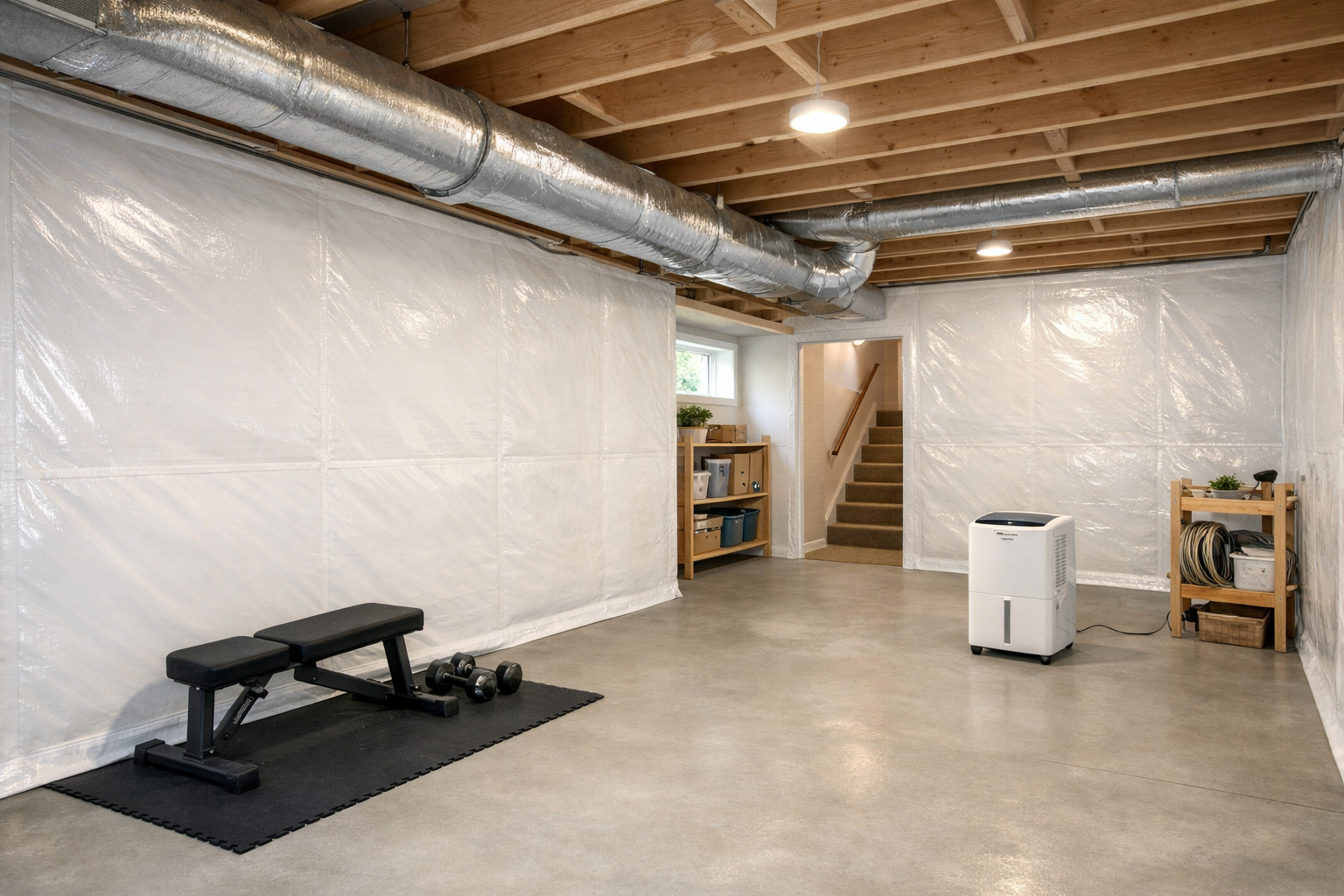
•Insulation: Insulating basement walls and rim joists helps keep surfaces warmer, reducing the likelihood of condensation forming when warm, moist air comes into contact with cold surfaces. Rigid foam insulation is often preferred for its moisture resistance.
Can Desiccants and Absorbents Offer a Simple Solution?
For very minor dampness or small, enclosed spaces, desiccants can absorb excess moisture from the air. These are typically passive solutions.
•Calcium Chloride: Products containing calcium chloride are effective moisture absorbers. They are available in various forms, such as crystals or pouches, and can be placed in damp areas.
•Kitty Litter: Unscented clay kitty litter can also absorb moisture and odors in small, localized damp spots . However, these are temporary fixes and not suitable for widespread or severe humidity issues.
Comparative Analysis: Dehumidifiers vs. Alternative Solutions
While this article focuses on alternatives, it’s helpful to understand how these methods compare to a traditional dehumidifier. Each approach has its advantages and disadvantages.
|
Feature
|
Dehumidifier
|
Exterior Waterproofing (e.g., French Drain)
|
Interior Waterproofing (e.g., Sealants, Vapor Barriers)
|
Ventilation & Grading
|
|
Primary Function
|
Actively removes airborne moisture
|
Prevents water from entering the foundation
|
Blocks moisture entry and manages internal condensation
|
Improves airflow, reduces condensation, directs surface water away
|
|
Cost
|
Moderate initial, ongoing electricity & maintenance
|
High (excavation required)
|
Low to Moderate (DIY options available)
|
Low (grading), Moderate (fans, HVAC extension)
|
|
Effectiveness
|
Excellent for managing airborne humidity
|
Highly effective for preventing water intrusion
|
Good for minor seepage & condensation, not for major leaks
|
Good for air circulation, limited for severe water issues
|
|
Maintenance
|
Regular emptying of water tank, filter cleaning
|
Minimal once installed, occasional drain inspection
|
Reapplication of sealants, monitoring vapor barrier integrity
|
Gutter cleaning, regrading as needed
|
|
Energy Use
|
Significant (continuous operation)
|
None
|
None
|
Low (fans) to None (natural ventilation, grading)
|
|
Permanence
|
Temporary (operates only when on)
|
Long-term, permanent solution
|
Semi-permanent, may require reapplication
|
Permanent (grading), ongoing (ventilation)
|
|
Best For
|
High ambient humidity, quick moisture reduction
|
Persistent water leaks, high water table, foundation issues
|
Minor dampness, condensation, small cracks
|
Preventing surface water issues, improving air quality
|
Conclusion: A Holistic Approach to a Dry Basement
Achieving a dry basement without a dehumidifier often requires a multi-faceted, holistic approach. By addressing exterior drainage, sealing interior surfaces, improving ventilation, and insulating properly, you can create a healthier, more comfortable, and moisture-free basement environment. While dehumidifiers offer a convenient solution for airborne humidity, these alternative methods tackle the root causes of moisture, providing more permanent and energy-efficient results. Investing in these strategies not only protects your home but also enhances your overall living quality.
FAQ
What are the most common signs of a damp basement?
Common signs include a musty odor, visible mold or mildew on walls or stored items, peeling paint, efflorescence (white powdery substance on masonry), condensation on pipes or windows, and water stains on floors or walls. Addressing these signs promptly is crucial for effective moisture control.
Can plants help reduce basement humidity?
While some plants can absorb a small amount of moisture from the air, they are generally not effective enough to significantly reduce humidity in a damp basement. In fact, overwatering plants can even contribute to indoor humidity. It’s better to rely on structural and ventilation solutions.
How often should I check my gutters and downspouts?
It’s recommended to clean and inspect your gutters and downspouts at least twice a year, typically in spring and fall. However, if your property has many trees, more frequent checks might be necessary, especially after heavy storms, to ensure they are free of debris and functioning correctly.
Is it safe to use kitty litter for basement moisture absorption?
Unscented clay kitty litter can absorb localized moisture and odors in small areas, acting as a temporary desiccant. However, it’s not a long-term or comprehensive solution for significant basement humidity. For larger issues, consider more robust methods like improved ventilation or professional waterproofing.
When should I consider professional help for a wet basement?
You should consider professional help if you observe significant water pooling, large cracks in your foundation, persistent musty odors despite your efforts, or if you suspect structural damage. A professional can accurately diagnose the source of the problem and recommend the most effective and lasting solutions, such as advanced dehumidifier solutions or comprehensive waterproofing systems.