
Introduction
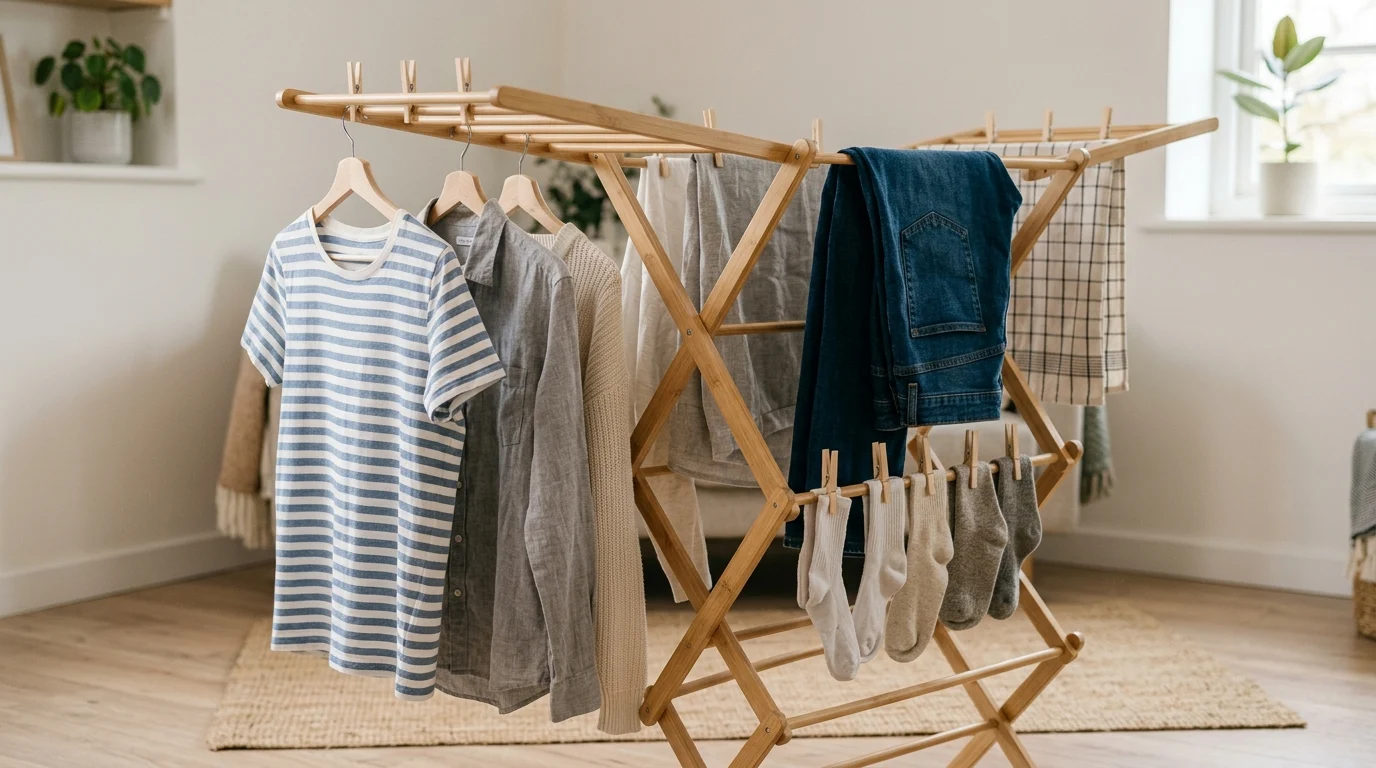
Drying clothes indoors can be slow, dampen the room, and leave fabrics smelling musty if moisture has nowhere to go. A dehumidifier speeds the process by removing water from the air, which helps wet laundry keep releasing moisture instead of stalling in humid conditions. In this article, you’ll learn why that works, how room temperature and airflow affect drying time, and how to position your clothes and machine for faster, more efficient results without relying on outdoor space or a tumble dryer.
Why a dehumidifier dries clothes indoors faster
The fundamental principle behind drying textiles indoors relies on managing the vapor pressure deficit between the moisture trapped in fabric fibers and the surrounding air. When wet garments are exposed to stagnant indoor air, the localized relative humidity (RH) rapidly approaches saturation, halting evaporation. A dehumidifier artificially alters this microclimate by continuously extracting airborne moisture. This maintains a high vapor pressure deficit, forcing water to evaporate from the clothes at a significantly accelerated rate.
How moisture removal, room temperature, and airflow affect drying
Evaporation kinetics dictate that moisture moves from areas of high concentration (wet fabric) to low concentration (dry air). When a standard 5-kilogram load of laundry is hung indoors, it releases approximately 2 to 3 liters of water into the environment. Without mechanical intervention, this spikes the room's RH from a comfortable 45% to over 80%, severely slowing the drying process.
A dehumidifier actively strips this moisture, pulling ambient RH back down to a target of 40% to 50%. Furthermore, the continuous circulation of air generated by the unit's fan disrupts the boundary layer of humid air that forms immediately adjacent to wet garments. By replacing this boundary layer with drier air, the rate of moisture transfer remains optimized. Room temperature also plays a critical role: warmer air holds exponentially more moisture, which is why dehumidifiers that exhaust slightly warmed air further boost drying efficiency.
When indoor drying with a dehumidifier works best
Relying on a dehumidifier for laundry is most advantageous in environments where outdoor drying is structurally impossible or climatically prohibitive. During winter months or in temperate, high-rainfall zones, ambient outdoor humidity and low temperatures prevent effective evaporation.
Indoors, this method excels in smaller, sealable spaces such as bathrooms or dedicated utility rooms. By confining the operation to a space of 5 to 10 square meters, the dehumidifier does not waste energy processing moisture from the rest of the dwelling. This targeted approach ensures the appliance focuses entirely on the localized humidity spike caused by the wet textiles, typically reducing drying times from 24–48 hours down to a manageable 4–8 hours.
Which dehumidifier features matter for drying clothes
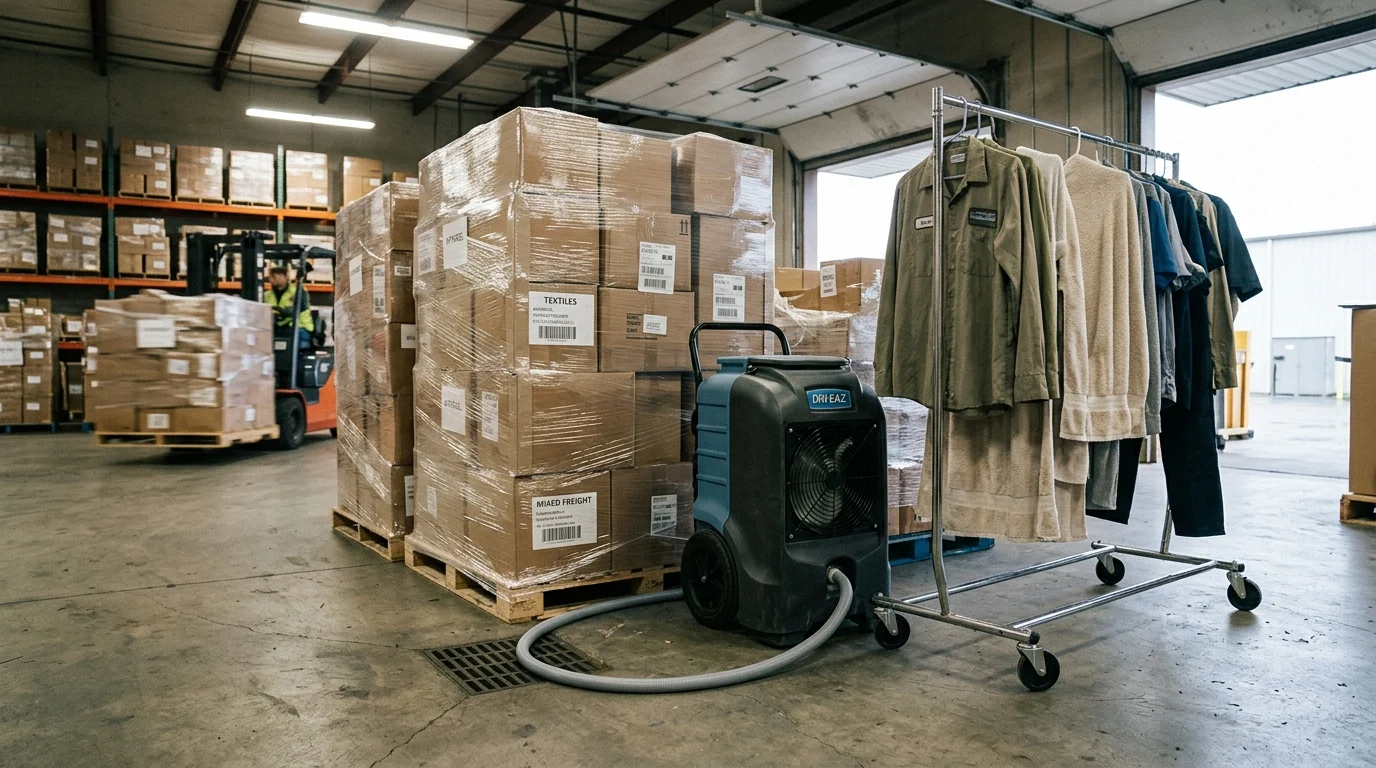
Not all dehumidification systems are engineered to handle the acute moisture spikes generated by freshly washed textiles. Selecting equipment capable of rapid moisture extraction requires analyzing specific hardware capabilities, ranging from daily extraction volumes to specialized operational modes.
How capacity, laundry mode, tank size, and drainage affect performance
The primary metric of a dehumidifier is its extraction capacity, typically measured in liters per 24 hours. For effective laundry drying, a minimum capacity of 12L/day is recommended, though 20L to 25L/day units perform significantly better for family-sized loads. Many modern units feature a dedicated 'Laundry Mode' or 'Continuous Mode.' This setting bypasses the standard humidistat, forcing the compressor and fan to operate at maximum output regardless of ambient RH to maximize the vapor pressure deficit.
Water management is equally critical. A unit with a small internal reservoir will halt operation mid-cycle when full, sabotaging the drying process. A tank capacity of at least 3 to 5 liters is required for unattended laundry drying. Alternatively, utilizing a continuous drainage hose routed to a floor drain or sink eliminates the tank bottleneck entirely, allowing the unit to run uninterrupted until the garments are fully dry.
Compressor vs desiccant dehumidifiers for laundry drying
The choice of internal technology—compressor (refrigerant) versus desiccant—drastically alters performance based on ambient temperature. Compressor units cool metal coils to condense moisture, a process that loses efficiency in colder environments. Desiccant units absorb moisture using a chemical rotor and then use an internal heater to extract the water into the tank.
| Technology | Optimal Temp Range | Power Consumption | Ambient Air Output Effect |
|---|---|---|---|
| Compressor | 15°C to 30°C | 200W – 400W | Neutral to slightly warm |
| Desiccant | 1°C to 15°C | 400W – 700W | Heats room by 3°C – 5°C |
For unheated utility rooms or garages where temperatures drop below 15°C, desiccant dehumidifiers are vastly superior. The 3°C to 5°C thermal exhaust they produce acts as a localized heater, accelerating evaporation. Conversely, compressor units are more energy-efficient and highly effective in standard, climate-controlled residential spaces.
How room size, laundry load, and fabric type influence results
The interaction between the machine, the spatial volume, and the textiles dictates the overall efficiency. In a 20-square-meter room, a 12L/day unit will struggle to lower the RH quickly enough to prevent prolonged dampness. In a 5-square-meter bathroom, the same unit will aggressively strip moisture, drying clothes in hours.
Fabric type also influences extraction rates. Synthetic fibers (polyester, nylon) possess low moisture regain rates and shed water rapidly, often drying within 2 to 3 hours under a dehumidifier. Heavy cellulosic fibers like cotton denim or bath towels retain water deeply within their molecular structure, requiring sustained low-humidity exposure (often 6 to 8 hours) to fully dry. Overloading a drying rack with heavy fabrics can overwhelm undersized dehumidifiers, leading to uneven drying.
How to set up clothes and the room for faster
Hardware capability must be paired with precise environmental control. Haphazardly draping wet garments in an open room diminishes the dehumidifier's efficiency, dispersing its extraction power across too large a volume. Strategic spatial setup is required to engineer an effective drying microclimate.
Step-by-step indoor drying process with a dehumidifier
The process begins before the clothes leave the washing machine. Utilizing a high-speed spin cycle (1200 to 1400 RPM) mechanically extracts up to 20% more water than lower speeds, drastically reducing the moisture burden on the dehumidifier.
Once transferred to a drying rack, the room must be environmentally sealed. All doors, windows, and passive ventilation vents must be closed to prevent the ingress of external humid air. The dehumidifier should be positioned centrally, approximately 30 to 50 centimeters away from the garments. This proximity allows the dry exhaust air to directly penetrate the hanging clothes without posing a physical obstruction or fire hazard. Finally, the unit should be set to its maximum extraction setting, and the oscillating louver (if equipped) should be activated to sweep dry air across the entire rack.
How rack spacing, spin speed, and room setup reduce drying time
Airflow occlusion is the primary cause of extended drying times. Garments must not overlap; maintaining a minimum spacing of 5 to 10 centimeters between items is vital for convective air currents to strip moisture from the fabric surfaces.
Strategic placement on the rack also matters. Heavy items, such as jeans and hoodies, should be hung on the outer perimeters where airflow from the dehumidifier is most direct and turbulent. Lighter, synthetic items can occupy the inner rungs. If the room features underfloor heating or a radiator, positioning the rack near the heat source while the dehumidifier operates on the opposite side creates a highly efficient thermal-convective loop, further accelerating the evaporation rate.
Operational trade-offs, risks, and running costs
While utilizing a dehumidifier for indoor laundry drying circumvents the mechanical wear of tumble drying and the unpredictability of outdoor weather, it introduces specific operational trade-offs. Homeowners must evaluate power consumption, acoustic output, and potential microbiological risks to optimize the process.
How energy use, noise, drainage, and maintenance affect ownership
Energy expenditure is a primary consideration. While more efficient than traditional vented tumble dryers, dehumidifiers still represent a continuous electrical load over several hours. Compressor units generally draw between 200W and 400W, whereas desiccant models, utilizing internal thermal elements, can draw up to 700W.
| Drying Method | Avg. Power Draw | Estimated Cycle Time | Total Energy per Cycle |
|---|---|---|---|
| Tumble Dryer (Vented) | 2500W | 1.5 Hours | 3.75 kWh |
| Heat Pump Dryer | 900W | 2.5 Hours | 2.25 kWh |
| Desiccant Dehumidifier | 600W | 4.0 Hours | 2.40 kWh |
| Compressor Dehumidifier | 300W | 6.0 Hours | 1.80 kWh |
Acoustic impact is another factor: units operating on high fan speeds (Laundry Mode) typically generate 45 to 55 decibels (dB) of noise, which may be disruptive in adjacent living spaces. Furthermore, regular maintenance—specifically the weekly vacuuming of the air intake filter—is mandatory. A lint-clogged filter restricts airflow, forcing the compressor to work harder, thereby increasing energy use and risking thermal overload.
Risks such as condensation, mold, odor, and under-drying
The most significant risk in indoor drying is under-sizing the dehumidifier relative to the moisture load. If textiles remain damp for more than 12 hours, the environment becomes highly conducive to microbial proliferation. Bacteria such as Moraxella osloensis metabolize sebum trapped in the wet fabric, releasing volatile organic compounds that manifest as a distinct musty odor.
Additionally, if the room is not adequately sealed, the evaporated moisture can migrate to colder surfaces in adjacent rooms, causing secondary condensation. This localized condensation serves as a vector for black mold (Stachybotrys chartarum) on window sills and drywall. Ensuring the dehumidifier has sufficient capacity to drop the room's RH below 55% within the first two hours of operation is critical to mitigating both odor and structural dampness.
How to decide if this method is right for you
Implementing a dehumidifier-based drying strategy requires assessing the specific constraints of your home. It is not a universal replacement for high-throughput tumble dryers, but rather a specialized solution for distinct architectural and textile limitations.
Use cases where a dehumidifier is worth using for laundry
This method provides exceptional utility in modern, airtight apartment complexes that lack the external venting infrastructure required for traditional dryers. It is equally valuable for preserving high-value or delicate textiles. Woolens, silks, and elastane-blended athletic wear suffer irreversible structural degradation and shrinkage when subjected to the extreme thermal and mechanical stress of a tumble dryer. By utilizing low-temperature, high-airflow dehumidification, these polymers and natural fibers retain their structural integrity while drying rapidly.
Additionally, for properties structurally prone to high baseline humidity or rising damp, utilizing a dehumidifier for laundry serves a dual purpose. It dries the textiles while simultaneously protecting the building envelope from moisture-induced degradation, effectively spreading the operational cost across both laundry and property maintenance.
How to choose the right unit and placement
Choosing a unit should be dictated by your standard laundry volume and environmental temperature. A household processing daily 8-kilogram loads requires a 20L to 25L/day compressor unit, provided the drying room remains above 15°C. Conversely, single occupants or those utilizing uninsulated spaces (like basements or garages) will achieve optimal results with a 7L to 10L/day desiccant model.
Optimal placement remains the final variable. Dedicating a compact, sealable room—preferably one with hard, non-porous surfaces like a tiled bathroom—maximizes the efficiency of the vapor pressure deficit. By matching the hardware specifications to the room size and adhering to strict airflow management, a dehumidifier transitions from a general dampness-mitigating appliance into a highly effective, fabric-safe drying system.
Key Takeaways
- The most important conclusions and rationale for dry clothes indoors
- Specs, compliance, and risk checks worth validating before you commit
- Practical next steps and caveats readers can apply immediately
Frequently Asked Questions
What humidity level helps clothes dry fastest indoors?
Aim for 40% to 50% relative humidity. This keeps the air dry enough to pull moisture from fabrics without making the room uncomfortably dry.
Where should I place a dehumidifier to dry clothes indoors quickly?
Put it in a small, closed room near the drying rack, with space around the unit for airflow. Bathrooms or utility rooms usually work best.
How long does it take to dry clothes indoors with a dehumidifier?
In a sealed small room, most loads dry in about 4 to 8 hours. Thicker items like jeans or towels may take longer.
What size dehumidifier is best for drying laundry indoors?
Choose at least 12L/day extraction, but 20L to 25L/day is better for family loads. A 3 to 5 liter tank or continuous drainage is ideal.
Should I use a compressor or desiccant dehumidifier for laundry drying?
Use a compressor model in warmer rooms around 15°C to 30°C. Choose a desiccant unit for colder spaces below 15°C, like garages or unheated utility rooms.