
Understanding Basement Moisture Issues and Why a High-Capacity Dehumidifier Matters
Basements are inherently prone to excess humidity due to factors like poor ventilation, groundwater seepage, and the “stack effect” caused by temperature differences. High moisture levels often lead to mold growth, musty odors, and structural damage to your home’s foundation
Humidity Source Control: Using a basement dehumidifier is the most effective way to regulate indoor relative humidity (RH).
Protection Benefits: A professional moisture control solution prevents long-term damage to drywall and support beams.
Air Quality Improvement: Maintaining a balanced environment (ideally between 30% and 50% RH) significantly reduces allergens and improves overall indoor air quality.
Key Features to Look for in the Best Basement Dehumidifier
When selecting the best dehumidifier for basement use, it is crucial to focus on functional specifications rather than just aesthetics. For damp below-grade spaces, the following features are essential:
Daily Extraction Capacity: Large or extremely damp basements require high-capacity dehumidifiers capable of removing 50 to 100+ pints of moisture daily.
Automatic Humidity Control: Look for models with built-in digital humidistats that allow the unit to cycle on and off based on real-time sensors.
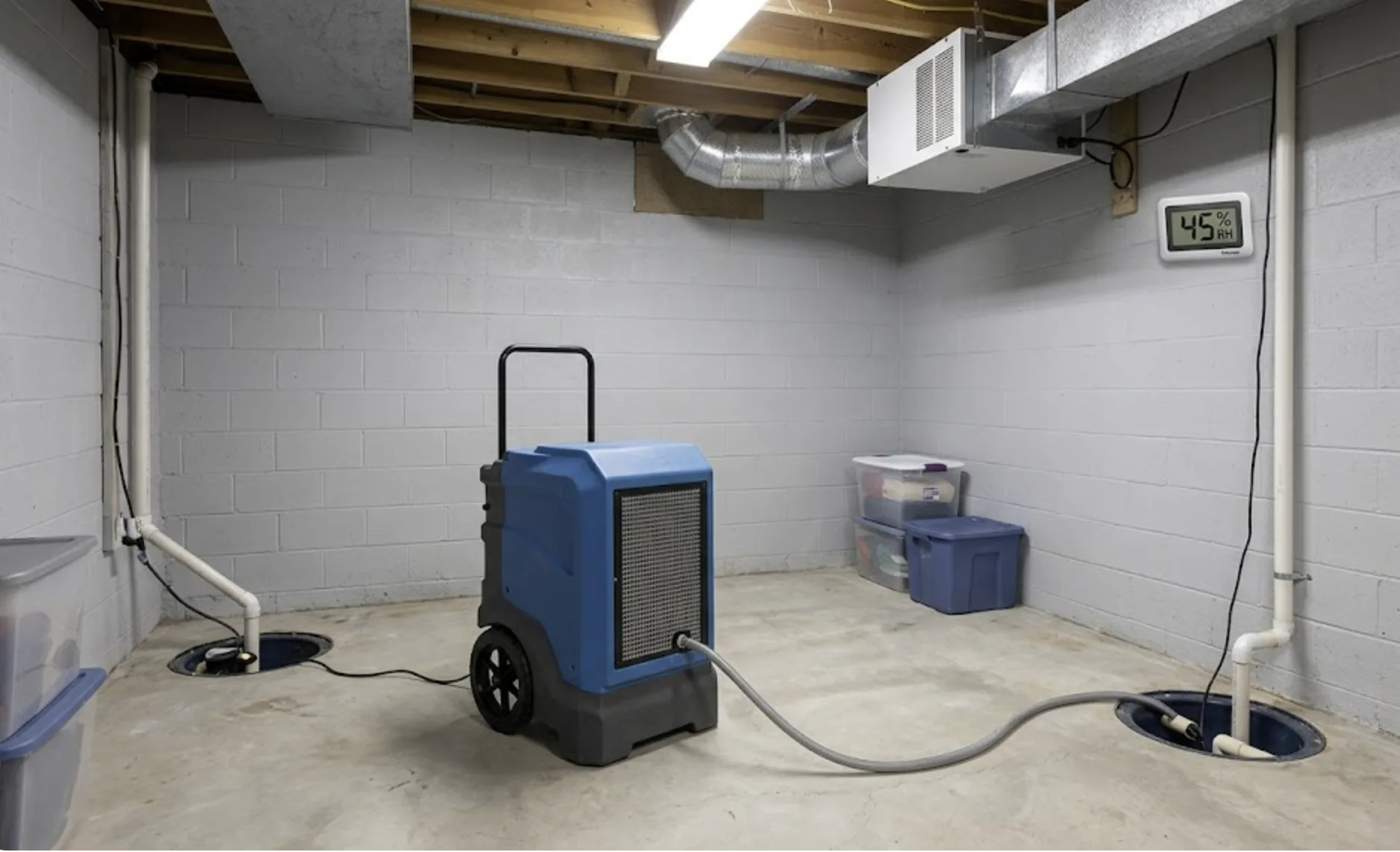
Continuous Drainage Options: For convenience, choose a unit with a gravity drain hose or a built-in condensate pump to eliminate the need for manual emptying.
Industrial Durability: Basement environments can be harsh; prioritize units with corrosion-resistant coils and durable housing designed for long-term operation.
Choosing the Right Size and Capacity for Your Space
Selecting the correct unit prevents energy waste and ensures consistent performance. Use these guidelines to match your space with a high-performance basement moisture remover:
Mildly Damp (500-1,500 sq. ft.): A medium-capacity unit (30-50 pints) is typically sufficient for spaces that feel damp only in humid weather.
Very Damp or Large Areas (1,500-3,000+ sq. ft.): Heavy-duty dehumidifiers (70+ pints or commercial grade) are necessary for persistent moisture issues.
The “Oversized” Advantage: It is often better to choose a unit with slightly more capacity than needed. An oversized unit will reach the target humidity faster and run less frequently, extending its lifespan.
Additional Considerations for Optimal Humidity Control
Beyond raw capacity, these advanced features enhance the usability of your basement humidity control system
Low-Temperature Operation: Since basements are cooler, ensure your unit has an auto-defrost feature to prevent ice buildup on the coils.
Energy Efficiency: Look for Energy Star-rated models to minimize electricity costs during continuous 24/7 operation.
Smart Controls: Wi-Fi connectivity and auto-restart features (in case of power outages) are highly beneficial for unmonitored basement spaces.
Noise Management: While basements are less noise-sensitive, choosing a unit with high-efficiency fans can prevent vibrations from traveling through the floor to the living areas above.
Tips for Maintaining Your Basement Dehumidifier
Routine maintenance ensures your moisture control equipment remains efficient and prevents premature failure
Air Filter Care: Clean the washable air filter every 2-4 weeks to maintain optimal airflow and prevent dust buildup on internal components.
Drainage Inspection: Periodically check the drain hose for blockages or algae growth to prevent leaks.
Strategic Placement: Place the unit in a central location with at least 12-18 inches of clearance around all sides to ensure proper air circulation.
Seasonal Checks: Verify that the sensor is reading accurately and that the auto-defrost cycle is functioning as temperatures drop.
FAQ
What size dehumidifier do I need for a typical basement?
The required size depends on square footage and moisture levels. Generally, a 50-pint to 70-pint dehumidifier (new DOE standards) is recommended for most residential basements to ensure it can handle seasonal humidity spikes effectively.
Can a dehumidifier eliminate existing basement mold?
A dehumidifier is a preventative tool. It stops new mold from growing by removing the moisture mold needs to survive. However, existing mold is a biological hazard and must be professionally remediated before the dehumidifier can maintain a clean environment.
How often should I run my basement dehumidifier?
For best results, use the “Auto” mode with a humidistat. This allows the unit to run only when humidity exceeds your target (e.g., 45%), providing stable protection while optimizing energy consumption.
Is continuous drainage necessary for basement moisture control?
Yes, it is highly recommended. Basements are prone to high moisture volumes; a continuous drainage system or a pump model ensures the unit doesn’t shut off when a tank is full, providing uninterrupted protection.
Are energy-efficient dehumidifiers worth the investment?
Absolutely. High-performance, energy-efficient models can save significant amounts in annual utility bills, often paying for the price difference over a few seasons compared to lower-quality, high-consumption units.
About CetusDry Dehumidifiers
CetusDry is a global leader in advanced humidity control solutions, specializing in high-performance residential and industrial dehumidification systems. Our product range spans from specialized basement dehumidifiers to heavy-duty commercial moisture control equipment for the manufacturing, pharmaceutical, and logistics sectors. With a focus on R&D and cutting-edge energy-efficient technology, CetusDry ensures long-term structural protection and superior air quality in the most challenging environments.