
Introduction
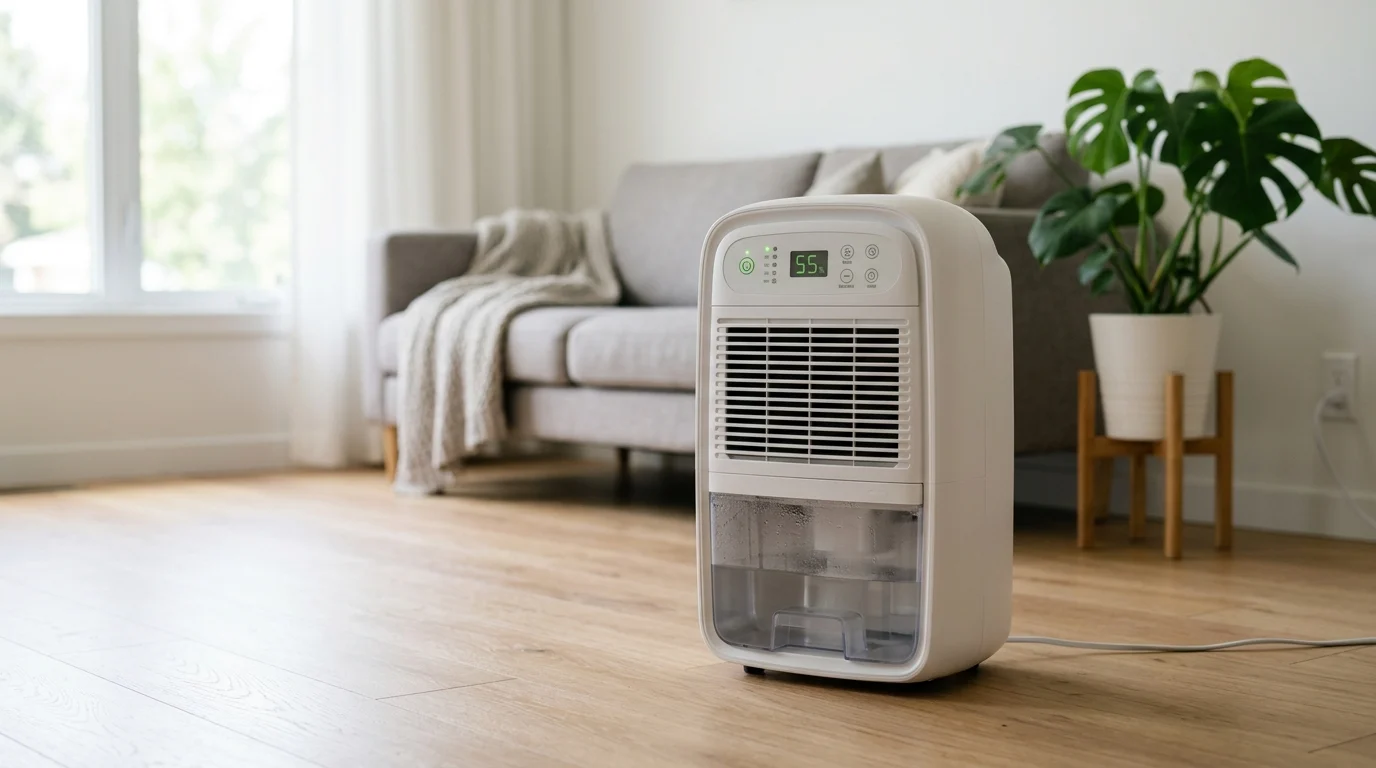
Closet odors rarely start with fabrics alone; they usually signal excess humidity, stagnant air, and the early growth of mold or mildew in a confined space. Choosing the right dehumidifier can stop that cycle before it damages clothing, shoes, leather, and shelving materials. This article explains how moisture builds up in closets, why odor problems persist, and which dehumidifier features matter most for small enclosed areas in 2026. You’ll learn how to compare capacity, drainage, noise, placement, and energy use so you can match the right solution to your closet size, climate, and storage needs.
Why Dehumidifier Selection Matters for Closet Odor Control
Maintaining an optimal microclimate within confined storage spaces is critical for preserving textiles, leather goods, and footwear. A specialized Dehumidifier serves as the primary defense against the micro-environmental degradation that manifests as musty odors, fabric deterioration, and permanent mold staining. Without active moisture management, high-value garments are frequently subjected to irreversible structural damage and pervasive odors.
How Musty Closet Odors Develop
Musty odors in closets are the direct result of microbial volatile organic compounds (mVOCs) released by actively growing mold and mildew colonies. These fungi require specific environmental conditions to proliferate, typically initiating growth when the relative humidity (RH) consistently exceeds 60% at standard room temperatures between 68°F and 75°F. Because closets often lack dedicated HVAC supply and return vents, air stagnates. This allows moisture from damp clothing, adjacent en-suite bathrooms, or exterior wall condensation to accumulate rapidly. If stagnant air remains trapped at 65% RH or higher for merely 48 to 72 hours, the exponential growth of spores accelerates, embedding them deep within natural fibers, porous leather, and drywall paper.
What Buying Factors Matter Most
Selecting appropriate moisture control equipment requires evaluating specific operational metrics rather than relying on generic consumer ratings. The most critical factor is moisture removal capacity, typically measured in pints per day (PPD) or milliliters per day, scaled to the exact cubic footage of the enclosure. A standard reach-in closet measuring 150 cubic feet generally requires a unit capable of extracting 250 to 500 milliliters daily. Conversely, expansive walk-in wardrobes exceeding 800 cubic feet demand robust systems with a minimum extraction rate of 10 to 15 PPD and an airflow rating of at least 50 cubic feet per minute (CFM) to ensure adequate air turnover. Additionally, spatial constraints necessitate a compact footprint, while fire safety compliance remains non-negotiable for devices operating continuously in enclosed, unattended areas containing flammable textiles.
Which Dehumidifier Technologies Work Best for Closets
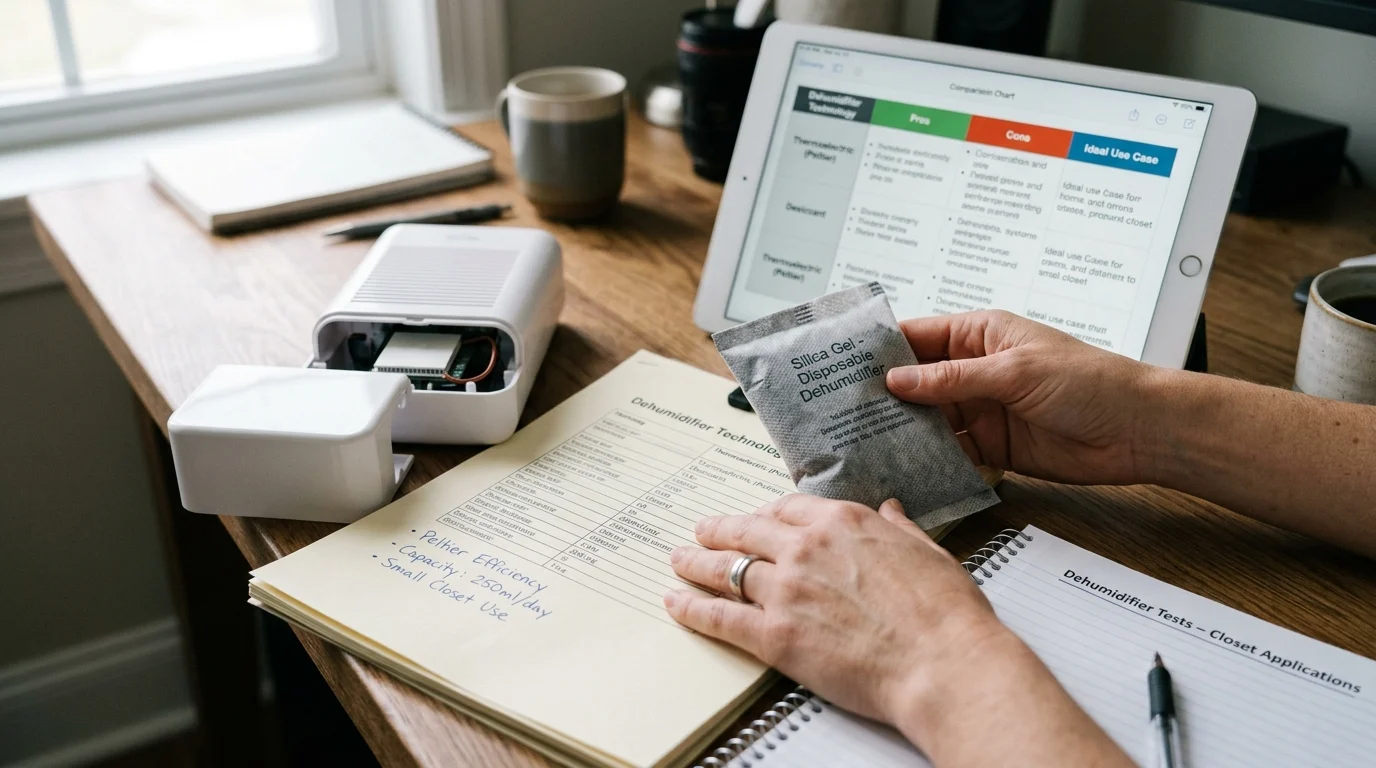
The efficacy of moisture extraction in storage environments depends entirely on matching the underlying technology to the specific thermal and spatial constraints of the closet. Manufacturers engineer various products utilizing distinct physical principles to condense or adsorb airborne water vapor, each offering unique performance profiles tailored to different levels of atmospheric saturation.
How to Match Capacity, Noise, and Drainage to Closet Needs
Integrating moisture removal hardware into quiet residential zones mandates strict acoustic and logistical evaluations. Compressor-based models often generate acoustic outputs between 45 and 55 decibels (dB), which can cause structural vibrations through closet flooring and adjacent bedroom walls. In contrast, solid-state alternatives typically operate well below the 30 dB threshold. Drainage logistics also dictate operational viability. Units relying on manual water collection require reservoir capacities—typically ranging from 500 milliliters to 2 liters—that align with the user’s maintenance schedule to prevent frequent shutoffs. For walk-in closets experiencing severe humidity loads exceeding 70% RH, continuous gravity drainage via a 1/4-inch polyurethane hose prevents the system from automatically shutting off when the internal bucket reaches maximum capacity.
When to Choose Desiccant, Compressor, Thermoelectric, or Passive Options
Evaluating the four primary moisture extraction technologies reveals distinct operational advantages and thermal limitations. Passive absorbers utilize calcium chloride crystals and require zero electricity, making them suitable for micro-enclosures under 50 cubic feet, but they mandate frequent chemical replacement. Thermoelectric (Peltier) units excel in small spaces, operating silently with minimal power consumption, though their extraction rate plummets in environments below 65°F. Compressor units provide the highest PPD yield for large walk-in wardrobes but introduce thermal output and mechanical noise. Desiccant rotors operate effectively at lower temperatures (down to 34°F) without refrigerants, making them ideal for unheated exterior-wall closets.
| Technology Type | Optimal Space Volume | Extraction Capacity | Acoustic Output | Ideal Operating Temp |
|---|---|---|---|---|
| Passive (Calcium Chloride) | < 50 cu. ft. | < 50 ml/day | 0 dB | Any |
| Thermoelectric (Peltier) | 50 – 200 cu. ft. | 250 – 500 ml/day | < 30 dB | > 65°F |
| Desiccant Rotor | 200 – 600 cu. ft. | 10 – 20 PPD | 35 – 45 dB | 34°F – 80°F |
| Compressor | > 600 cu. ft. | 20 – 50 PPD | 45 – 55 dB | > 60°F |
How to Choose and Use the Best Dehumidifier Solution
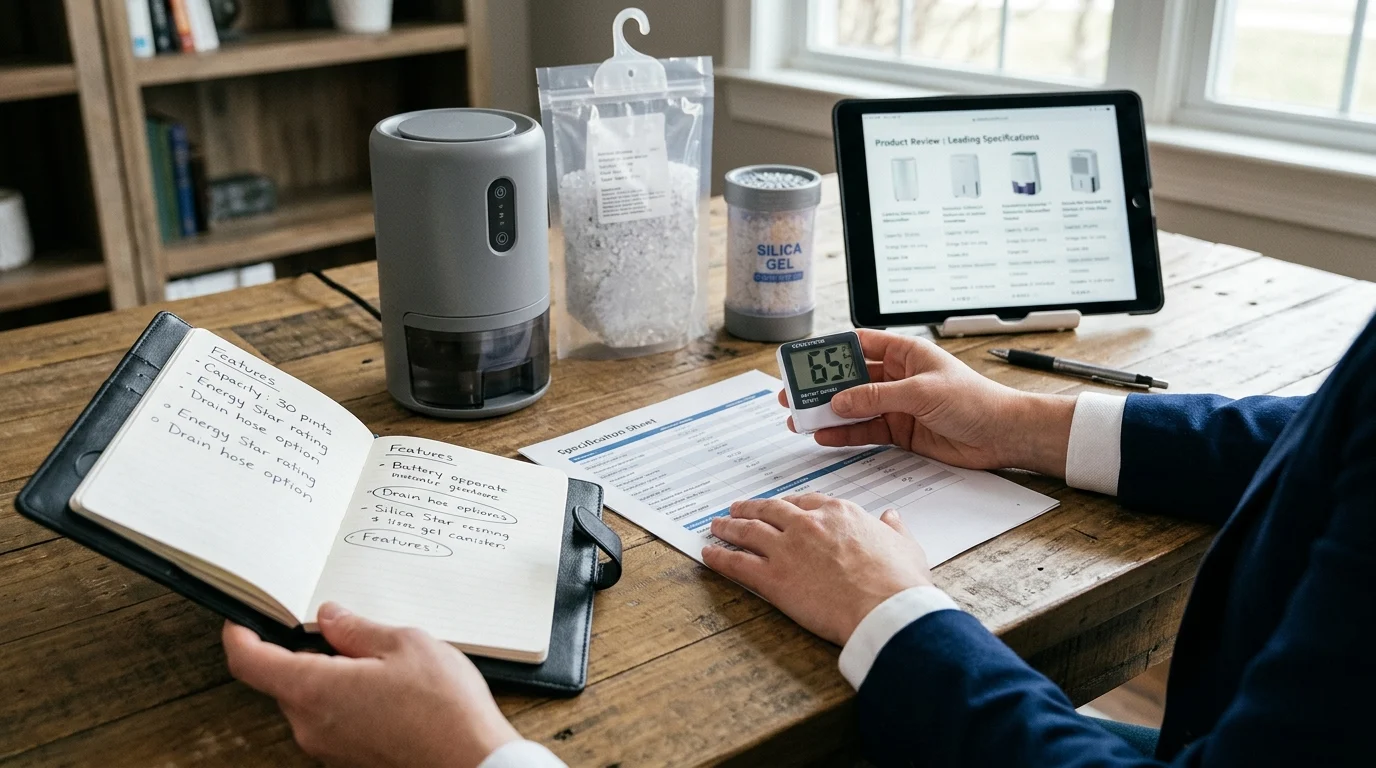
Acquiring high-performance moisture mitigation hardware is only the first phase of achieving absolute odor control. The long-term success and lifecycle of any strategic installation rely heavily on optimizing physical placement, establishing rigorous maintenance protocols, and ensuring strict adherence to electrical safety standards to protect both the equipment and the surrounding facility.
Best Practices for Placement, Monitoring, and Maintenance
Proper spatial configuration dictates that active moisture extraction units require unimpeded airflow to function at their rated capacity. Technicians recommend maintaining a minimum clearance radius of 6 to 12 inches around the air intake and exhaust louvers to prevent compressor strain or Peltier module overheating. Devices should be positioned at the lowest possible elevation within the closet, as cool, damp air naturally settles near the floor. To verify operational efficacy, users should install an independent digital hygrometer at the highest shelving tier, aiming to maintain a stabilized microclimate between 45% and 50% RH. Furthermore, mechanical maintenance—such as vacuuming pre-filters every 30 days and sanitizing collection reservoirs with a 5% white vinegar solution—prevents the internal hardware from becoming a secondary source of bacterial odors.
How to Balance Performance, Compliance, and Cost
Procurement decisions must synthesize upfront capital expenditure with long-term energy consumption and safety compliance. Balancing these factors ensures that the chosen dehumidifier provides cost-effective, reliable moisture control without compromising the safety of enclosed storage spaces.
Key Takeaways
- The most important conclusions and rationale for Dehumidifier
- Specs, compliance, and risk checks worth validating before you commit
- Practical next steps and caveats readers can apply immediately
Frequently Asked Questions
What humidity level should a closet stay at to prevent musty odors?
Keep closet humidity between 45% and 55% RH. Mold and mildew often start growing once RH stays above 60% for a couple of days.
Which dehumidifier type works best for a small reach-in closet?
A thermoelectric unit usually fits best for small reach-in closets around 150 cubic feet, especially in normal room temperatures above 65°F.
When should I choose a desiccant dehumidifier for a closet?
Choose a desiccant model if the closet is cool, unheated, or on an exterior wall. It performs better than thermoelectric units in low temperatures.
How much moisture removal capacity does a walk-in closet need?
A walk-in closet over 800 cubic feet typically needs at least 10 to 15 PPD and about 50 CFM for effective air turnover and odor control.
Is continuous drainage necessary for closet dehumidifiers?
Use continuous drainage when closet humidity is high or you cannot empty the tank often. A gravity drain hose helps avoid shutdowns from a full reservoir.