
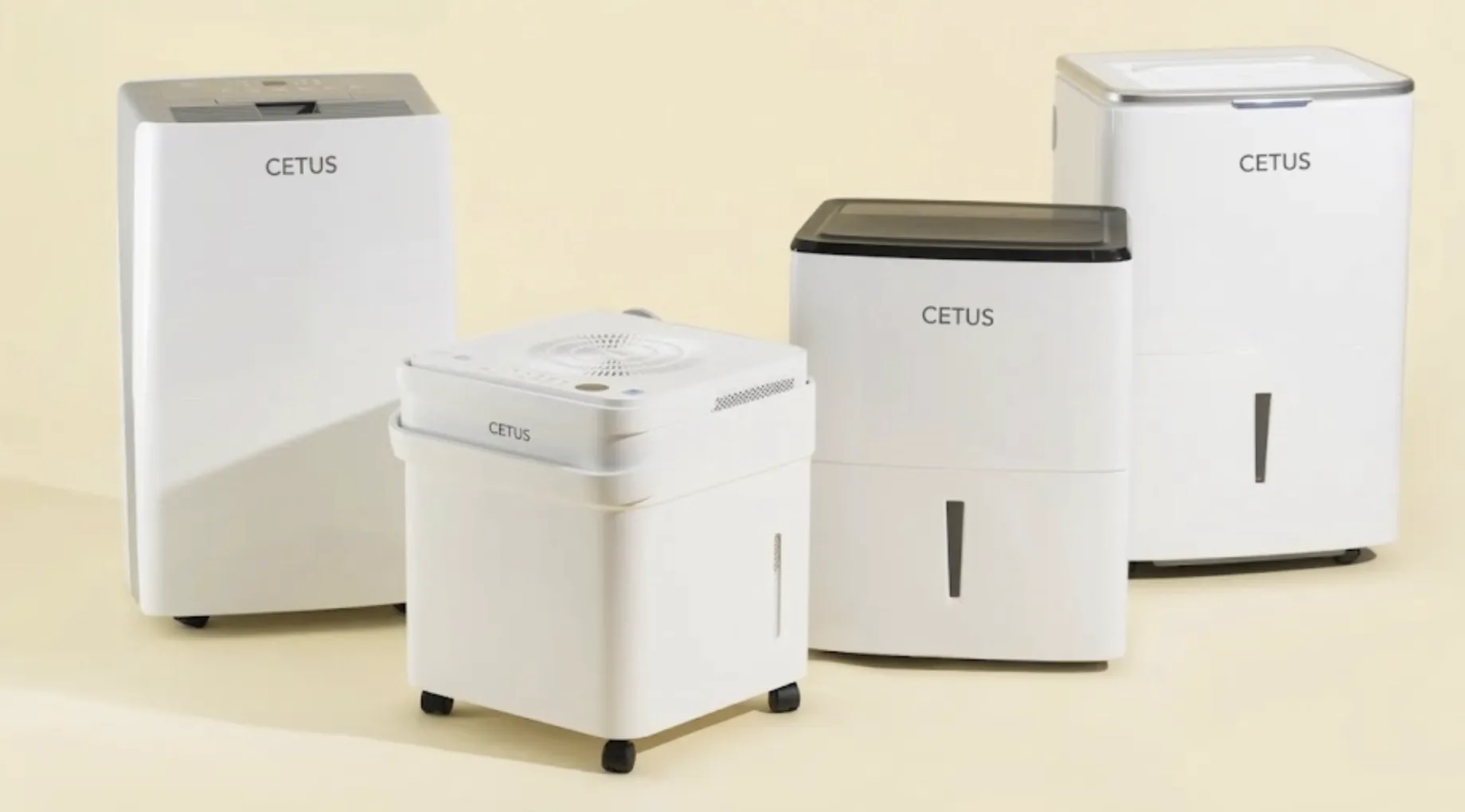
Maintaining optimal humidity in your home or office is essential for comfort, health, and the longevity of your belongings. A dehumidifier is an effective solution for controlling excess moisture. This guide will help you understand the different types of dehumidifiers—compressor, desiccant, and thermoelectric—their advantages, and ideal use cases. We’ll also highlight some top Cetus models to help you make an informed choice.
What Are the Different Types of Dehumidifiers?
Compressor Dehumidifiers
How They Work: Compressor dehumidifiers use a refrigeration cycle to remove moisture from the air. Humid air is drawn into the unit, passes over cold coils, where the moisture condenses into water droplets, and collects in a tank.
Advantages: These dehumidifiers are highly efficient, especially in warm and humid environments. They are well-suited for large spaces and continuous operation.
Ideal Use Cases: Basements, large living areas, and high-humidity regions.
Desiccant Dehumidifiers
How They Work: Desiccant dehumidifiers use an absorbent material to capture moisture from the air. The material is then heated to release the water, which is collected in a tank.
Advantages: Effective even at lower temperatures and quieter than compressor dehumidifiers. They perform efficiently in unheated spaces.
Ideal Use Cases: Garages, cold storage rooms, and winter use.
Thermoelectric (Peltier) Dehumidifiers
How They Work: These dehumidifiers use the Peltier effect to create a temperature difference, condensing moisture from the air onto a cold plate.
Advantages: Compact, lightweight, and extremely quiet, making them ideal for small spaces or noise-sensitive areas.
Ideal Use Cases: Closets, cabinets, small bedrooms, and bathrooms.
How to Choose the Right Dehumidifier
When selecting a dehumidifier, consider the following factors:
Home Size: Choose a unit with capacity appropriate for your room size (measured in liters per day).
Humidity Levels: Higher humidity requires a more powerful unit.
Temperature: Desiccant dehumidifiers are more effective in cold environments.
Portability: If you need to move the unit between rooms, opt for models with wheels and handles.
Benefits of Using a Dehumidifier
Health Improvement: Reduces allergens such as mold, dust mites, and fungi, improving air quality.
Protects Property: Prevents damage to furniture, electronics, and structural components caused by excessive moisture.
Enhanced Comfort: Eliminates musty odors and lowers humidity for a more comfortable living environment.
Energy Efficiency: Modern dehumidifiers, such as high-capacity 16 L/day compressor units with MAIDI compressors, are designed to be energy-efficient and reduce electricity costs.
Conclusion
Understanding the different types of dehumidifiers and their specific applications helps you make an informed decision. Whether you need a powerful compressor dehumidifier for large spaces or a versatile desiccant dehumidifier for colder areas, Cetus offers solutions to meet a wide range of needs. Explore their dehumidifier lineup to find the ideal model for your home or office and maintain optimal humidity levels.
For more information and to purchase the best dehumidifier, visit the Cetus official website dehumidifier series.