
Indoor humidity control affects comfort, mold prevention, and electricity costs. When comparing a dehumidifier vs air conditioner, a dehumidifier usually uses less electricity for moisture control alone, while an air conditioner consumes more power because it cools and dehumidifies simultaneously. Understanding operating costs, room conditions, and appliance efficiency helps homeowners choose the right solution for energy-efficient humidity management.
Understanding Dehumidifier vs Air Conditioner Performance
A dehumidifier removes excess moisture from indoor air without significantly lowering room temperature. An air conditioner cools indoor air while also extracting humidity during the refrigeration cycle. Both systems improve indoor comfort, but they operate with different priorities and energy requirements.
Most residential dehumidifiers consume between 300 and 700 watts depending on capacity and compressor size. Portable air conditioners often consume between 900 and 2,000 watts during active cooling. According to the U.S. Department of Energy, cooling systems account for a major share of residential summer electricity use.
Dehumidifier Uses Electricity
A dehumidifier uses a fan, compressor, and condensation coil to collect moisture from humid air. Compressor-based models operate similarly to refrigeration systems but on a smaller scale. Thermoelectric units use semiconductor technology instead of large compressors, making them quieter and more compact.
Homeowners searching for low-power humidity control often compare:
- Compressor dehumidifiers
- Thermoelectric dehumidifiers
- Industrial moisture control systems
- Mini dehumidifiers for bedrooms
- Quiet home dehumidifiers
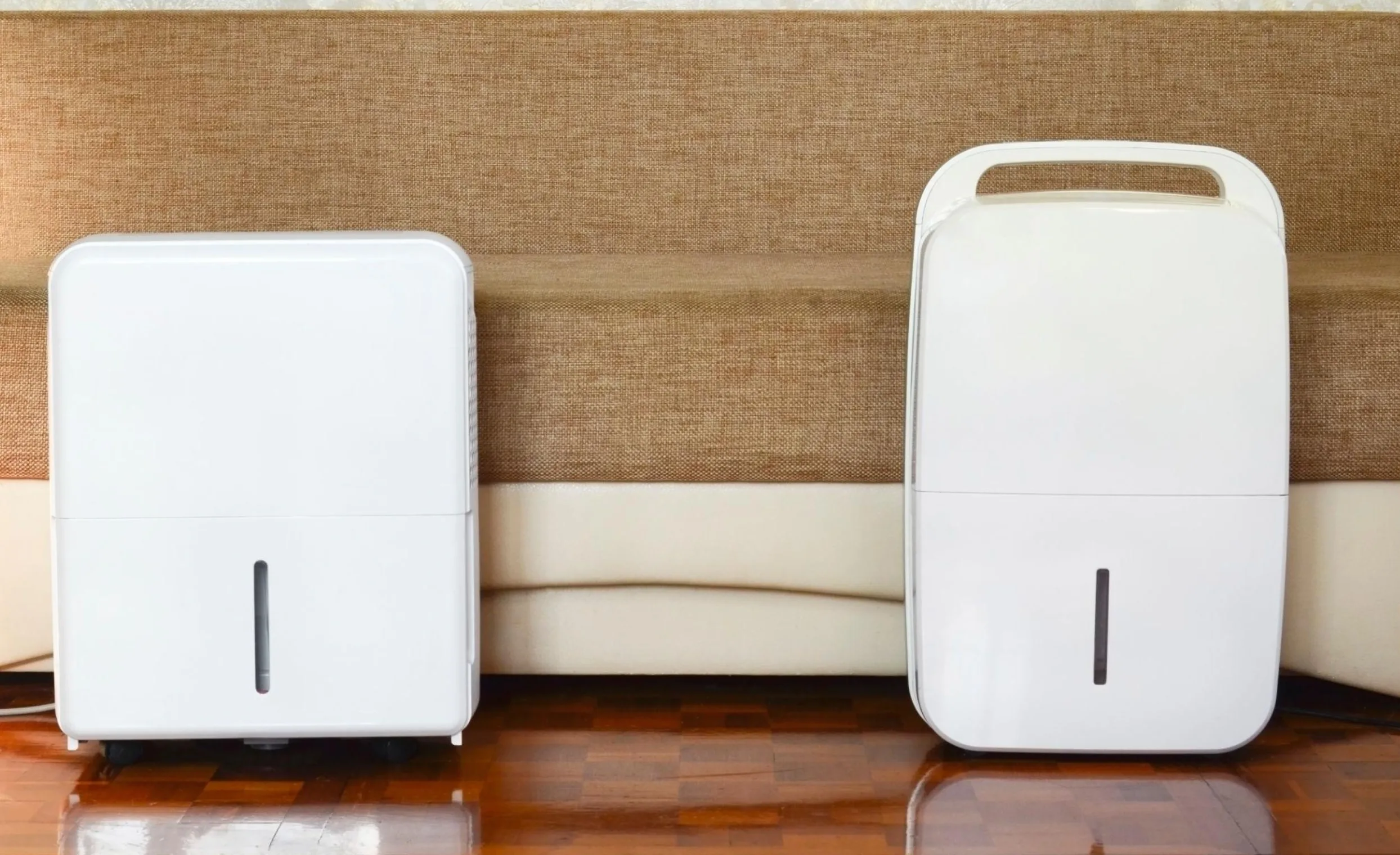
A modern Energy Star-certified dehumidifier can remove large amounts of moisture while consuming significantly less electricity than a central cooling system.
| Appliance Type | Average Wattage | Main Function | Typical Daily Runtime |
|---|---|---|---|
| Small Thermoelectric Dehumidifier | 20-70 W | Small-space humidity control | 6-12 hours |
| Compressor Dehumidifier | 300-700 W | Whole-room dehumidification | 4-10 hours |
| Portable Air Conditioner | 900-1,500 W | Cooling and dehumidification | 4-12 hours |
| Central Air Conditioner | 2,000-5,000 W | Whole-home cooling | Variable |
How an Air Conditioner Consumes More Electricity
An air conditioner removes heat and humidity simultaneously, which requires more compressor power and continuous airflow. Cooling large indoor spaces increases electricity demand, especially during summer heat waves.
According to the International Energy Agency, global air conditioning electricity demand continues to rise due to increasing temperatures and urbanization. Modern inverter air conditioners improve efficiency, but cooling still requires more energy than standalone humidity removal.
The main reason air conditioners consume more electricity is thermal load management. The system must:
- Compress refrigerant continuously
- Remove indoor heat
- Maintain target temperature
- Run blower fans for circulation
- Handle latent heat from humidity
A dehumidifier only focuses on moisture extraction. That narrower operating scope reduces overall power consumption.
Dehumidifier vs Air Conditioner Electricity Cost Comparison
Electricity costs depend on local utility rates, humidity levels, room size, and runtime. However, industry estimates show that a medium-sized dehumidifier usually costs less per day than running an air conditioner for equivalent humidity control.
| Scenario | Recommended Appliance | Estimated Energy Efficiency |
|---|---|---|
| Damp basement without high heat | Dehumidifier | High |
| Hot and humid living room | Air conditioner | Moderate |
| Mild weather with excess humidity | Dehumidifier | High |
| Summer heat above 30°C | Air conditioner | Necessary |
| Bedroom humidity control | Quiet dehumidifier | High |
For example, a 500-watt dehumidifier running eight hours consumes roughly 4 kWh daily. A 1,500-watt portable air conditioner running the same duration consumes approximately 12 kWh.
According to the U.S. Environmental Protection Agency Energy Star program, replacing older dehumidifiers with certified models can reduce energy use by nearly 15%.
External references:
- Energy Star Dehumidifier Guidelines
- U.S. Department of Energy Cooling Information
- International Energy Agency Cooling Report
When a Dehumidifier Is the Better Energy-Efficient Choice
A dehumidifier is usually the better solution when temperature reduction is unnecessary. Many homes experience high humidity during rainy seasons without excessive heat.
A dedicated humidity control system works best in:
- Basements
- Laundry rooms
- Storage areas
- Closets
- Garages
- Bedrooms with condensation problems
Users looking for quiet humidity control may consider a quiet home dehumidifier for sleeping areas or office spaces.
A dehumidifier also helps reduce mold growth, dust mites, and moisture damage. The U.S. Environmental Protection Agency recommends maintaining indoor humidity between 30% and 50% for healthier indoor air quality.
When an Air Conditioner Is Necessary Despite Higher Power Use
An air conditioner becomes essential when indoor heat affects comfort, safety, or productivity. Removing humidity alone cannot lower heat stress during hot summers.
Air conditioners remain the best choice when:
- Outdoor temperatures exceed indoor comfort thresholds
- Large living spaces require cooling
- Occupants are sensitive to heat
- Electronics generate excess indoor warmth
- Ventilation is limited
Modern inverter air conditioners improve seasonal energy efficiency by adjusting compressor speed dynamically. Even so, cooling a room always consumes more electricity than moisture removal alone.In tropical climates, many homeowners use both systems strategically. The air conditioner cools the room during peak heat, while the dehumidifier maintains humidity during cooler evening hours.
Factors That Affect Electricity Consumption
Several operational variables influence appliance energy use. Comparing wattage alone does not provide a complete picture.
| Factor | Effect on Electricity Consumption |
|---|---|
| Room Size | Larger rooms require more runtime |
| Humidity Level | Higher humidity increases compressor workload |
| Outdoor Temperature | Hot weather increases AC demand |
| Appliance Age | Older units are less efficient |
| Insulation Quality | Poor insulation increases cooling loss |
| Runtime Settings | Continuous operation raises costs |
| Airflow Design | Restricted airflow lowers efficiency |
Industry engineers often recommend selecting equipment based on square footage and relative humidity instead of maximum capacity alone.
Consumers researching moisture control solutions may also compare:
- Industrial dehumidifiers
- Portable dehumidifiers
- Whole-house humidity systems
- Ceiling-mounted dehumidifiers
- Energy-efficient compressor systems
Practical Ways to Reduce Humidity and Electricity Bills
Lowering humidity efficiently requires proper appliance management and environmental control. Small operational adjustments can significantly reduce monthly electricity costs.
Recommended energy-saving practices include:
- Keep indoor humidity between 40% and 50%
- Use automatic humidity sensors
- Clean filters regularly
- Seal windows and doors
- Avoid oversized cooling systems
- Use ceiling fans to improve airflow
- Empty dehumidifier water tanks consistently
Some homeowners also combine smart thermostats with programmable humidity control schedules. According to industry estimates, optimized runtime management can reduce unnecessary appliance cycling.
Choosing the Right Dehumidifier Type
Different dehumidifier technologies offer different efficiency advantages depending on climate and room conditions.
Compressor Dehumidifiers
Compressor systems provide strong moisture removal for larger areas. These units are commonly used in basements, warehouses, and humid residential environments.
Users seeking high-capacity humidity control often choose compressor-based dehumidifiers.
Thermoelectric Dehumidifiers
Thermoelectric models operate quietly and consume less electricity in small spaces. These systems work well in bedrooms, closets, and compact storage areas.
Consumers looking for low-noise operation frequently select mini dehumidifiers.
Quiet Home Dehumidifiers
Noise-sensitive environments benefit from low-decibel systems with sleep modes and inverter technology.
Many homeowners prefer quiet bedroom dehumidifiers for overnight use.
Final Verdict: Which One Uses Less Electricity?
A dehumidifier generally uses less electricity than an air conditioner when the goal is humidity control without active cooling. Compressor dehumidifiers consume moderate power, while thermoelectric units consume very little electricity for small spaces.
An air conditioner consumes more electricity because it must cool air, remove heat, and regulate humidity simultaneously. However, cooling remains necessary in hot climates where humidity control alone cannot maintain comfort.For energy-efficient indoor moisture management, homeowners should match appliance type to actual environmental conditions rather than using oversized cooling systems for every humidity issue.
FAQ
Does a dehumidifier cool a room like an air conditioner?
A dehumidifier does not significantly lower room temperature. The system removes moisture from the air, which may make the environment feel more comfortable, but compressor operation can slightly warm the room during extended use.
Is it cheaper to run a dehumidifier all day?
Running a modern Energy Star dehumidifier continuously is usually cheaper than operating a portable air conditioner for the same period. Actual costs depend on wattage, humidity levels, electricity rates, and room conditions.
Can a dehumidifier replace an air conditioner in summer?
A dehumidifier cannot fully replace an air conditioner during extreme heat. The appliance removes moisture but does not actively remove large amounts of indoor heat. In mild climates, however, humidity reduction alone may improve comfort.
Which type of dehumidifier is most energy efficient?
Thermoelectric dehumidifiers are highly energy efficient for small spaces, while compressor dehumidifiers provide better efficiency for larger humid rooms because they remove moisture more quickly and consistently.
Should I use both a dehumidifier and an air conditioner?
Using both appliances strategically can improve indoor comfort and reduce energy waste. Many homeowners run air conditioners during peak daytime heat and switch to dehumidifiers during cooler evenings or rainy weather.