
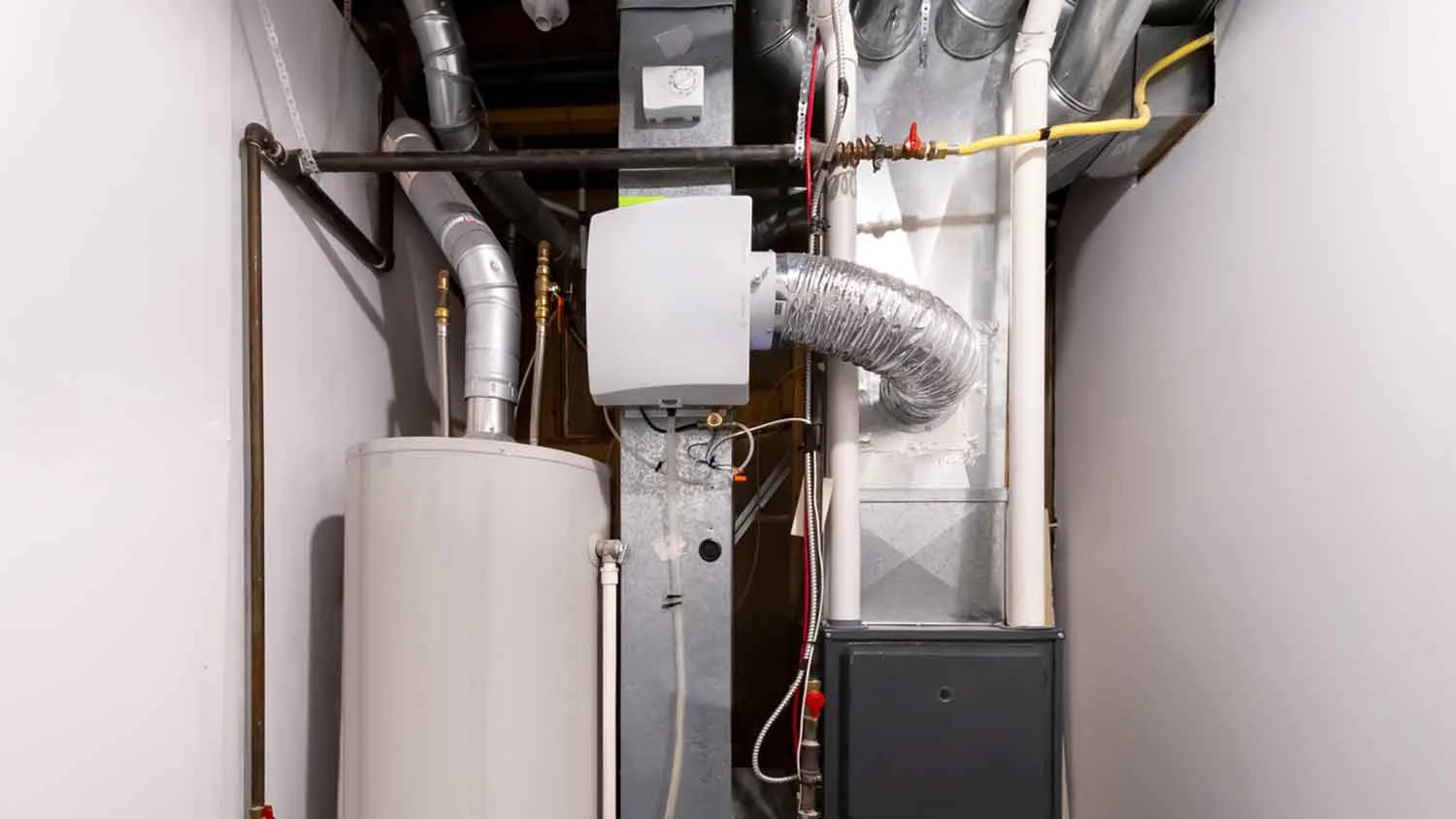
Installing a dehumidifier near or directly into a furnace system is not only possible but is often the most effective way to manage indoor air quality. By integrating these two systems, you transform your existing heating and cooling setup into a comprehensive climate control solution.
Do You Need a Furnace to Install a Whole-House Dehumidifier?
Not necessarily. While whole-house dehumidifiers are commonly paired with a furnace, it is not a strict requirement for installation.
Integrated Installation: If your home has a furnace, the dehumidifier can utilize the furnace’s blower and filtration system to distribute dry air to every room.
Standalone Installation: For homes without a furnace or central heating (such as those using radiant heat or ductless mini-splits), a whole-house dehumidifier can operate as a standalone system. In this setup, it requires its own dedicated intake and exhaust vents and is typically installed in a basement, crawl space, or attic.
Adding a Dehumidifier to Your Furnace
Integrating a dehumidifier into your furnace system is the most efficient solution, often referred to as an “inline” or “integrated” installation
Installation Location: It is usually installed on the return side of the furnace, drying the air before it enters the unit to be heated or cooled.
Synchronized Operation: Using a dedicated control panel (humidistat), the dehumidifier activates when indoor humidity exceeds the set point. It also triggers the furnace blower to circulate the conditioned air throughout the house.
Key Advantages: This saves space and leverages existing ductwork to ensure balanced humidity control in every room.
Does a Whole-House Dehumidifier Require Ductwork?
Yes. The core functionality of a whole-house dehumidifier relies on air circulation, and ductwork is the essential foundation for this process
Utilizing Existing Ducts: If you already have central AC or a furnace, the dehumidifier can be plumbed directly into the existing metal ductwork.
Adding Dedicated Ducts: In homes without central ductwork, installing a whole-house unit usually requires laying simple, dedicated ducts to ensure moist air is
pulled in and dry air is delivered to key living areas.
Note: Without ductwork, the unit acts like a standard portable dehumidifier, only treating the immediate surrounding air rather than the entire home.
Humidifier or dehumidifier, which one will you choose?
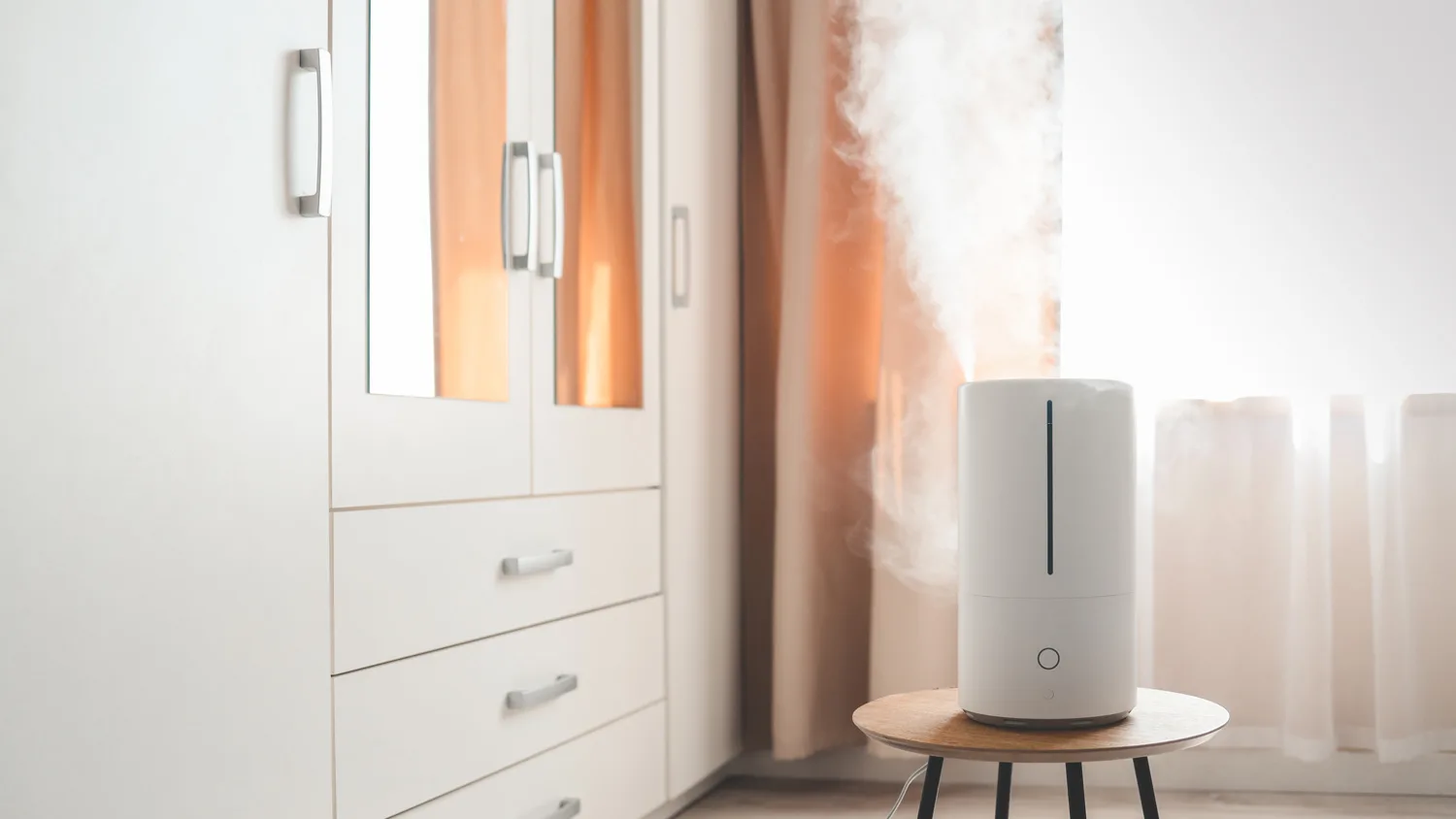
The choice between a humidifier and a dehumidifier primarily depends on the relative humidity of your environment: if indoor humidity stays below 30%–40% (common in dry winters or with constant heating), a humidifier is essential to relieve dry skin and respiratory discomfort. Conversely, if humidity consistently exceeds 60% (typical during rainy seasons, in coastal areas, or basements), a dehumidifier is necessary to prevent mold growth, protect furniture, and improve physical comfort.
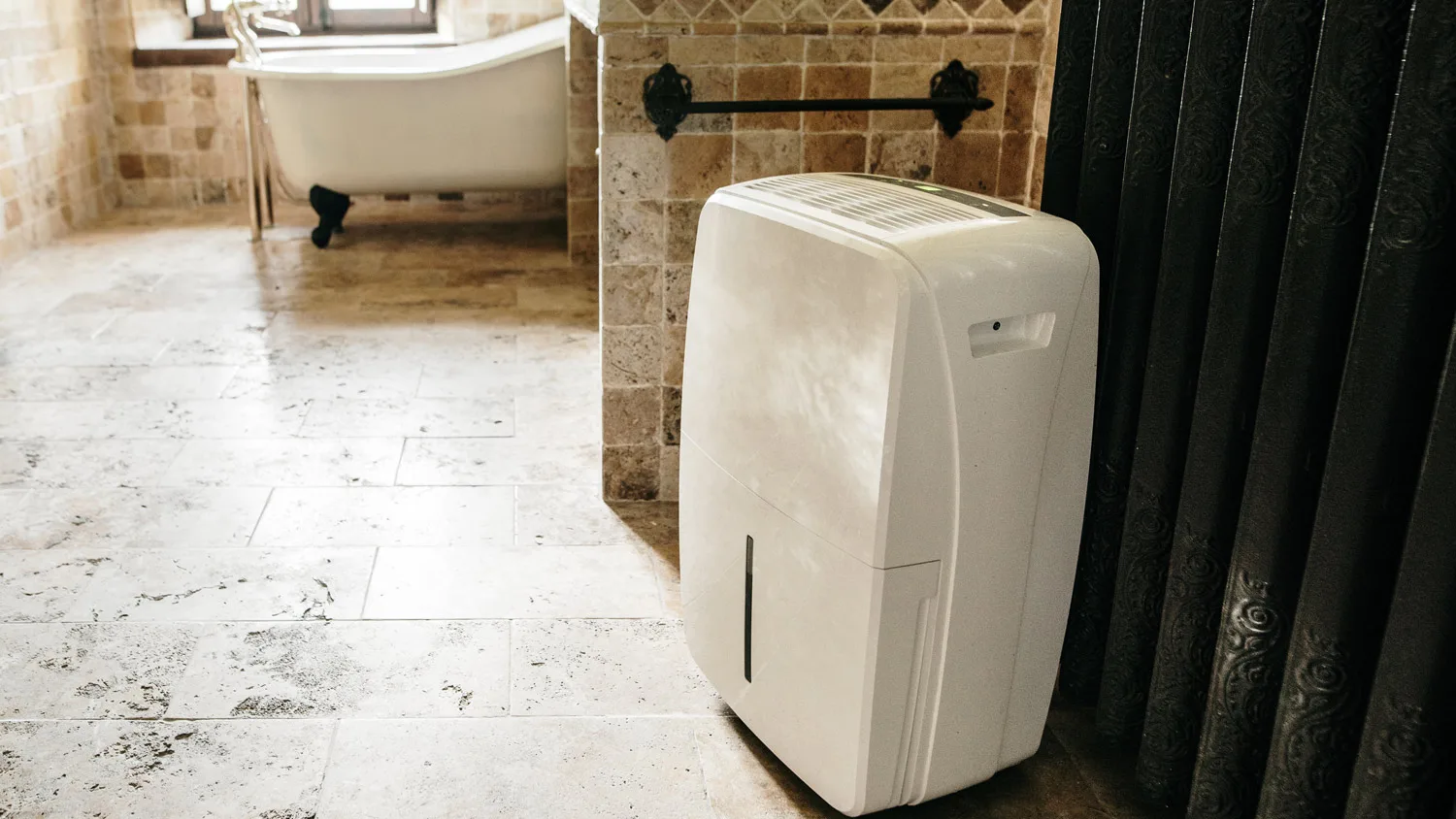
In short: add moisture when it’s dry (humidifier) and extract it when it’s damp (dehumidifier); maintaining a target range of 45%–55% is the key to ultimate comfort.
FAQ
Will adding a dehumidifier to my furnace significantly increase my electric bill?
Not necessarily. While the dehumidifier consumes power, lower humidity makes the air feel cooler. This allows you to raise your AC thermostat (e.g., from 75°F to 78°F), which can offset or even reduce your overall energy costs.
Can You Put s Dehumidifier Near a Furnace?
This refers to the application of a whole-house central dehumidification system, where a dehumidifier is integrated into the furnace’s ductwork to regulate humidity across the entire home.
How is the condensation from the dehumidifier handled?
Whole-house dehumidifiers drain automatically. The unit is connected via a condensate line to a floor drain, a condensate pump, or the existing furnace drain line, eliminating the need to empty water tanks manually.
How often does a whole-house dehumidifier need maintenance?
Typically once a year. The main tasks include replacing the air filter (usually every 6–12 months) and checking the condensate drain line for any clogs.
Why is a whole-house system better than several small portable units?
A whole-house system is more efficient, operates much more quietly (since the unit is in a basement or mechanical room), and requires less maintenance. It provides consistent, precise humidity control for the entire home rather than leaving some rooms damp and others dry.