
How Can Dehumidifiers Create the Ideal Grow Room Environment?
Dehumidifiers create the ideal grow room environment by controlling excess moisture that can damage plants, promote mold growth, and reduce crop yields. Proper humidity management ensures consistent growing conditions for indoor cultivation operations. This guide examines how dehumidification equipment functions within controlled growing spaces and outlines practical strategies for maintaining optimal atmospheric conditions.
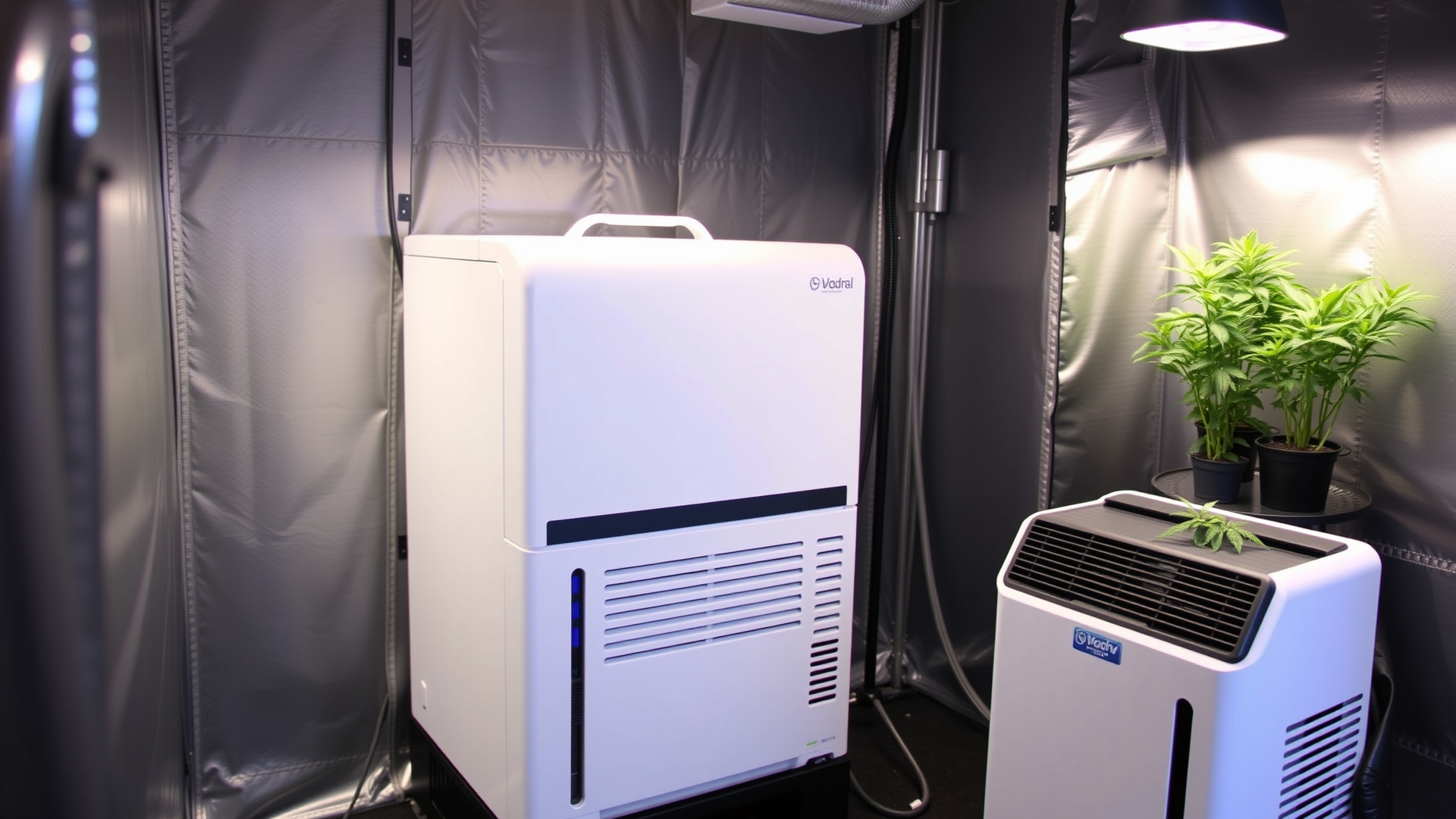
Understanding Humidity Requirements in Indoor Growing Spaces
Humidity levels directly impact plant transpiration rates and nutrient uptake in indoor cultivation environments. Most plants thrive between 40% and 60% relative humidity during their vegetative stage, while flowering stages typically require slightly lower levels around 40% to 50%. Excess moisture in grow rooms creates favorable conditions for fungal pathogens like powdery mildew and botrytis, which can devastate crops within days. Conversely, humidity levels that drop too low cause plant stress, stunted growth, and reduced photosynthesis efficiency.
Commercial growers monitor humidity using hygrometers positioned at plant canopy level to ensure accurate readings. The interaction between temperature and humidity determines the dew point, which indicates when condensation forms on surfaces. According to
How Dehumidifiers Remove Excess Moisture from Grow Rooms
Dehumidifiers extract water vapor from air through two primary mechanisms: condensation and desiccation. Condensation dehumidifiers cool air below its dew point, causing moisture to condense into liquid water that collects in a tank or drains away. Desiccant dehumidifiers use hygroscopic materials to absorb moisture from air passing through the unit. Most residential and commercial grow rooms use compressor-based condensation units due to their energy efficiency at typical operating temperatures.
The moisture removal capacity of a dehumidifier is measured in liters per day, indicating how much water the unit can extract under standard conditions. When selecting equipment, growers must account for room volume, ambient temperature, and the transpiring surface area of their plants. A unit undersized for the space will fail to maintain target humidity, while an oversized unit may cycle on and off too frequently, reducing operational efficiency.
High-capacity commercial dehumidifiers like the 16L/day commercial dehumidifier with auto defrost are engineered for demanding environments where continuous moisture removal is essential. These units feature robust compressors capable of handling heat loads generated by grow lights and environmental fluctuations.
Selecting the Right Dehumidifier Capacity for Your Grow Space
Matching dehumidifier capacity to grow room dimensions prevents both under-performance and energy waste. A general calculation estimates that each cubic meter of grow space requires approximately 0.05 to 0.1 liters of moisture removal per hour. However, this baseline varies significantly based on factors including ambient humidity, plant density, irrigation frequency, and ventilation rates.
Small-scale indoor gardens in closets or tent setups typically require units rated between 10 and 12 liters per day. The efficient 12L/day dehumidifier with LED display and timer offers programmable operation cycles that align with plant growth schedules. For various capacity options, browse the dehumidifier products available for different growing scales.
The multi-capacity dehumidifier series (10L/12L/16L) provides flexibility for growers who scale their operations over time. Starting with a smaller unit allows cost-effective testing before investing in higher-capacity equipment. This modular approach aligns with industry recommendations for scalable infrastructure planning.
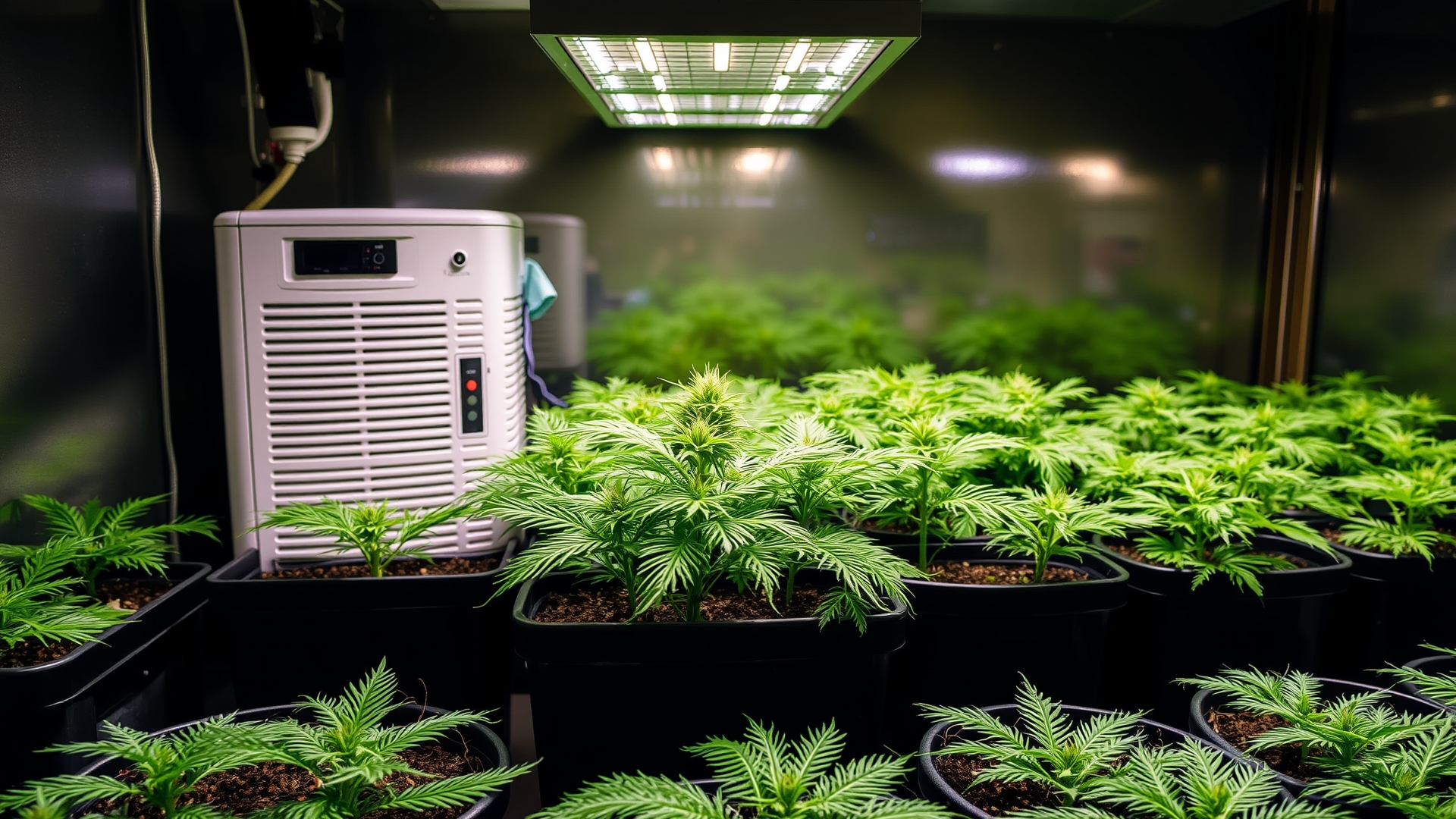
Strategic Placement of Dehumidification Equipment
Positioning dehumidifiers for maximum effectiveness requires understanding air circulation patterns within the grow space. Units should be placed where air naturally converges, typically near the center or at the exhaust side of ventilation systems. Avoid placing equipment directly in front of grow lights or in corners where cold spots may form, as temperature variations affect humidity readings and unit performance.
Airflow is essential for effective moisture removal, as stagnant air creates localized humidity pockets that dehumidifiers cannot address. Growers should ensure at least 0.5 meters of clearance around dehumidifier intake vents. For larger rooms exceeding 20 square meters, distributing multiple smaller units provides more uniform humidity control than relying on a single central unit.
Integration with Climate Control Systems
Modern grow room environments benefit from integrated climate control systems that coordinate dehumidification with heating, cooling, and ventilation. These systems use sensors to monitor temperature, humidity, and CO2 levels, automatically adjusting equipment to maintain preset parameters. Integration prevents the common problem of dehumidifiers and air conditioners working against each other, which wastes energy and creates fluctuations. For implementing these systems effectively, consult the when designing control interfaces.
When designing integrated systems, consider the sequence of operations during different growing phases. Vegetative stages generate less moisture and tolerate higher humidity, while flowering phases require stricter control. Automated systems should be programmed with phase-specific setpoints that transition smoothly between growth stages. Dehumidifier products with built-in smart features support these advanced control strategies through programmable timers and remote monitoring.
Maintenance Practices for Consistent Performance
Regular maintenance ensures dehumidifiers operate at rated capacity throughout their service life. Air filters should be cleaned or replaced every two to four weeks, depending on dust levels in the growing environment. Clogged filters restrict airflow, reducing moisture removal efficiency and increasing energy consumption. Drainage systems require inspection to prevent blockages that cause water overflow or leaks.
Coil cleaning is necessary every six months to remove dust accumulation and prevent ice formation on cold coils. Units with auto defrost functions still require periodic inspection to verify heating elements activate correctly. The user-friendly 10L home dehumidifier features accessible design for simplified maintenance routines that busy growers can perform quickly.
Condensate pumps and drainage lines should be checked for mineral buildup, especially in areas with hard water. Mineral deposits restrict water flow and can damage pump mechanisms over time. Using distilled water in humidifier reservoirs when applicable reduces scale formation and extends equipment lifespan. Professional servicing is recommended annually for commercial-grade units operating under continuous load.
Managing Humidity During Critical Growth Phases
Seedling and cloning stages demand the highest humidity levels, typically 70% to 80%, to prevent tender young plants from drying out before establishing roots. During this phase, dehumidifiers may operate at minimal capacity or remain off entirely while ventilation provides fresh air. As plants mature and transpire more moisture, dehumidification capacity increases proportionally to maintain target ranges.
Flowering stages present unique challenges as plants redirect energy to bud production and moisture output typically decreases. However, inconsistent humidity during flowering promotes uneven bud development and increases susceptibility to botrytis infections. Experienced growers monitor canopy-level humidity closely during this phase, adjusting dehumidification to maintain stable conditions even as plant physiology changes.
Harvest preparation often involves lowering humidity intentionally to reduce moisture content in flowers and prevent mold during storage. This deliberate stress response requires careful timing, as excessive drying degrades final product quality. The transition between growing and curing phases should be gradual, allowing dehumidifiers to establish new equilibrium levels without shocking plants.
Common Grow Room Humidity Problems and Solutions
Several recurring issues affect humidity control in indoor growing environments, each with specific remediation strategies:
- Condensation on walls and equipment: Indicates humidity exceeding dew point at surface temperatures. Increase dehumidification capacity and improve insulation to raise surface temperatures above dew point.
- Mold growth on plant material: Signals humidity levels above 60% combined with poor air circulation. Remove affected material immediately and adjust dehumidification to maintain levels below 55%.
- Swimming pool effect: Occurs when excessive dehumidification causes humidity to plummet below 30%. Reduce unit capacity or operate on intermittent cycles to stabilize levels.
- Temperature-humidity fluctuations: Results from oversized equipment or inadequate sensor placement. Redistribute units throughout space and verify sensors measure representative conditions.
Addressing these problems requires systematic diagnosis rather than reactive adjustments. Maintaining a log of humidity readings, equipment settings, and environmental observations helps identify patterns and effective solutions over time. Data-driven approaches align with optimization methodologies that emphasize measurable outcomes and iterative improvement.
The principles of humidity control apply broadly across indoor environments. Similar challenges affect protecting garage tools from rust and excess humidity, where moisture management prevents corrosion and material degradation. While the scale differs, the underlying physics of condensation and moisture damage remain consistent across applications.
Energy Efficiency Considerations
Dehumidifiers consume significant electricity in indoor growing operations, making energy efficiency a priority for commercial cultivators. Selecting units with high energy factor ratings reduces operating costs without sacrificing performance. Variable-speed compressors allow precise capacity matching, avoiding the inefficiency of constant cycling between full and idle states.
Placement relative to air conditioning systems affects overall efficiency significantly. Dehumidifiers reject heat as a byproduct of condensation, which can increase cooling loads by 10% to 15%. Strategic positioning that leverages natural airflow patterns reduces this thermal load and improves climate control efficiency. Integration with smart thermostats and environmental controllers optimizes operation schedules based on real-time conditions rather than fixed timers.
Conclusion
Dehumidifiers create the ideal grow room environment by maintaining consistent humidity levels that support healthy plant development and prevent pathogen proliferation. Successful implementation requires matching equipment capacity to grow space dimensions, strategic placement for optimal air circulation, and integration with broader climate control systems. Regular maintenance ensures long-term performance, while data-driven adjustments address the evolving humidity requirements throughout different growth phases.
Frequently Asked Questions
What humidity level is best for indoor plant growth?
Most plants thrive between 40% and 60% relative humidity during active growth, with seedlings preferring higher levels around 70% to 80%. Flowering plants generally require slightly lower humidity, typically 40% to 50%.
How many dehumidifiers do I need for a 10×10 grow room?
A 10×10 foot (approximately 3×3 meter) grow room typically requires a dehumidifier rated between 30 and 50 liters per day, depending on plant density and ventilation rates. Consulting manufacturer sizing guides helps determine precise requirements.
Should dehumidifiers run continuously in grow rooms?
Continuous operation is often necessary in sealed environments with high plant density. However, programmable units can operate on cycles that align with growth phases and natural humidity fluctuations throughout the day.
What temperature should grow rooms maintain?
Most grow rooms operate between 20°C and 28°C (68°F to 82°F), depending on plant species and growth phase. Temperature and humidity are interconnected, so adjustments to one parameter often affect the other.
How do I know if my dehumidifier is working properly?
Check that water collection tanks fill at expected rates, intake air feels noticeably drier after passing through the unit, and humidity readings on calibrated hygrometers stabilize at target levels. Visible ice buildup on coils indicates defrost function problems requiring service.