
Introduction
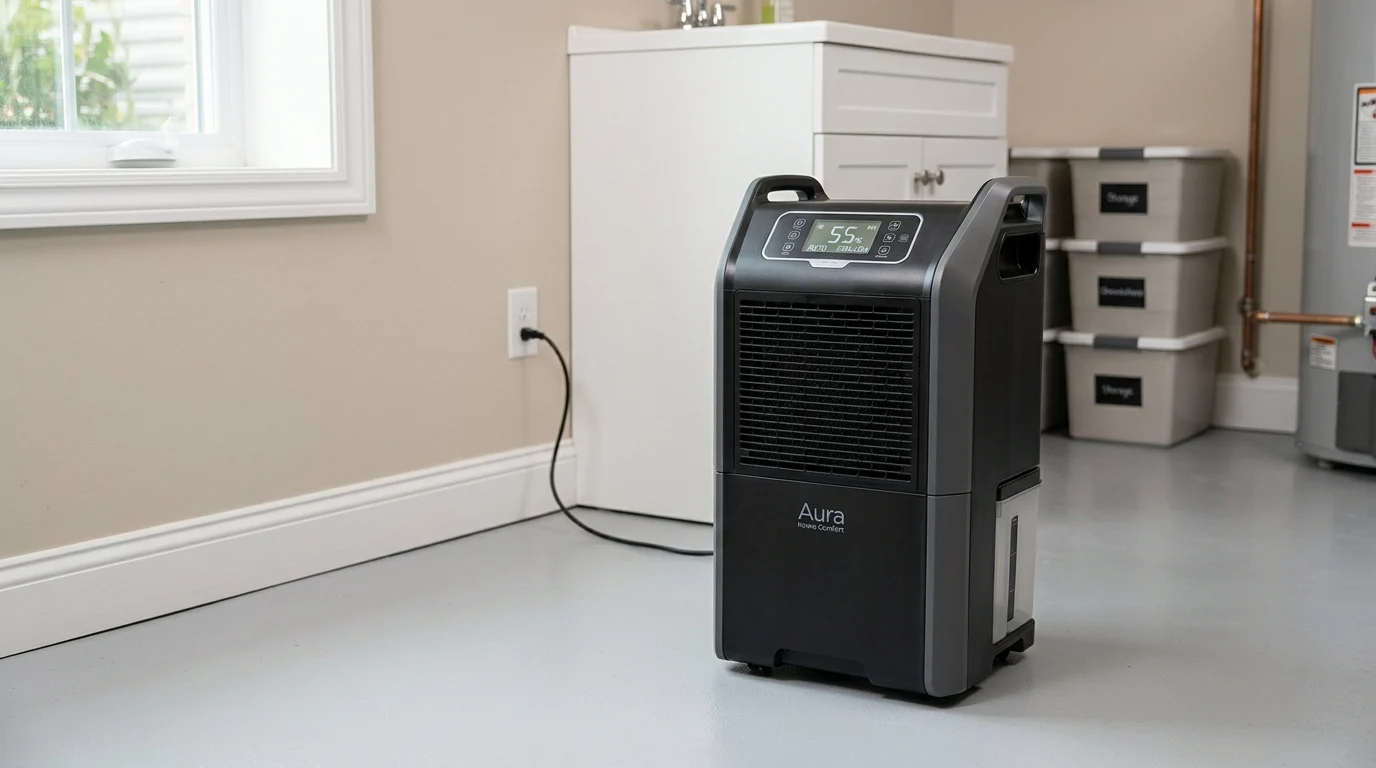
Choosing a high-end basement dehumidifier means looking beyond standard retail models and understanding which manufacturers build for continuous moisture control, durability, and demanding below-grade conditions. This article identifies the brands most active in the premium segment and explains what sets them apart, from extraction capacity and drainage design to build quality and operating reliability. You’ll also get a clearer sense of how premium units differ from entry-level options, making it easier to compare manufacturers based on real basement performance rather than marketing claims alone.
Manufacturer Landscape and Comparison
Navigating the supply chain for high-capacity dehumidification systems requires a clear understanding of the manufacturing landscape. The market is populated by a mix of specialized original equipment manufacturers (OEMs), established global HVAC conglomerates, and niche indoor air quality (IAQ) technology firms. Identifying the right manufacturing partner or brand depends heavily on the buyer’s scale, required customization, and localized support needs.
Main manufacturer types
The manufacturing sector for these devices is generally divided into three main categories. First are mass-market consumer appliance brands that occasionally produce higher-capacity units, though these often utilize consumer-grade internal components. Second are specialized IAQ manufacturers that focus exclusively on restoration and environmental control equipment; these firms typically engineer robust units featuring epoxy-coated coils and commercial-grade compressors. Finally, direct OEM/ODM manufacturers operate primarily out of global industrial hubs, offering white-label solutions for distributors who purchase in bulk and require custom branding or specific regional certifications.
Best comparison criteria
When evaluating different manufacturers, buyers must look beyond superficial marketing claims and focus on verifiable engineering metrics. Warranty length serves as a primary indicator of manufacturer confidence and component quality. While standard units offer 1-year limited warranties, premium manufacturers typically provide 5-year comprehensive warranties, extending up to 7 years for the sealed refrigeration system. Additional criteria include the structural integrity of the housing (rotomolded polyethylene or heavy-gauge steel versus thin ABS plastic), noise output (premium units are engineered to operate below 55 decibels), and the availability of localized service networks.
How to use comparison tables
Procurement teams and contractors can utilize standardized comparison matrices to objectively evaluate potential suppliers. The table below illustrates the typical operational and commercial divergences between mass-market producers and premium specialized manufacturers.
| Feature / Metric | Mass-Market Manufacturers | Premium IAQ Manufacturers |
|---|---|---|
| Expected Lifespan | 3 to 5 years | 10 to 15+ years |
| Defect Rate (Out of Box) | 2.5% – 4.0% | < 0.5% |
| Casing Material | Thin ABS Plastic | Heavy-Gauge Steel / Rotomolded |
| Warranty Duration | 1 Year Limited | 5-7 Years (Sealed System) |
| Filtration Standard | Basic Washable Mesh | MERV-8 to MERV-11 Pleated |
Technical and Compliance Standards
At the core of every premium dehumidification system is strict adherence to rigorous technical and regulatory standards. Because these units are frequently installed in semi-permanent configurations—often tied directly into a home’s HVAC ductwork or dedicated drainage systems—they must comply with stringent electrical, safety, and environmental benchmarks. Failing to verify these specifications can result in inadequate moisture control, excessive energy expenditures, or severe safety liabilities.
Core performance specifications
Airflow dynamics and thermal operational ranges are critical performance indicators. A premium basement dehumidifier must generate sufficient volumetric airflow to circulate the entire air mass of a subterranean space multiple times per hour. Therefore, premium specifications typically demand an airflow rate between 250 and 400 cubic feet per minute (CFM), compared to the sub-150 CFM output of standard retail units. Furthermore, because basements can experience significant temperature drops, premium systems feature hot-gas bypass defrost mechanisms, ensuring the unit meets its product specifications for efficient moisture extraction in environments as cold as 33°F (1°C) without the evaporator coils freezing over.
Energy, safety, and refrigerant requirements
Regulatory compliance dictates both the environmental impact and the operational safety of the equipment. Energy efficiency is quantified by the Energy Factor (EF), measured in liters of water extracted per kilowatt-hour (L/kWh) of energy consumed. Premium units must achieve an EF of 2.8 L/kWh or higher to qualify for top-tier Energy Star ratings. Simultaneously, the industry is undergoing a mandated transition away from high Global Warming Potential (GWP) refrigerants like R-410A, shifting toward low-GWP alternatives such as R-32 or R-454B. On the safety front, all reputable units must carry certifications from recognized testing laboratories, such as UL 60335-2-40 or equivalent CSA standards, ensuring electrical safety in damp environments.
Sourcing, Distribution, and After-Sales Support
The logistical framework supporting the procurement of commercial-grade dehumidifiers is vastly different from retail appliance purchasing. For HVAC contractors, property management firms, and regional distributors, establishing a reliable supply chain is just as critical as the technical specifications of the units themselves. Effective sourcing strategies must account for channel dynamics, minimum order quantities, and the long-term availability of replacement components.
Direct, distributor, and marketplace channels
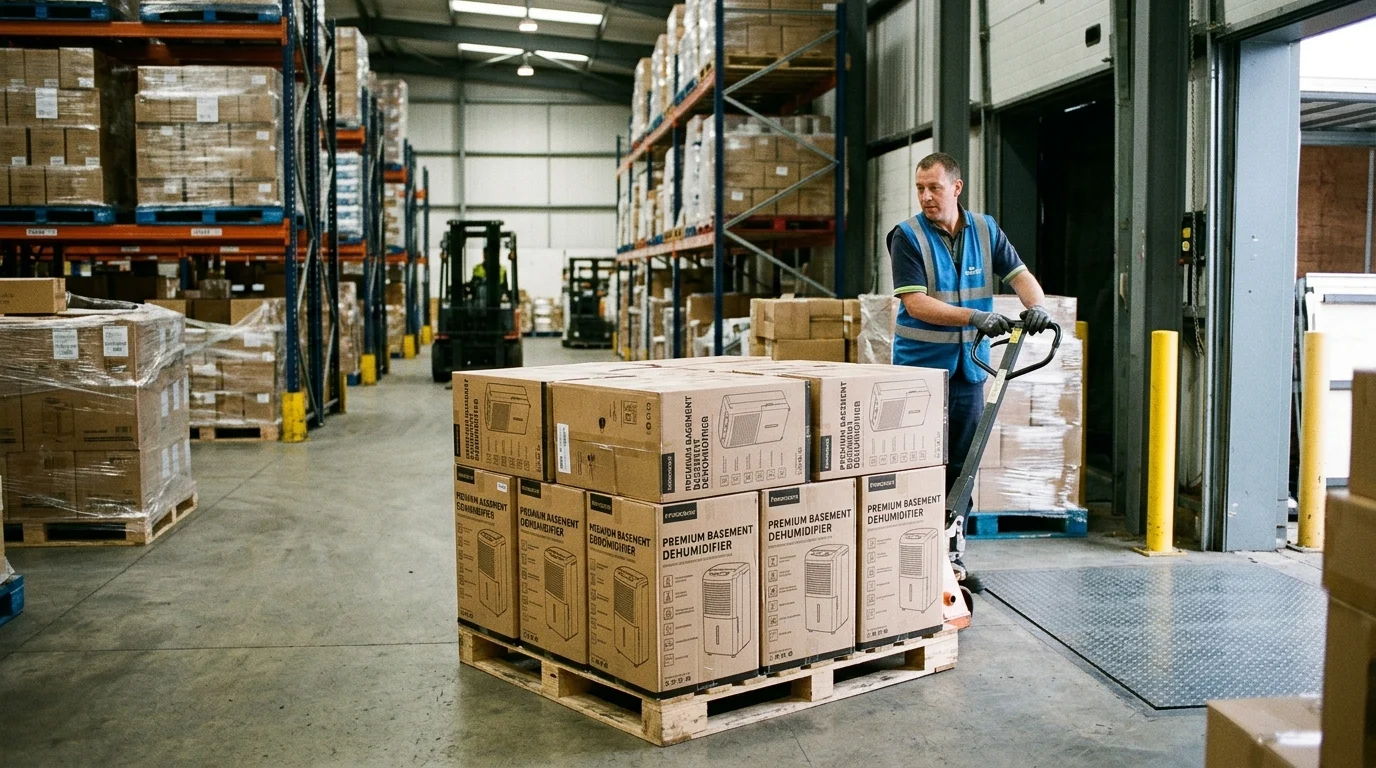
Buyers generally engage with three primary sourcing channels. Direct factory relationships (OEM/ODM) offer the lowest per-unit costs and high customization potential but require significant capital outlay and logistical management. Wholesale HVAC distributors serve as the middle tier, providing localized inventory, credit terms, and immediate availability, albeit at a 20% to 40% markup over direct sourcing. Finally, specialized B2B marketplaces facilitate smaller volume purchases and drop-shipping models, which are ideal for independent contractors who lack the warehousing capacity to store large pallets of heavy equipment.
Lead times, MOQs, and spare parts
Understanding the logistical constraints of each channel is vital for project planning and inventory management. Direct-from-factory orders typically impose Minimum Order Quantities (MOQs) ranging from 50 to 100 units, with ocean freight and customs clearance extending lead times to 8-12 weeks. Conversely, domestic wholesale channels might have no MOQ and offer 2-day delivery. Regardless of the channel, buyers must ensure comprehensive after-sales support, prioritizing manufacturers that guarantee spare parts availability for a minimum of 10 years. Proactive buyers also prioritize establishing clear protocols for contacting technical support and managing warranty claims efficiently.
| Sourcing Channel | Typical MOQ | Average Lead Time | Spare Parts Availability | Cost Premium |
|---|---|---|---|---|
| Direct Factory (OEM) | 50 – 100 units | 8 – 12 weeks | 10+ years (contractual) | Baseline (Lowest) |
| Wholesale Distributor | 1 – 5 units | 2 – 5 days | Stocked locally | +20% to +40% |
| B2B Marketplace | 1 unit | 5 – 10 days | Manufacturer dependent | +15% to +30% |
How Buyers Should Make the Final Choice
Selecting the optimal premium basement dehumidifier requires synthesizing technical specifications, logistical realities, and total cost of ownership into a coherent procurement strategy. Buyers must move beyond simply comparing sticker prices and instead evaluate how a specific unit’s engineering aligns with the precise environmental demands of the target installation site.
Practical evaluation steps
The evaluation process must begin with accurate spatial and environmental sizing. Buyers should calculate the total cubic footage of the basement and assess the severity of the moisture intrusion. A standard guideline for a moderately damp 2,000-square-foot basement requires a minimum extraction capacity of 70 PPD to maintain a target relative humidity of 45% to 50%. Following capacity sizing, buyers must evaluate the installation infrastructure: identifying access to dedicated 115V or 230V electrical circuits, determining the optimal route for gravity or pump-assisted drainage, and deciding whether the unit will operate as a standalone device or be ducted into the existing HVAC framework.
Key decision trade-offs
The final decision inevitably involves balancing upfront capital expenditure against long-term operational savings and risk mitigation. Premium units demand an initial investment ranging from $800 to $1,800, significantly higher than the $200 to $300 cost of retail alternatives. However, this upfront premium is offset by substantial lifecycle benefits. High-efficiency commercial units can save property owners $50 to $120 annually in electricity costs compared to less efficient models. More importantly, their superior reliability prevents the catastrophic failure of moisture control, thereby avoiding mold remediation and structural repair costs that routinely exceed $3,000. By prioritizing robust construction, high-efficiency extraction, and reliable after-sales support, buyers secure a long-term asset that decisively resolves subterranean moisture challenges.
Further reading:
Key Takeaways
- The most important conclusions and rationale for Premium Basement Dehumidifiers
- Specs, compliance, and risk checks worth validating before you commit
- Practical next steps and caveats readers can apply immediately
Frequently Asked Questions
Which manufacturers are known for premium basement dehumidifiers?
Premium options usually come from specialized IAQ brands and OEM/ODM suppliers rather than basic appliance makers. CetusDry also provides high-capacity moisture control solutions for demanding basement conditions.
How do premium basement dehumidifiers differ from standard retail units?
Premium models typically remove 70 to 130+ PPD, support continuous drainage, and use more durable components. Standard units often remove 30 to 50 PPD and rely on manual bucket emptying.
What features should I compare when choosing a manufacturer?
Check AHAM-rated capacity, warranty length, pump lift, casing material, noise level, filtration, and service support. On CetusDry, product specifications can help you compare these core metrics quickly.
Are OEM or white-label basement dehumidifiers a good option?
Yes, if you need bulk orders, custom branding, or regional certifications. They are best suited for distributors, contractors, and private-label buyers with specific technical requirements.
What warranty is typical for a premium basement dehumidifier?
A strong premium warranty is usually 5 years overall, with up to 7 years on the sealed refrigeration system. Shorter coverage can indicate lighter-duty construction.