
Introduction
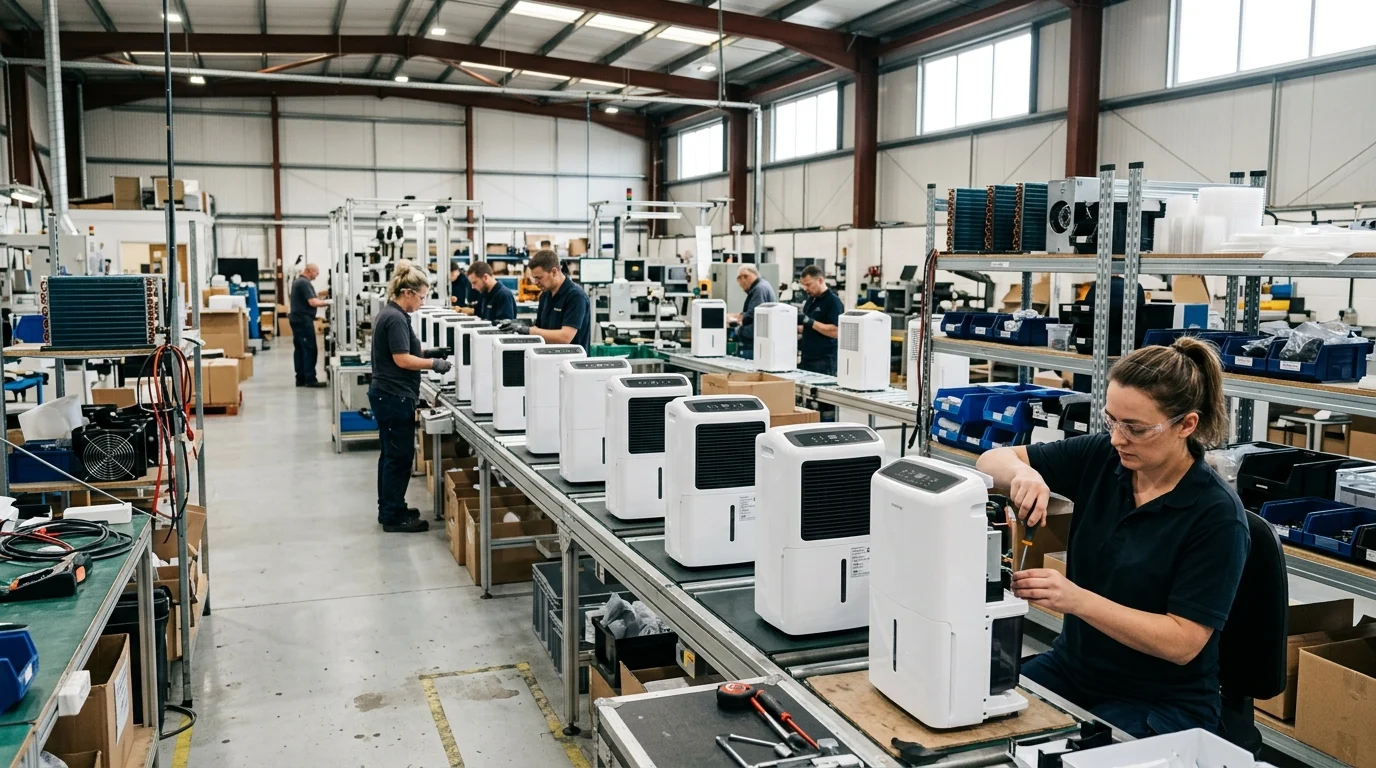
Factory pricing for private label dehumidifiers depends on more than order volume. Manufacturers typically quote based on product specifications, certification needs, branding complexity, packaging, tooling, and forecasted annual demand. Understanding these cost drivers helps buyers negotiate from a stronger position, compare suppliers more accurately, and avoid hidden markups from intermediaries. This article explains what factories evaluate when building a quote, how private label requirements affect unit cost, and which questions can uncover better terms. By the end, you’ll have a practical framework for approaching a private label dehumidifier factory and securing pricing that supports both margins and long-term growth.
Benefits of Private Label Dehumidifier Pricing
Securing factory-direct pricing for dehumidifiers allows brands to bypass intermediaries, capture higher margins, and exert greater control over their product roadmaps. In the highly competitive climate control appliance sector, the shift toward a private label manufacturing strategy is a proven method for scaling operations efficiently.
When commercial buyers engage directly with a manufacturer, they unlock pricing structures that are insulated from wholesale markups. Understanding the fundamental advantages of this procurement model is the first step toward establishing a profitable appliance brand.
Why buyers choose private label dehumidifiers
The primary motivation for transitioning to a private label model is margin expansion. By sourcing directly from the production line, brands can typically reduce their unit costs by 30% to 40% compared to purchasing through domestic distributors or trading companies. This cost advantage provides the financial flexibility to invest heavily in marketing, offer competitive retail pricing, or simply absorb higher profit margins.
Furthermore, buyers gain unparalleled visibility into the supply chain. Direct communication with the manufacturer ensures that production schedules align with seasonal retail demands, particularly the peak humidity months in spring and summer. To understand the broader market context and manufacturing capabilities, buyers often review industry profiles and company backgrounds to verify supplier credibility before committing to high-volume orders.
How branding and product differentiation affect pricing
Product differentiation plays a critical role in determining the final factory price. A completely off-the-shelf OEM unit with a basic logo print will yield the lowest per-unit cost but offers minimal market distinction. Conversely, true private labeling often involves varying degrees of customization, each carrying distinct financial implications.
Minor aesthetic modifications, such as custom injection-molded colors or specialized digital display interfaces, typically incur modest setup fees ranging from $500 to $1,500. However, developing proprietary casing requires custom tooling and mold creation. A completely new plastic injection mold for a standard 50-pint dehumidifier can require an upfront capital expenditure of $15,000 to $25,000. While this increases the initial investment, it protects the brand from direct visual competition, allowing for premium retail pricing that quickly amortizes the tooling costs.
Cost Drivers in Private Label Dehumidifier Pricing
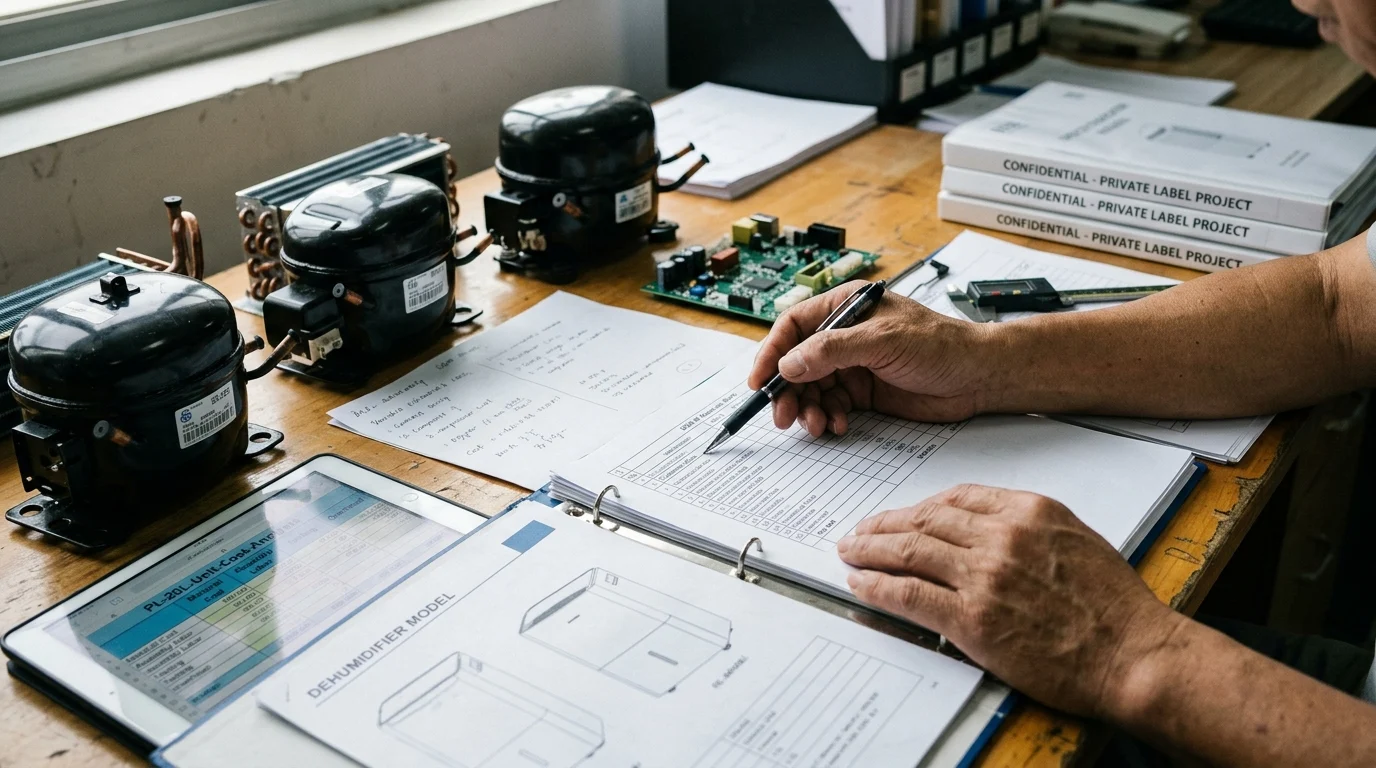
Unlocking the most competitive private label dehumidifier pricing requires a deep understanding of the manufacturer’s Bill of Materials (BOM) and the commercial terms governing the transaction. Factory quotes are not arbitrary; they are meticulously calculated based on hardware specifications, production scale, and risk allocation.
By dissecting these cost drivers, procurement teams can identify areas where value engineering can reduce costs without compromising the end-user experience.
How product specifications influence factory cost
The internal components of a dehumidifier dictate the majority of its manufacturing cost. The compressor is the single most expensive component; opting for a high-efficiency rotary compressor over a standard alternative will increase the base cost but improve the energy rating. Similarly, the choice of refrigerant impacts the price. Transitioning to environmentally friendly R32 refrigerant from older R410A standards may alter the cost by 3% to 5% due to different pressure requirements in the copper tubing.
Smart functionality is another significant cost driver. Integrating Wi-Fi modules and IoT compatibility for smartphone control typically adds $3 to $6 per unit at the factory level. Buyers must consult specific product specifications to determine which capacity tiers—ranging from compact 20-pint residential units to robust 150-pint commercial models—best align with their target demographic’s budget.
Which commercial terms affect landed cost
Beyond the physical hardware, Incoterms and payment structures heavily influence the final landed cost. A factory quoting EXW (Ex Works) presents a lower unit price than one quoting FOB (Free On Board), but the buyer assumes all domestic transport and export clearance costs in the country of origin.
Payment terms also reflect pricing leverage. Standard industry terms require a 30% T/T (Telegraphic Transfer) deposit to initiate production, with the remaining 70% balance due upon presentation of the Bill of Lading. Negotiating favorable terms, such as a Letter of Credit (L/C) for orders exceeding $100,000, can tie up less working capital but may result in the factory adding a 1% to 2% premium to the unit price to offset their financial risk.
How to compare supplier quotations
When analyzing competing bids, buyers must normalize the data to ensure an accurate comparison. A quote that appears 10% cheaper may exclude essential packaging upgrades or utilize a lower-grade compressor.
| Specification / Term | Factory A Offer | Factory B Offer |
|---|---|---|
| Capacity | 50-Pint (Standard) | 50-Pint (Standard) |
| Compressor Brand | Tier 1 (Panasonic/GMCC) | Tier 2 (Generic) |
| FOB Price | $85.00 | $78.00 |
| MOQ | 500 Units | 200 Units |
| Warranty Terms | 2 Years | 1 Year |
| Defect Allowance | 1% Free Spare Parts | None Included |
By standardizing the variables in a comparative matrix, procurement managers can easily calculate the true Total Cost of Ownership (TCO) rather than simply reacting to the lowest initial FOB figure.
How to Source and Negotiate with a Factory
Identifying a capable manufacturer is a rigorous process that demands robust due diligence. The goal is to partner with a factory that not only offers competitive pricing but also possesses the engineering infrastructure to scale alongside your brand.
Effective sourcing and negotiation establish the foundation for a resilient supply chain, minimizing the risk of production delays and quality fade over time.
How to screen private label dehumidifier suppliers
Screening potential partners requires evaluating their operational footprint and quality management systems. A reliable private label dehumidifier factory should demonstrate a monthly production capacity of at least 30,000 to 50,000 units to ensure they can handle peak season orders. Buyers should mandate proof of ISO 9001 certification to verify standardized manufacturing processes.
Furthermore, assessing a factory’s export history is vital. A manufacturer with extensive experience exporting to strict regulatory environments, such as North America or the European Union, will already have the necessary compliance frameworks in place. Utilizing a direct inquiry channel allows buyers to request factory audit reports and verify these credentials early in the screening phase.
How to negotiate pricing and MOQ
Minimum Order Quantities (MOQ) are a standard mechanism factories use to maintain production efficiency. For dehumidifiers, the baseline MOQ is typically tied to container optimization, often set at one 40-foot High Cube (40HQ) container. Depending on the physical dimensions of the units, a 40HQ container holds approximately 400 to 600 residential dehumidifiers.
Negotiating pricing against MOQ requires strategic forecasting. If a brand cannot meet the 500-unit MOQ for a custom colorway, they can negotiate tiered pricing. For example, a buyer might commit to an annual volume of 2,000 units, agreeing to pay a 5% premium on the first 500-unit pilot run, with the stipulation that the price drops to the standard bulk rate for subsequent container orders.
How to validate samples and pilot orders
Before authorizing mass production, validating a physical sample is mandatory. Factories generally charge 2x to 3x the mass production unit price for a custom sample, a fee that is standardly refunded or credited against the first bulk order.
Validation should involve rigorous performance testing. Procurement teams should subject the sample units to at least 200 hours of continuous operation in controlled environmental chambers to verify moisture extraction rates and monitor for premature component failure. Only after the pilot unit passes these thermal and electrical stress tests should the 30% production deposit be released.
Compliance, Quality, and Logistics Risks
Navigating the transition from the factory floor to the retail shelf involves mitigating significant compliance, quality, and logistical risks. An aggressively priced dehumidifier becomes a financial liability if it fails customs inspections, suffers high return rates, or sustains damage during ocean transit.
Proactive management of these variables is essential to protecting the profit margins secured during the initial factory negotiations.
Which compliance requirements affect import cost
Electronic appliances involving refrigerants and compressors are heavily regulated. Importing non-compliant units can result in customs seizures or forced recalls. If a factory does not already hold the required certifications for a specific model, the buyer must bear the cost of laboratory testing.
Securing a new UL or ETL certification for the North American market can cost between $5,000 and $12,000 and add 4 to 8 weeks to the project timeline. Similarly, CE and RoHS compliance are non-negotiable for European distribution.
| Region | Electrical Safety | Environmental / Chemical | Energy Efficiency |
|---|---|---|---|
| North America | UL / ETL | EPA (Refrigerant rules) | Energy Star |
| European Union | CE (LVD) | RoHS / REACH | ErP Directive |
| Australia | SAA / RCM | MEPS | GEMS |
How quality control reduces returns and failures
Quality control (QC) is the primary defense against margin-eroding retail returns. A standard acceptable defect rate in the appliance industry should be negotiated to strictly less than 1%. To enforce this, buyers must implement robust pre-shipment inspections.
Employing third-party inspection agencies to conduct an AQL (Acceptable Quality Limit) 1.5/4.0 audit ensures that a statistically significant batch is tested for functional and cosmetic defects before the final 70% payment is released. Catching a faulty compressor batch at the factory costs pennies on the dollar compared to processing a consumer return, which can incur reverse logistics costs exceeding $40 per unit.
How shipping and packaging impact total cost
Dehumidifiers are heavy, bulky appliances that are susceptible to transit damage if improperly packaged. Standard factory packaging is often designed for domestic palletized transport, not the rigors of international less-than-container-load (LCL) or e-commerce parcel shipping.
Upgrading to ISTA 3A drop-test certified packaging typically adds $1.50 to $3.00 to the factory BOM cost. However, this upgrade utilizes reinforced EPS foam and double-corrugated cardboard, which can reduce transit damage rates by 5% to 10%. When calculating the total landed cost, optimizing the carton dimensions to maximize the cube utilization of a 40HQ shipping container is just as critical as the FOB price itself.
How to Evaluate the Best Factory Offer
Finalizing a manufacturing partnership requires synthesizing all collected data into a cohesive evaluation strategy. The objective is to identify the factory that offers the highest overall value, balancing immediate cost savings against long-term reliability and market compliance.
Sophisticated buyers utilize structured matrices to remove emotional bias from the procurement process, ensuring the selected partner aligns with both financial targets and brand reputation goals.
How to assess value beyond the lowest quote
Evaluating value beyond the lowest monetary quote involves quantifying post-sale support and operational flexibility. A factory offering an $80 unit with zero after-sales support is inherently riskier than a factory offering an $83 unit that includes a comprehensive warranty and a guaranteed 1.5% allocation of free spare parts (such as PCB boards, filters, and display panels).
Communication efficiency is another critical, albeit intangible, metric. A supplier that responds to engineering queries within 12 hours and proactively flags potential BOM shortages demonstrates operational maturity. Delays in communication during the prototyping phase inevitably compound into multi-week delays during mass production.
How to balance price, compliance, and customization
To finalize the decision, procurement teams should utilize a weighted vendor scorecard. A standard distribution for appliance manufacturing might assign 40% weight to FOB Price, 30% to Quality and Compliance Certifications, 20% to Lead Time and Capacity, and 10% to Communication and Customization Flexibility.
By applying this quantitative framework, buyers can confidently balance the tension between aggressive pricing, strict regulatory compliance, and the customized features necessary to succeed in the private label dehumidifier market. This analytical approach guarantees that the final factory selection drives sustainable, long-term profitability.
Further reading:
Key Takeaways
- The most important conclusions and rationale for Private Label Dehumidifier Factory
- Specs, compliance, and risk checks worth validating before you commit
- Practical next steps and caveats readers can apply immediately
Frequently Asked Questions
How can I get factory pricing for a private label dehumidifier?
Contact the manufacturer directly with target capacity, features, branding needs, quantity, and shipping terms. At Cetusdry, a complete RFQ helps the factory quote faster and more accurately.
What information should I send to get an accurate quote?
Share pint capacity, voltage, refrigerant, smart functions, logo/packaging requirements, certification needs, order quantity, and destination port. Missing specs usually lead to rough pricing only.
Does customization increase private label dehumidifier pricing?
Yes. Simple logo printing adds little, while custom colors, control panels, packaging, or new molds raise setup and unit costs. Ask for separate tooling and per-unit pricing to compare options clearly.
What MOQ is usually needed for better factory pricing?
Higher volumes usually unlock lower unit costs because tooling, sourcing, and production setup are spread across more units. Request tiered quotes, such as 500, 1,000, and 3,000 pieces, before deciding.
Which trade terms matter most when comparing dehumidifier quotes?
Check whether the quote is EXW or FOB, because freight responsibility changes your landed cost. Also confirm payment terms, such as 30% deposit and 70% before shipment, before comparing suppliers.