
Introduction
Buying commercial dehumidifiers in bulk is less about finding the lowest unit price and more about identifying suppliers that can meet performance, consistency, and support requirements at scale. For contractors, facility operators, rental companies, and growers, the right source depends on factors such as extraction capacity, durability, lead times, certification, warranty terms, and after-sales service. This article explains where bulk buyers typically purchase reliable commercial dehumidifiers, how to compare manufacturers, distributors, and OEM partners, and which procurement details matter most before placing a large order.
Where to Source Reliable Commercial Dehumidifiers in Bulk
Procuring commercial dehumidifiers at scale requires a strategic approach to supply chain management. When enterprises look to outfit multiple facilities, build rental fleets, or integrate moisture control into large-scale construction projects, purchasing in bulk fundamentally shifts the procurement dynamic from simple transactional buying to a complex vendor partnership.
Use cases and buyer requirements
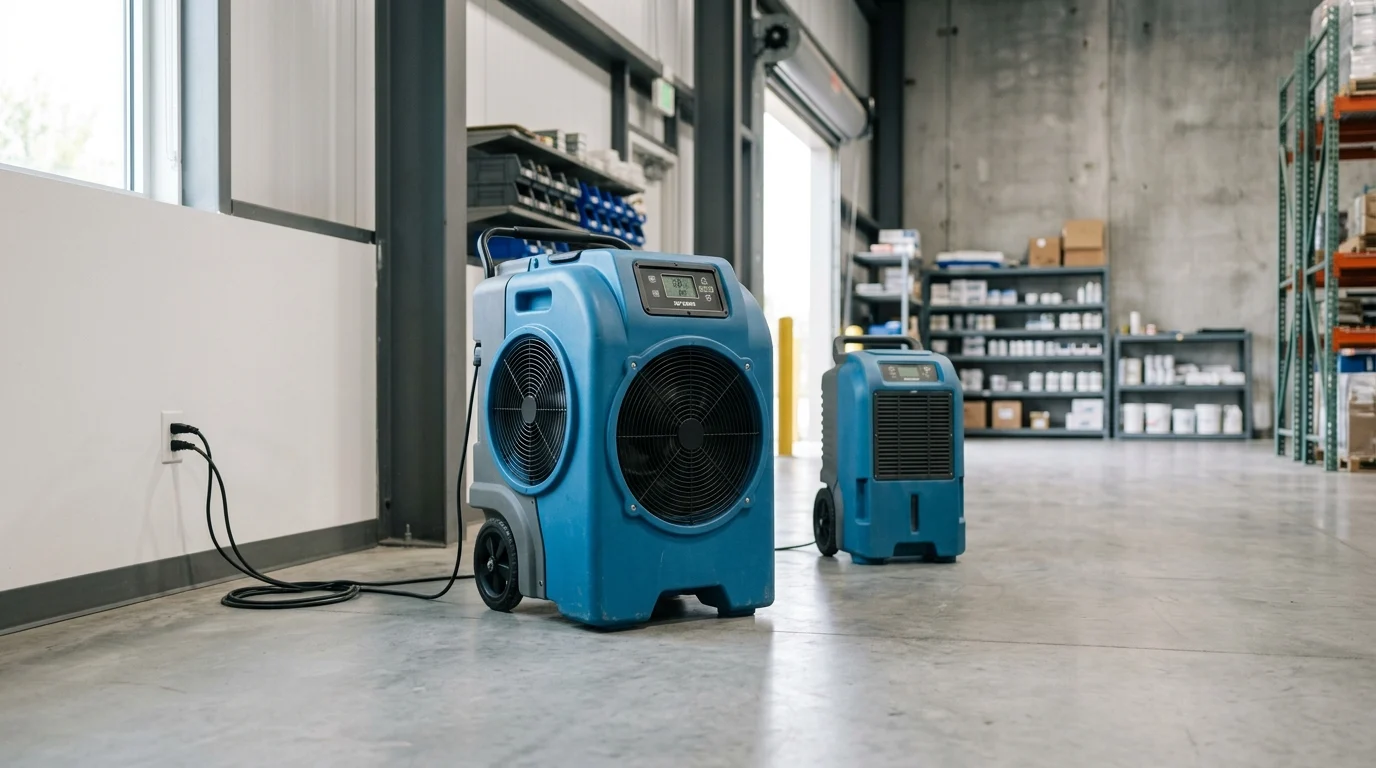
Commercial moisture control systems serve diverse, rigorous environments. Indoor agriculture facilities demand precise relative humidity (RH) control to prevent crop loss, often requiring units capable of extracting 150 to 500 pints per day (PPD) at standard conditions. Similarly, water damage restoration contractors require highly portable, impact-resistant units that can operate continuously in environments exceeding 90% RH. Understanding the specific cubic feet per minute (CFM) airflow requirements, daily extraction volume, and operational temperature thresholds of the intended application is the foundational step in the bulk sourcing process.
Why bulk procurement needs deeper evaluation
Purchasing 50 to 500 units represents a significant capital expenditure, often ranging from $50,000 to over $400,000. At this scale, a minor defect rate or a 5% inefficiency in energy consumption can result in massive operational cost overruns across a fleet. Bulk procurement necessitates deeper evaluation because buyers assume greater risk regarding product consistency, warranty fulfillment, and supply chain reliability. A thorough vetting process ensures that the chosen equipment delivers a positive return on investment over a projected 5- to 7-year lifecycle.
How to Evaluate Commercial Dehumidifiers
Assessing the technical merits of moisture extraction equipment requires looking past marketing specifications to understand true operational capabilities before committing to a high-volume purchase.
Key performance specifications
The primary metric for dehumidification is extraction capacity, typically measured in PPD at Association of Home Appliance Manufacturers (AHAM) conditions (80°F and 60% RH) or at saturation (90°F and 90% RH). Bulk buyers must ensure suppliers provide certified testing data rather than theoretical maximums. Additionally, evaluating the energy factor (liters of water removed per kilowatt-hour, or L/kWh) is critical; high-efficiency commercial units should achieve at least 2.5 to 3.0 L/kWh to minimize long-term electrical costs.
Build quality, maintenance, and service life
The physical construction of commercial dehumidifiers dictates their durability in harsh environments. Roto-molded polyethylene housings are the industry standard for restoration applications due to their high impact resistance, while heavy-gauge steel enclosures are preferred for permanent HVAC integration. A rigorous supplier evaluation must include inquiries into mean time between failures (MTBF) and historic defect rates, which top-tier manufacturers keep strictly below 1.5%. Maintenance accessibility, such as washable MERV-8 or MERV-10 filters and quick-access pump panels, significantly impacts lifecycle service costs.
Comparison criteria for supplier review
To effectively compare suppliers, procurement teams should utilize a standardized matrix to evaluate base specifications across different bids.
| Specification Category | Minimum Standard Requirement | Premium/Industrial Requirement |
|---|---|---|
| Water Removal (AHAM) | 110 PPD | 200+ PPD |
| Airflow Capacity | 250 CFM | 400+ CFM |
| Operating Temperature | 41°F – 95°F | 33°F – 105°F |
| Condensate Pump | Optional / Gravity drain | Built-in, 15-20 ft lift capacity |
Using this baseline allows buyers to normalize proposals and accurately assess which manufacturer offers the best value per dollar of capital invested.
Which Bulk Purchasing Channels Are Most Reliable
Identifying the correct node in the supply chain to purchase from can drastically alter both the unit cost and the level of post-sale support received.
Manufacturers, distributors, and OEM partners
Buyers generally choose between direct manufacturers, wholesale distributors, and original equipment manufacturer (OEM) partners. Distributors offer the advantage of localized inventory, allowing for split deliveries and shorter domestic lead times, but typically add a 15% to 30% margin to the unit cost. Direct manufacturers and OEM partners provide factory-gate pricing and the ability to customize branding, firmware, or specific internal components, which is essential for large rental fleets or specialized industrial applications.
Supplier verification and production capacity
Before committing to a factory-direct relationship, rigorous supplier verification is mandatory. Procurement teams should request ISO 9001 quality management certificates and third-party audit reports. Production capacity is a crucial metric; a reliable factory should demonstrate a monthly throughput of at least 3,000 to 5,000 units to ensure they can absorb large bulk orders without delaying lead times. Requesting a bill of materials (BOM) transparency report can also verify that the factory uses reputable brand-name compressors rather than generic, high-failure alternatives.
When to buy direct from factory
Engaging directly with a factory makes the most financial sense when purchasing volumes exceed minimum order quantities (MOQs), which typically range from a 20-foot container (approximately 50 to 80 units) to a 40-foot high-cube container (up to 200 units). At these volumes, buyers can bypass distributor markups, achieving cost reductions of 25% to 40%. However, this route requires the buying organization to manage import logistics, customs clearance, and longer forecasting horizons.
What Compliance, Logistics, and Contract Terms Matter
International bulk procurement introduces layers of regulatory compliance, logistical planning, and contractual negotiations that must be managed to protect the buyer’s investment.
Certifications, electrical standards, and refrigerants
Equipment must meet the safety and electrical standards of the destination market. In North America, ETL or UL listing is non-negotiable for commercial deployment, while CE and RoHS certifications are required for the European Economic Area. Furthermore, environmental regulations are rapidly shifting the landscape of acceptable refrigerants. Buyers must ensure that new bulk orders utilize compliant refrigerants like R410A, or the newer low-GWP (Global Warming Potential) alternatives such as R454B, to avoid purchasing obsolete inventory that violates upcoming EPA or EU F-Gas phase-downs.
Lead times, packaging, and spare parts support
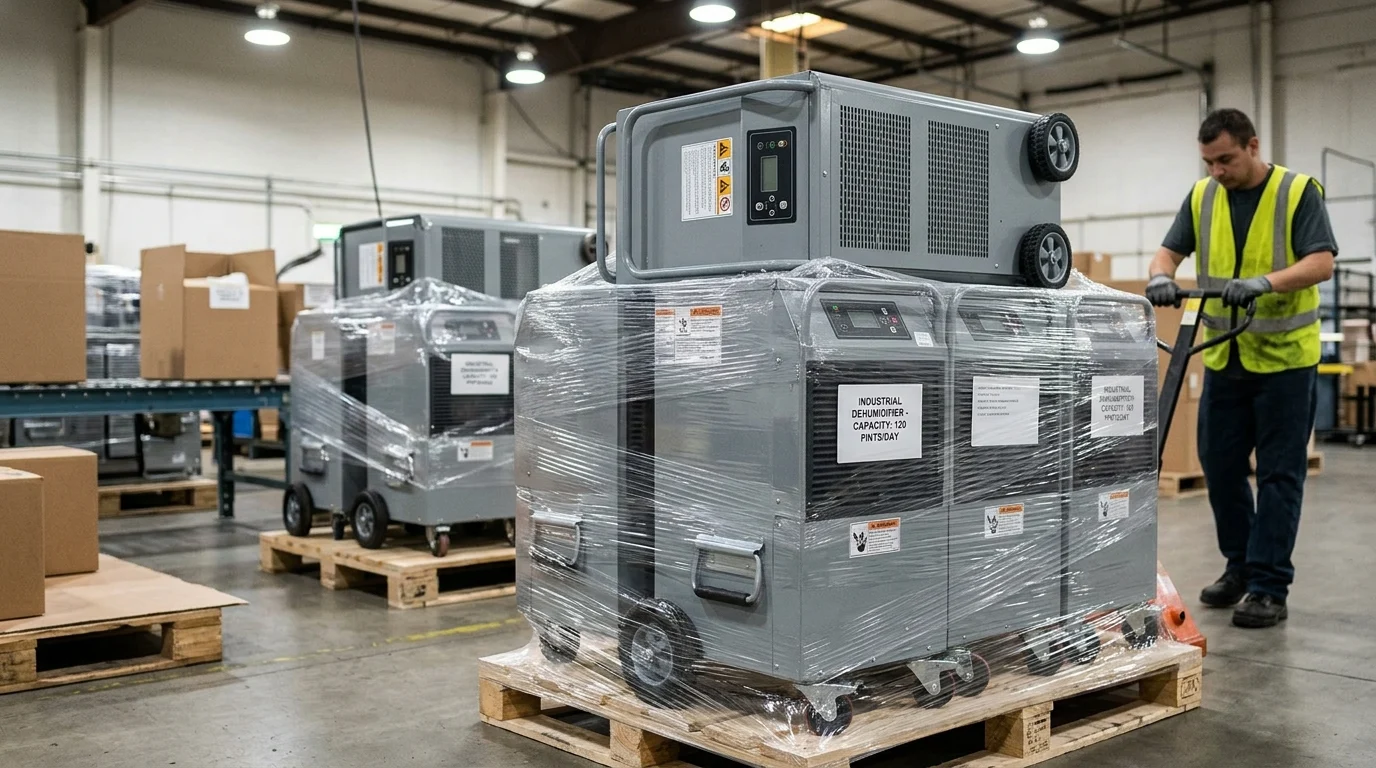
Managing the supply chain for heavy equipment requires precise logistical coordination. Standard production lead times for bulk orders average 30 to 45 days, followed by 20 to 35 days of ocean freight transit. Buyers must specify packaging requirements in their contracts, such as reinforced corrugated boxes with custom EPS foam inserts, to prevent transit damage. Additionally, negotiating a spare parts support package—typically 1% to 2% of the total order volume in free critical components like control boards and humidity sensors—ensures immediate field serviceability upon deployment.
Warranty, inspection, payment, and liability terms
The commercial agreement defines the risk allocation between buyer and seller, and volume purchasers hold significant leverage to secure favorable terms.
| Contract Element | Standard Industry Term | Favorable Buyer Term |
|---|---|---|
| Payment Structure | 30% Deposit, 70% Before Shipment | 20% Deposit, 80% Against Bill of Lading |
| Warranty Duration | 1 Year Parts, 3 Years Compressor | 2 Years Parts, 5 Years Compressor |
| Quality Inspection | Factory internal QA report | Third-party AQL 2.5/4.0 pre-shipment inspection |
Establishing clear liability terms for defective batches and mandating third-party inspections before the final payment is released are critical steps in securing a bulk transaction.
How Buyers Should Make the Final Sourcing Decision
Moving from market research to a finalized purchase order requires a structured decision-making framework that weighs upfront costs against long-term operational reliability.
Step-by-step supplier shortlist process
The final selection should follow a strict funnel process. Begin by issuing a Request for Information (RFI) to 10-15 potential suppliers, narrowing down to 3-5 candidates based on certifications, capacity, and responsiveness. Next, issue a Request for Quotation (RFQ) to the shortlist. Crucially, before signing a bulk contract, buyers must order 1 to 2 sample units for rigorous in-house testing under actual environmental conditions. This physical validation confirms whether the unit meets the promised performance metrics and build quality standards.
When premium vs budget options make sense
Procurement teams often face a choice between lower-cost budget units and premium commercial models. While budget options might offer a 15% to 20% savings on initial capital expenditure, they frequently incur a higher total cost of ownership (TCO). Premium models generally feature high-efficiency rotary compressors, advanced hot-gas bypass defrost systems, and superior insulation. These features can reduce energy consumption by up to 30% and extend the operational lifespan from 3 years to over 7 years, making the premium upfront investment highly profitable in the long run.
Final procurement decision criteria
The ultimate sourcing decision should be based on a weighted scoring matrix. Criteria such as unit cost (30%), proven extraction efficiency (25%), warranty and after-sales support (20%), factory quality control processes (15%), and lead time (10%) provide an objective basis for selection. By carefully balancing these factors and utilizing direct communication channels to manufacturers of commercial dehumidifiers, enterprise buyers can secure reliable equipment fleets that deliver consistent environmental control and long-term financial value.
Further reading:
Key Takeaways
- The most important conclusions and rationale for commercial dehumidifiers
- Specs, compliance, and risk checks worth validating before you commit
- Practical next steps and caveats readers can apply immediately
Frequently Asked Questions
Where can I buy commercial dehumidifiers in bulk?
Buy directly from manufacturers or OEM suppliers like CetusDry for factory pricing, customization, and better control over lead times and support.
What should I verify before placing a bulk order?
Confirm AHAM-rated PPD, L/kWh efficiency, airflow, operating temperature, defect rate, warranty terms, and actual production capacity.
Is buying direct better than using a distributor?
Direct buying usually lowers unit cost and supports OEM options. Distributors can help with faster local delivery and smaller split shipments.
What capacity is suitable for commercial projects?
For many sites, start around 110 PPD and 250 CFM. Heavy-duty projects often need 200+ PPD, 400+ CFM, and a built-in pump.
Can CetusDry support OEM or private-label bulk orders?
Yes, factory-direct suppliers such as CetusDry typically support OEM or private-label needs, including branding, component options, and volume procurement.