
Introduction
Getting pricing for OEM dehumidifier manufacturing starts with more than asking for a unit cost. A useful quote reflects your product specs, order volume, certifications, tooling needs, packaging, lead times, and quality expectations, so you can compare suppliers on both price and execution risk. This article explains what information manufacturers typically need, which quote details matter most, and how to avoid vague estimates that cause delays or cost changes later. With that framework, you can approach the RFQ process more efficiently and evaluate OEM partners with clearer expectations.
Why an OEM Dehumidifier Quote Matters
Securing a comprehensive and accurate quote is the foundational step in establishing a successful manufacturing partnership for any climate control brand. When sourcing an OEM dehumidifier, the request for quotation (RFQ) process dictates the trajectory of product development, unit economics, and supply chain reliability. A well-structured quote goes beyond a simple price tag; it establishes the baseline for negotiations, sets production expectations, and clarifies the distribution of responsibilities between the buyer and the manufacturer.
How buyers use quotes to compare cost and risk
Procurement teams and product managers utilize initial quotes to evaluate the total landed cost of a product rather than just the factory-gate price. A comprehensive quote allows buyers to break down the cost into its constituent parts, such as raw materials, compressor technology, labor, and overhead. By analyzing these components, buyers can identify areas where costs might be optimized or where excessive price cutting might introduce quality risks.
Furthermore, quotes serve as a primary tool for risk mitigation. Manufacturers that provide highly detailed quotes demonstrate a mature understanding of the production process and supply chain variables. Conversely, vague quotes often mask hidden fees or indicate a lack of experience with the specific product category. Buyers must cross-reference the quoted prices against industry benchmarks, keeping in mind that an abnormally low unit price might signal substandard components or a high defect rate down the line.
What commercial terms should appear in the first quote
The first formal quote should clearly outline critical commercial terms that govern the financial and logistical relationship between the two parties. Minimum Order Quantity (MOQ) is a primary metric; for standard consumer dehumidifiers, MOQs typically range from 500 to 1,000 units, whereas specialized industrial models might have lower thresholds of 100 to 200 units. Knowing the MOQ allows buyers to calculate the initial capital outlay required to launch or restock a product line.
Payment terms and Incoterms are equally critical components of the commercial agreement. Standard payment structures in overseas manufacturing often require a 30% Telegraphic Transfer (T/T) deposit before mass production begins, with the remaining 70% balance due upon the issuance of the Bill of Lading or after a successful pre-shipment inspection. Additionally, the quote must specify the Incoterms, such as FOB (Free On Board) or EXW (Ex Works), which dictate at what point the liability and shipping costs transfer from the manufacturer to the buyer. Standard lead times for mass production should also be explicitly stated, typically falling between 45 and 60 days after deposit receipt and sample approval.
Product Specifications Needed for an Accurate Quote
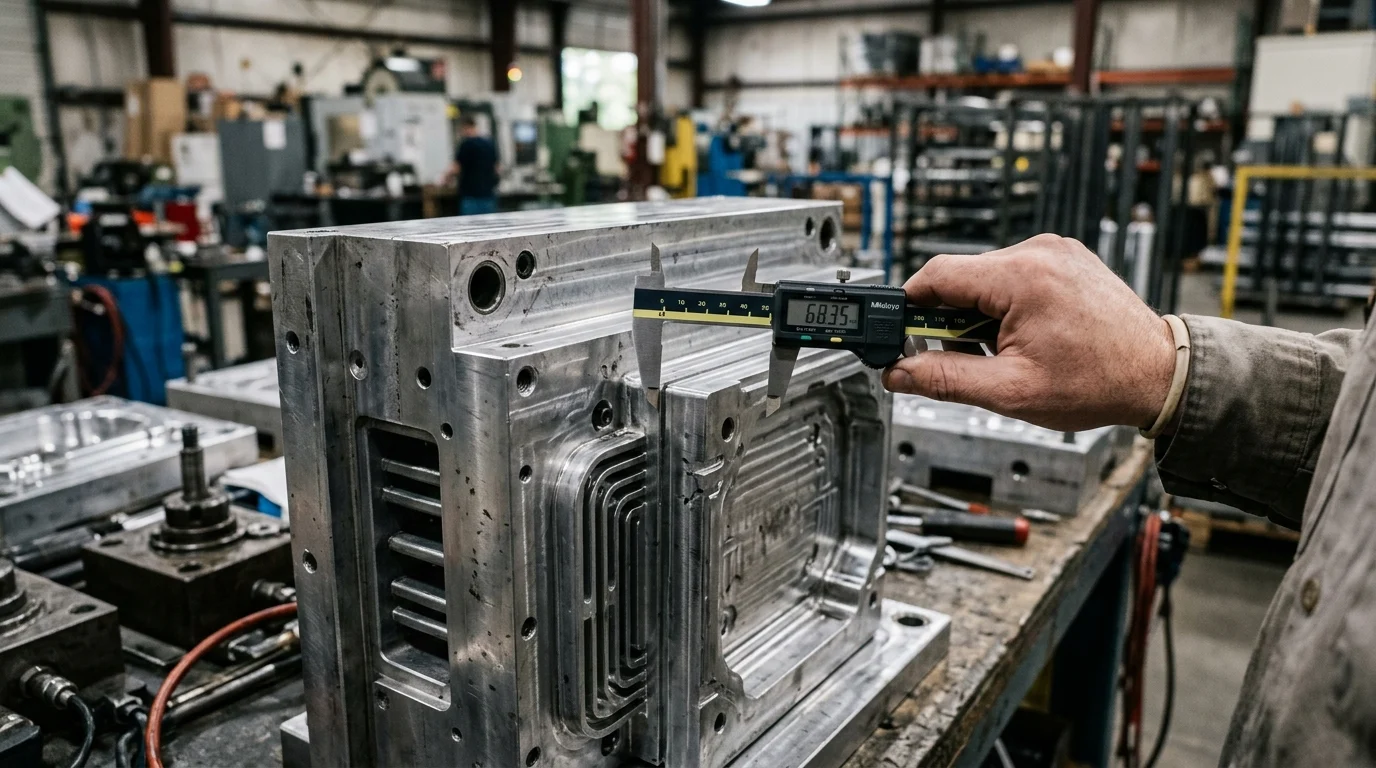
The accuracy of an OEM manufacturing quote is directly proportional to the detail provided in the product specifications. Manufacturers calculate their costs based on the exact technical requirements, material choices, and performance standards outlined in the buyer’s technical dossier. Without granular specifications, suppliers are forced to estimate, which leads to inaccurate pricing and potential disputes during the production phase.
Which technical inputs affect OEM dehumidifier pricing
Several core technical parameters drive the unit cost of an OEM dehumidifier. The most significant cost driver is the moisture removal capacity, typically measured in pints per day (PPD) or liters per day (L/D). A compact residential unit designed to remove 30 pints per day will utilize a significantly smaller and less expensive compressor than a commercial unit rated for 150 pints per day. The compressor brand and type (e.g., rotary vs. reciprocating) also heavily influence both cost and long-term reliability.
Airflow rate, measured in Cubic Feet per Minute (CFM), and the choice of refrigerant further impact the pricing structure. Modern environmental regulations are pushing manufacturers away from older refrigerants toward eco-friendly alternatives like R32 or R290. Specifying these newer, highly efficient refrigerants may slightly increase the initial component cost but is essential for global market compliance. Additionally, the inclusion of smart technologies, such as Wi-Fi modules for app integration or advanced digital humidistats, adds specific line-item costs to the printed circuit board assembly (PCBA).
How to define performance targets, materials, and branding
Defining performance targets involves setting acceptable ranges for operational metrics. For instance, a buyer must specify the target humidity control range, commonly set between 30% and 80% relative humidity, and the acceptable noise level, which should generally remain below 50 decibels (dB) for residential models. If the product aims to achieve Energy Star certification, the manufacturer must select high-efficiency fan motors and heat exchangers, which must be factored into the quote.
Material selection and branding requirements also dictate manufacturing costs. The housing material—whether standard ABS plastic for consumer models or powder-coated stainless steel for industrial environments—drastically changes the bill of materials (BOM). Branding requirements, such as custom injection molds for a unique chassis design, custom pantone color matching, and silk-screened logos, involve upfront tooling costs. Tooling for a completely custom chassis can range from $10,000 to $40,000, depending on the complexity and number of parts.
What comparison table to use when evaluating quotes
To effectively evaluate multiple supplier proposals, buyers should utilize a standardized comparison matrix. This ensures that competing manufacturers are quoting based on identical technical assumptions rather than their own default configurations.
| Specification Category | Parameter to Define | Typical Cost Impact Variable | Example Threshold/Range |
|---|---|---|---|
| Core Performance | Moisture Removal Capacity | Compressor size, evaporator coil density | 50 PPD (Residential) to 200+ PPD (Industrial) |
| Environmental | Refrigerant Type | Component compatibility, safety testing | R410A (Legacy) vs. R32/R290 (Eco-friendly) |
| User Interface | Smart Connectivity | PCBA complexity, Wi-Fi module addition | $3.00 to $8.00 per unit for IoT integration |
| Physical Build | Housing Material | Raw material costs, tooling requirements | ABS Plastic (Low) vs. 304 Stainless Steel (High) |
| Tooling & Branding | Custom Chassis | NRE (Non-Recurring Engineering) fees | $10,000 to $40,000 upfront mold cost |
How to Evaluate OEM Dehumidifier Manufacturers
Receiving competitive pricing is only the first hurdle in the sourcing process. Evaluating potential manufacturing partners requires a holistic approach that examines their operational capabilities, financial stability, and quality management systems. A supplier offering the lowest unit price may end up costing more in the long run if they lack the infrastructure to maintain consistent quality or meet delivery deadlines.
Which comparison points matter beyond the initial quote
Beyond the unit price and tooling costs, buyers must evaluate a manufacturer’s production capacity and scalability. A factory that produces 5,000 units a month might struggle to accommodate a sudden scale-up if the buyer’s product experiences rapid market success. Buyers should target manufacturers with a demonstrated capacity of at least 30,000 to 50,000 units per month to ensure supply chain elasticity. Furthermore, the size and expertise of the internal Research and Development (R&D) team are crucial indicators of a supplier’s ability to troubleshoot complex engineering challenges and integrate modern features.
Historical defect rates and the supplier’s approach to warranty claims are also vital comparison points. A reliable OEM partner should maintain a mass production defect rate of less than 1.5%. Buyers must inquire about the manufacturer’s corrective action procedures when defects do occur. Assessing how a factory handles past failures provides deep insight into their management culture and commitment to long-term client success.
How factory audits, sample validation, and pilot orders reduce risk
To systematically reduce risk, buyers must implement a rigorous validation process before committing to high-volume orders. This begins with a comprehensive factory audit, ideally conducted by a third-party inspection agency, to verify the supplier’s ISO 9001 certification, assess working conditions, and confirm the actual existence of the production equipment claimed in their marketing materials.
Following a successful audit, sample validation is the next critical phase. The buyer must request a ‘Golden Sample’—a fully functional prototype that represents the exact standard of mass production. Once the sample is rigorously tested for performance and safety, buyers should initiate a pilot run. A pilot order of 100 to 200 units allows the manufacturer to test their assembly line processes and quality control checkpoints at scale, identifying potential manufacturing bottlenecks before a 5,000-unit mass order is placed.
Compliance, Quality, and Logistics Factors That Change Pricing
While raw materials and labor form the core of product pricing, compliance, quality assurance, and logistics introduce significant variable costs that must be accounted for in the final quote. Overlooking these factors can lead to unexpected budget overruns, customs delays, or the inability to legally sell the product in target markets.
Which certifications, testing standards, and regional rules apply
Navigating international regulatory frameworks is mandatory for climate control appliances. Depending on the target market, dehumidifiers must pass stringent electrical safety and environmental tests. For the North American market, UL or ETL certification is standard, while the European market requires CE marking and adherence to RoHS (Restriction of Hazardous Substances) directives. If a manufacturer does not already hold these certifications for the specific product architecture, the buyer may be responsible for the testing fees.
| Compliance Factor | Target Market | Estimated Testing/Certification Cost | Time to Acquire |
|---|---|---|---|
| UL / ETL Certification | USA & Canada | $8,000 – $15,000 per model | 6 to 10 weeks |
| CE Marking | European Union | $3,000 – $7,000 per model | 4 to 6 weeks |
| RoHS Compliance | Global (primarily EU/UK) | $1,000 – $2,500 for material testing | 2 to 4 weeks |
| Energy Star | North America | $2,000 – $5,000 (plus high-efficiency parts) | 4 to 8 weeks |
How quality plans, inspections, warranty terms, and shipping affect cost
The strictness of the quality control plan directly impacts the final unit price. Implementing stringent Acceptable Quality Limit (AQL) standards—such as AQL 0 for Critical defects, 1.5 for Major defects, and 4.0 for Minor defects—requires the factory to allocate more labor hours to inspection and rework. Warranty terms also play a significant role in pricing. A standard 1-year comprehensive warranty is typically built into the base price, but requesting a 3-year or 5-year warranty on critical components like the compressor will increase the per-unit cost by 3% to 7% to cover the manufacturer’s extended liability.
Finally, global shipping logistics dictate the ultimate landed cost. Dehumidifiers are bulky appliances, meaning shipping efficiency is paramount. A standard 40-foot High Cube (40HQ) shipping container can typically accommodate between 300 and 600 units, depending on the physical dimensions and packaging design. Optimizing the packaging to maximize container density can significantly reduce the per-unit freight cost. Buyers must work closely with their freight forwarders to monitor fluctuating ocean freight rates, which can add anywhere from $5 to $25 per unit depending on global supply chain conditions.
How to Finalize the Best OEM Manufacturing Partner
Transitioning from the initial RFQ phase to signing a binding manufacturing contract requires careful negotiation and strategic alignment. The final selection should be based on a synthesis of competitive pricing, proven technical competence, and a shared vision for product quality and market growth.
What process to follow from RFQ to final supplier selection
The procurement timeline requires strict management to ensure product launch deadlines are met. The typical process begins with the RFQ issuance, followed by a 1 to 2-week period for suppliers to generate detailed initial quotes. Once a shortlist is created, developing and refining the functional sample usually takes 3 to 4 weeks, with an additional 2 weeks allocated for engineering revisions based on testing feedback.
After the Golden Sample is approved and commercial terms are negotiated, the total time to mass production generally spans 90 to 120 days. This lead time includes raw material procurement, PCB fabrication, final assembly, and pre-shipment inspections. Establishing a clear, milestone-based timeline in the final contract ensures both parties are held accountable for delays.
Which decision criteria help choose the best OEM partner
When choosing the best OEM partner, decision criteria must extend
Further reading:
Key Takeaways
- The most important conclusions and rationale for OEM dehumidifier
- Specs, compliance, and risk checks worth validating before you commit
- Practical next steps and caveats readers can apply immediately
Frequently Asked Questions
What details should I send to get an OEM dehumidifier quote?
Send capacity, airflow, refrigerant, voltage, target market, certifications, branding needs, MOQ, and annual volume. More complete specs help Cetus Dry quote faster and more accurately.
How long does it take to receive a quote from an OEM dehumidifier manufacturer?
A standard quote often takes 1–3 working days after receiving clear specs. Custom designs or certification requirements may take longer.
What commercial terms should be included in the first quote?
Ask for unit price, MOQ, tooling fees, payment terms, Incoterms, lead time, packaging, and warranty. This makes cost and risk easier to compare across suppliers.
Can I get a quote if I only have a concept and not full drawings?
Yes, but the quote will usually be preliminary. Share target capacity, size, features, and market so the manufacturer can estimate pricing and suggest specifications.
How can I make my OEM dehumidifier quote more accurate?
Provide exact performance targets, component preferences, compliance needs, logo/packaging files, and shipping destination. Clear inputs reduce revisions and hidden costs.