
Introduction
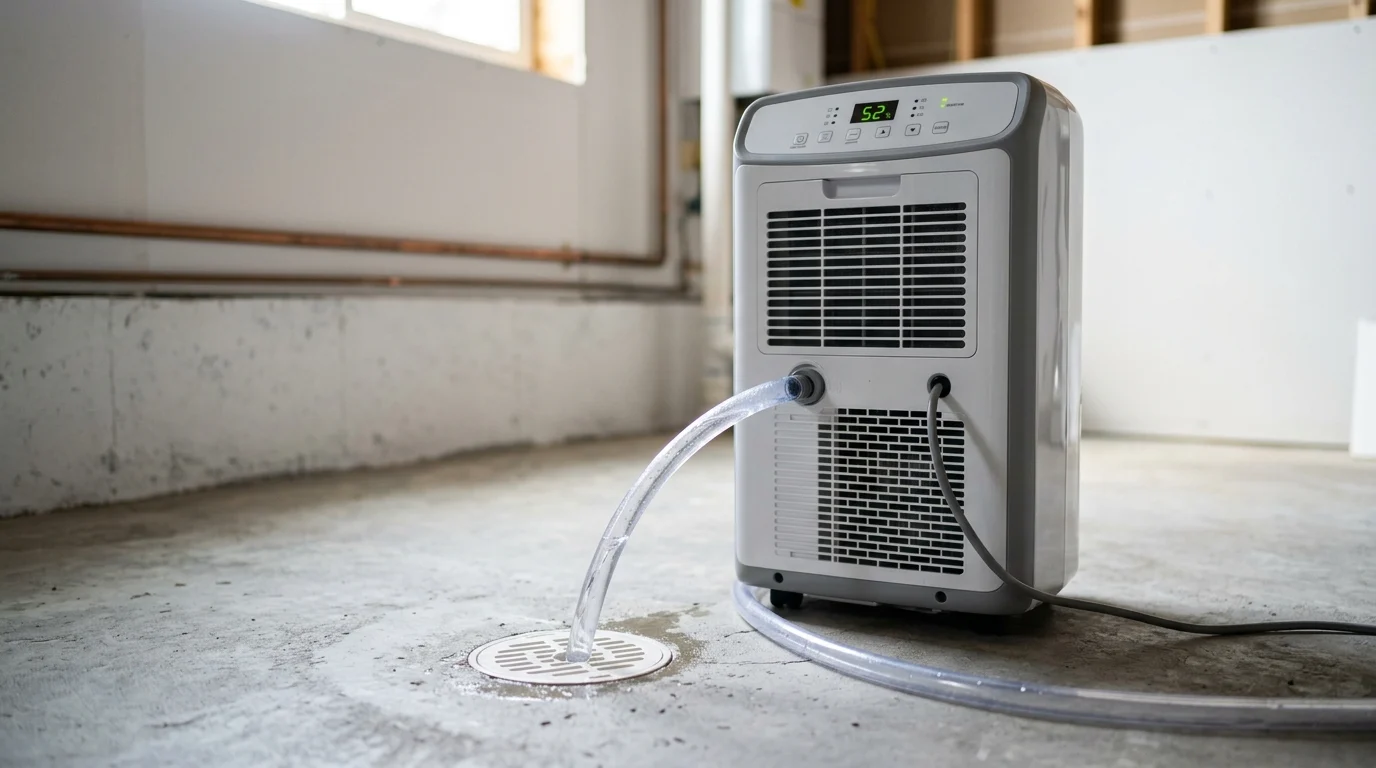
Choosing the right drainage setup determines whether a dehumidifier runs continuously or stops every time its tank fills. This guide explains the main dehumidifier drainage options—from manual collection buckets to gravity hoses, condensate pumps, and built-in pump systems—and shows where each works best. You’ll learn how drainage affects runtime, overflow risk, installation flexibility, and maintenance, especially in basements, crawl spaces, and other high-humidity areas. With that context, the rest of the article breaks down how each method works, what it requires, and how to match a drainage solution to your space and moisture load.
Why dehumidifier drainage matters
Effective dehumidifier drainage is a fundamental requirement for maintaining continuous environmental control in residential, commercial, and industrial facilities. Without a reliable method to evacuate condensate, moisture mitigation systems are inherently limited by their internal storage capacities, rendering them ineffective during periods of peak latent load.
Impact on runtime and overflow prevention
The primary benefit of automated drainage is maximizing operational runtime. In a high-humidity environment—such as a space registering 80% relative humidity at 80°F—a standard 50-pint (23.6-liter) dehumidifier will completely fill its internal reservoir in approximately six to eight hours. Once the float switch is triggered, the compressor shuts down, halting the dehumidification process and allowing ambient moisture levels to rebound.
Continuous drainage mechanisms bypass this mechanical bottleneck, ensuring the equipment operates uninterrupted until the target setpoint is achieved. Furthermore, automated condensate removal eliminates the risk of localized flooding caused by operator error during manual bucket emptying or mechanical failure of the internal float switch.
Best-fit environments for continuous drainage
Continuous drainage configurations are heavily favored in environments where manual intervention is impractical or moisture loads are consistently high. Crawlspaces, unfinished basements, indoor agricultural facilities, and commercial storage warehouses represent primary use cases.
In these spaces, maintaining relative humidity strictly below the 50% threshold is critical to prevent microbial growth and structural degradation. Relying on manual drainage in a remote crawlspace or a high-capacity commercial application generating over 100 pints of condensate daily introduces unacceptable labor costs and operational vulnerabilities.
Dehumidifier drainage options
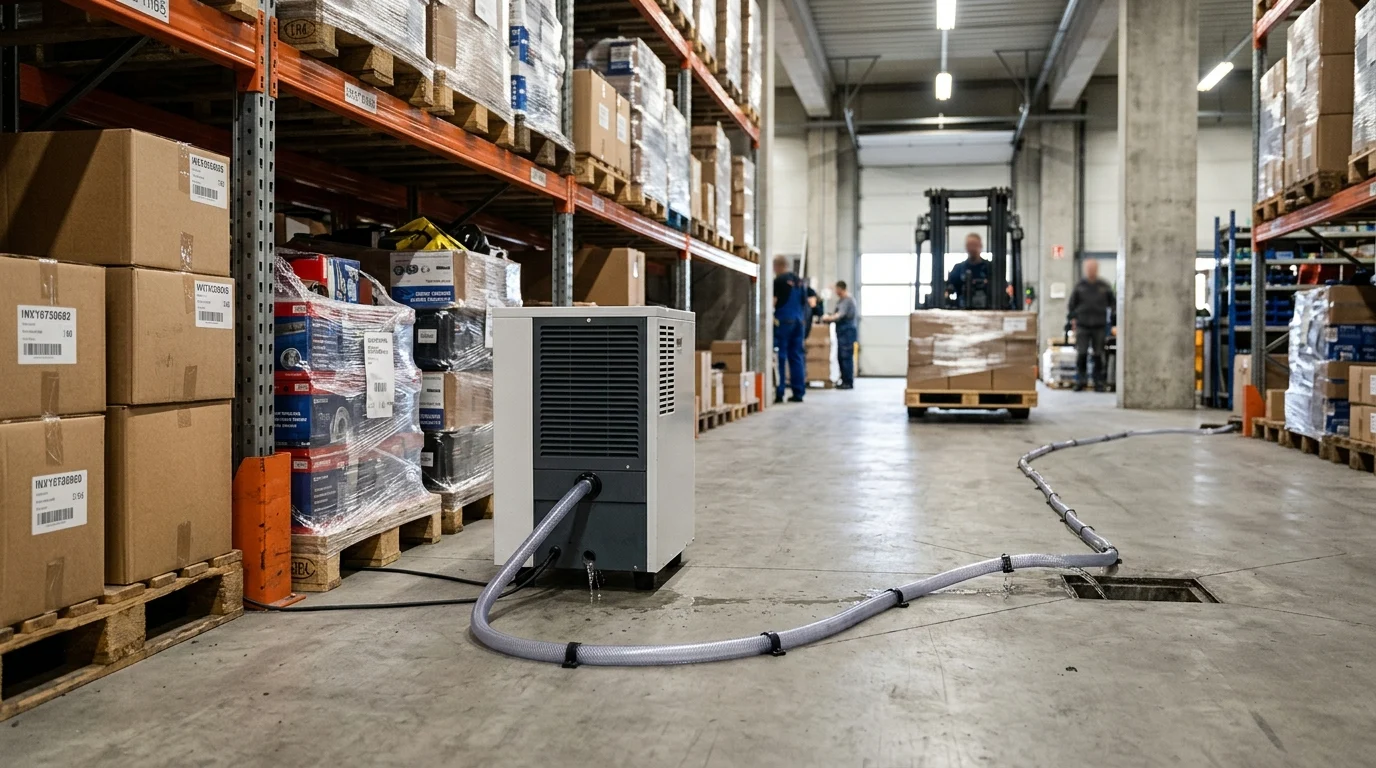
The industry standard categorizes dehumidifier drainage into three primary modalities: gravity-fed, pump-assisted, and manual reservoir collection. Selecting the appropriate mechanism dictates the physical placement of the unit and the overall reliability of the moisture control system.
When gravity drainage works best
Gravity drainage leverages natural downward flow to evacuate condensate. This method requires the dehumidifier's drain port to be positioned at a higher elevation than the destination receptacle, such as a floor drain or sump pit.
Industry best practices dictate a minimum downward slope of 1/4 inch per foot of horizontal run to maintain adequate flow velocity and prevent standing water within the line. When the topography allows, gravity drainage is the most reliable and energy-efficient option, as it introduces zero additional mechanical failure points.
When pump-assisted drainage is needed
Pump-assisted drainage becomes necessary when condensate must be moved vertically or across long horizontal distances without adequate slope. Condensate pumps—whether integrated into the dehumidifier chassis or installed as external aftermarket accessories—utilize an internal impeller to propel water upwards.
A standard integrated pump can typically achieve a vertical lift (head pressure) of 15 to 20 feet (4.5 to 6 meters). This capability is indispensable when evacuating water from a deep basement to a ground-level utility sink or exterior drainage network.
Where bucket drainage fits
Manual bucket drainage relies on the unit's internal reservoir, which typically holds between 1 to 2 gallons (3.7 to 7.5 liters) of condensate. While heavily restricted by capacity, this configuration remains viable for localized, temporary moisture events or low-load environments where the ambient humidity rarely exceeds 55%.
It requires no supplementary plumbing or specialized placement, offering maximum deployment flexibility at the cost of high maintenance labor.
| Drainage Modality | Max Vertical Lift | Maintenance Frequency | Mechanical Complexity |
|---|---|---|---|
| Gravity-Fed | 0 ft (requires slope) | Low (bi-annual flush) | Low |
| Pump-Assisted | 15 – 20 ft | Medium (quarterly checks) | High |
| Manual Bucket | N/A | High (daily/weekly) | Lowest |
How to choose the right drainage setup
Specifying the optimal drainage configuration requires a rigorous assessment of the facility's latent heat load, existing plumbing infrastructure, and the physical constraints of the deployment zone.
Key technical selection factors
The primary technical factor driving drainage selection is the unit's moisture removal capacity, typically measured in Pints Per Day (PPD) or Liters Per Day (LPD) at standard rating conditions. A commercial-grade desiccant or refrigerant dehumidifier rated for 150 PPD will generate nearly 19 gallons (71 liters) of liquid condensate over a 24-hour cycle.
Managing this volume necessitates a high-capacity continuous drainage solution. This often requires hard-piped PVC infrastructure rather than flexible vinyl tubing to handle the sustained volumetric flow rate without risk of backup or pressure loss.
Site and installation constraints
Site constraints heavily dictate feasibility. Engineers must map the distance from the dehumidifier location to the nearest approved discharge point, accounting for elevation changes and building code compliance regarding condensate disposal. Discharging condensate into a sanitary sewer, for example, frequently requires an air gap fitting to prevent cross-contamination from sewer gas backup.
Additionally, external condensate pumps require dedicated 120V or 240V receptacles, meaning electrical infrastructure must be evaluated alongside plumbing access. In environments subject to freezing temperatures, drainage lines routed to the exterior must be heat-traced or insulated to prevent ice blockages that can force condensate back into the equipment.
Installation and maintenance best practices
Even the most robust drainage specification will fail if installation protocols and maintenance schedules are ignored. Proper execution during deployment safeguards the equipment and the surrounding facility from water damage.
Core installation checks
Core installation checks begin with the securement of the drainage tubing. Installers should utilize hose clamps or threaded fittings rather than relying on friction fits, which can degrade over time due to thermal expansion and contraction. The tubing itself must be appropriately sized; a 5/8-inch or 3/4-inch inner diameter (ID) line is standard to prevent capillary action from restricting flow.
Installers must also ensure the line is free of dips, traps, or sharp 90-degree bends that could accumulate debris or create airlocks. When utilizing an external pump, verifying the functionality of the safety overflow switch—which should be wired to interrupt the dehumidifier's compressor circuit if the pump fails—is a critical commissioning step.
Preventive maintenance essentials
Preventive maintenance is essential to mitigate the accumulation of biofilm, algae, and mineral scale, which are the primary culprits behind drainage blockages. Facility managers should implement a quarterly maintenance schedule that includes flushing the entire drainage line with a 10% bleach solution or a specialized HVAC condensate line cleaner.
For pump-assisted systems, the pump reservoir must be inspected for sediment buildup, and the float mechanism should be manually actuated to confirm responsiveness. Units operating in high-dust environments, such as construction sites or manufacturing floors, may require this maintenance cycle to be accelerated to every 30 to 60 days to counteract particulate ingress into the condensate pan.
How to compare drainage configurations
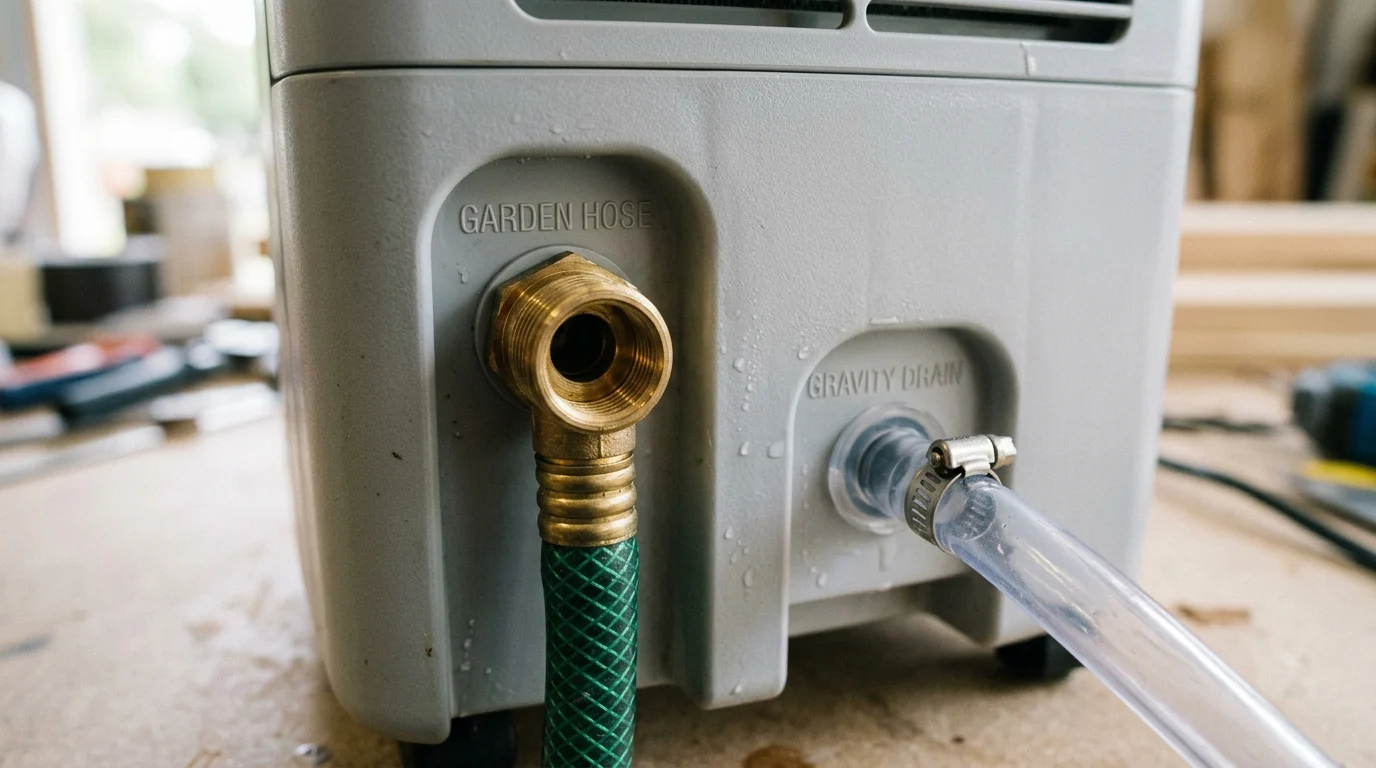
Comparing drainage configurations ultimately involves balancing upfront capital expenditures against long-term operational costs, serviceability requirements, and the facility's tolerance for water damage risk.
Decision criteria for specification
Key decision criteria for specification include the spatial footprint of the equipment, ambient noise restrictions, and energy consumption profiles. Integrated pump systems add approximately 40 to 50 decibels (dB) of intermittent noise when the impeller engages, which may be unacceptable in acoustically sensitive environments like libraries or residential living spaces.
Conversely, external condensate pumps introduce a secondary physical footprint and require separate power metering, typically drawing between 1.5 to 2.0 amps during operation. Facility engineers must evaluate these metrics against the baseline requirements of the space to determine the most viable path forward.
Cost, serviceability, and risk tradeoffs
The tradeoffs between cost, serviceability, and risk are highly quantifiable. Opting for a dehumidifier with a factory-integrated pump generally introduces a $50 to $150 premium over a gravity-only equivalent. However, this upfront cost is rapidly offset by the reduction in manual labor required to empty buckets, which can exceed hundreds of dollars annually in commercial maintenance hours.
Relying on manual drainage or poorly sloped gravity lines introduces a high risk of overflow, potentially resulting in secondary property damage that far exceeds the cost of a robust, pump-assisted hard-piped installation.
| Configuration | Upfront Cost Premium | Operational Labor Requirement | Overflow Risk Profile |
|---|---|---|---|
| Integrated Pump | $50 – $150 | Minimal | Low (with safety shutoff) |
| External Pump Add-on | $60 – $120 | Minimal | Low to Medium |
| Gravity Drain (Hard-piped) | $20 – $50 (materials) | Lowest | Lowest |
| Manual Bucket | $0 | Highest ($$$ annually) | High |
Key Takeaways
- The most important conclusions and rationale for dehumidifier drainage
- Specs, compliance, and risk checks worth validating before you commit
- Practical next steps and caveats readers can apply immediately
Frequently Asked Questions
Why is continuous drainage better than using the bucket?
It lets the dehumidifier run without stopping when the reservoir fills, which helps maintain humidity below 50% and reduces overflow risk in basements, crawlspaces, and warehouses.
When should I choose gravity drainage?
Use gravity drainage when the drain hose can run downhill to a floor drain or sump pit with about 1/4 inch of slope per foot. It is the simplest and most reliable option.
When do I need a pump for dehumidifier drainage?
Choose a pump when water must move up or across a long flat run, such as from a basement to a utility sink. Many integrated pumps can lift condensate 15 to 20 feet.
How often should a dehumidifier drain line be maintained?
Flush gravity drain lines about twice a year to clear buildup. Check pump systems quarterly to confirm the pump, tubing, and float switch are working properly.
Is manual bucket drainage ever a good option?
Yes, for temporary moisture issues or small rooms with light humidity loads. It is flexible and requires no plumbing, but expect frequent emptying once humidity rises.