
Introduction
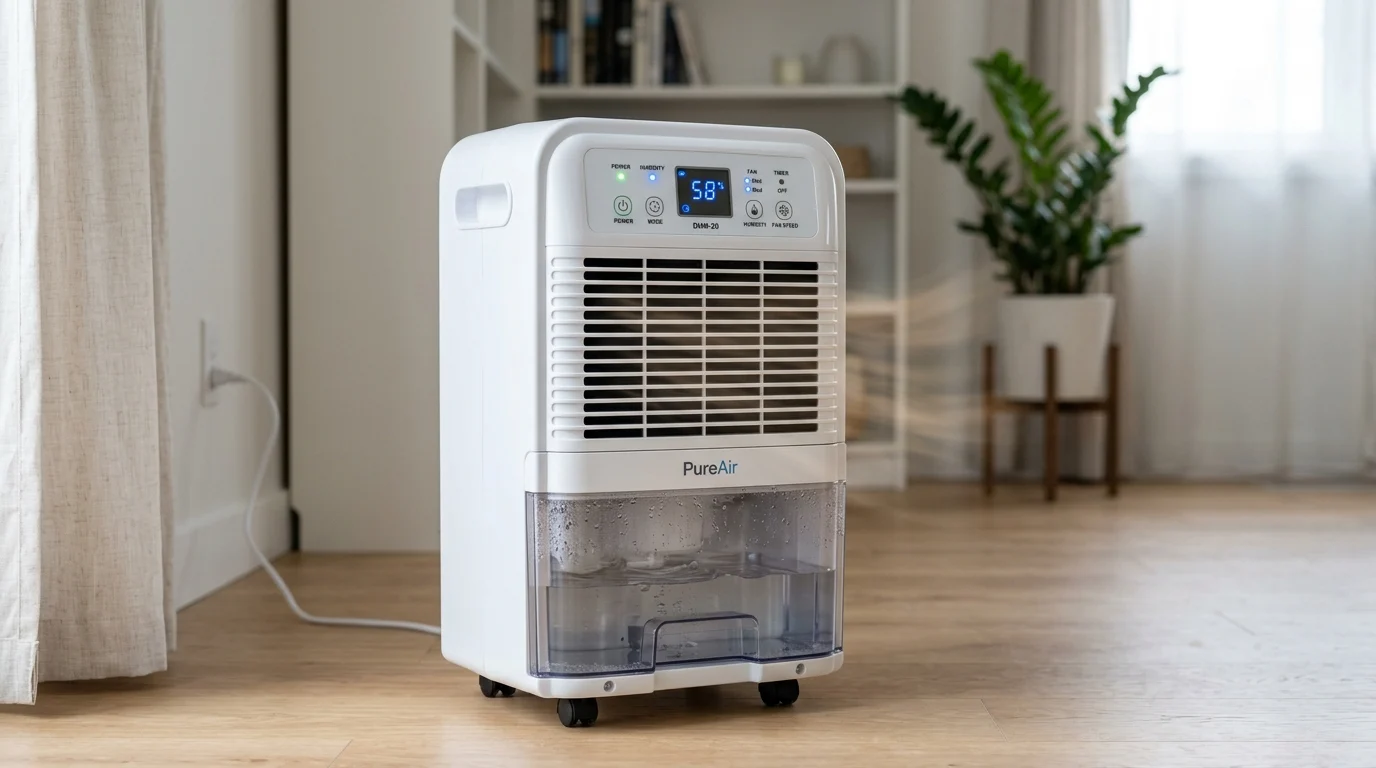
A compressor dehumidifier removes moisture by pulling room air across a set of cold and warm coils in a sealed refrigeration system. As the air hits the chilled evaporator coils, water vapor condenses into liquid and collects in a tank or drains away. The air then passes over warmer condenser coils before returning to the room slightly heated and drier. This article explains the key components, the airflow and refrigerant cycle, and the conditions that affect performance, so you can understand why these units work well in some environments and less effectively in others.
How a compressor dehumidifier works
Compressor dehumidifiers operate on the fundamental principles of thermodynamics and the refrigeration cycle to extract airborne moisture. By manipulating the physical state of a refrigerant gas, these systems create localized temperature differentials that force water vapor to condense out of the ambient air.
Understanding the internal mechanics of a compressor-based system requires examining how sensible and latent heat are managed within the unit. The efficacy of this process is heavily dependent on specific environmental variables, which dictate the overall moisture extraction rate.
Core components and airflow path
The architecture of a compressor dehumidifier relies on a closed-loop refrigeration circuit. The primary components include a mechanical compressor, a set of evaporator (cooling) coils, a set of condenser (heating) coils, an expansion device such as a capillary tube or thermostatic expansion valve, and a motorized fan. The system is charged with a specialized refrigerant, commonly R-410A or R-32, which acts as the heat transfer medium.
The compressor pressurizes the low-temperature refrigerant gas, raising its temperature and pressure before pushing it into the condenser. After releasing heat, the pressurized liquid passes through the expansion valve, experiencing a rapid pressure drop. This forces the refrigerant to evaporate and absorb heat as it enters the evaporator coils, dropping the coil surface temperature significantly below the ambient dew point.
Step-by-step moisture removal process
The moisture removal sequence begins when the internal fan draws humid ambient air into the chassis, typically processing between 150 to 400 cubic feet per minute (CFM) depending on the unit's capacity. This humid air is forced across the chilled evaporator coils, which are maintained at temperatures usually between 35°F and 40°F (1.6°C to 4.4°C).
As the air cools below its dew point, it can no longer hold its current moisture load. The water vapor undergoes a phase change, condensing into liquid water droplets on the fins of the evaporator coil. This liquid gravity-feeds into a collection basin or a continuous drainage hose. The newly dehumidified, cold air is then routed over the hot condenser coils to recover sensible heat. The air is ultimately exhausted back into the room approximately 2°F to 5°F (1°C to 3°C) warmer than when it entered, but with a substantially reduced relative humidity.
How temperature and humidity affect performance
The performance of a compressor dehumidifier is inextricably linked to ambient temperature and relative humidity (RH). Manufacturers typically rate extraction capacity at the Association of Home Appliance Manufacturers (AHAM) standard of 65°F and 60% RH, or the older testing standard of 80°F and 60% RH. At higher temperatures and humidity levels, the air holds a larger volume of water vapor, allowing the compressor to extract maximum moisture with high thermodynamic efficiency.
Conversely, as ambient temperatures drop below 60°F (15.5°C), the dew point approaches the freezing mark. Moisture condensing on the evaporator coils begins to freeze, forming a layer of frost that insulates the coils and halts the dehumidification process. The system must then pause the compressor and initiate a defrost cycle—running only the fan to melt the ice—which severely degrades the overall daily moisture extraction rate.
Where compressor dehumidifiers work best
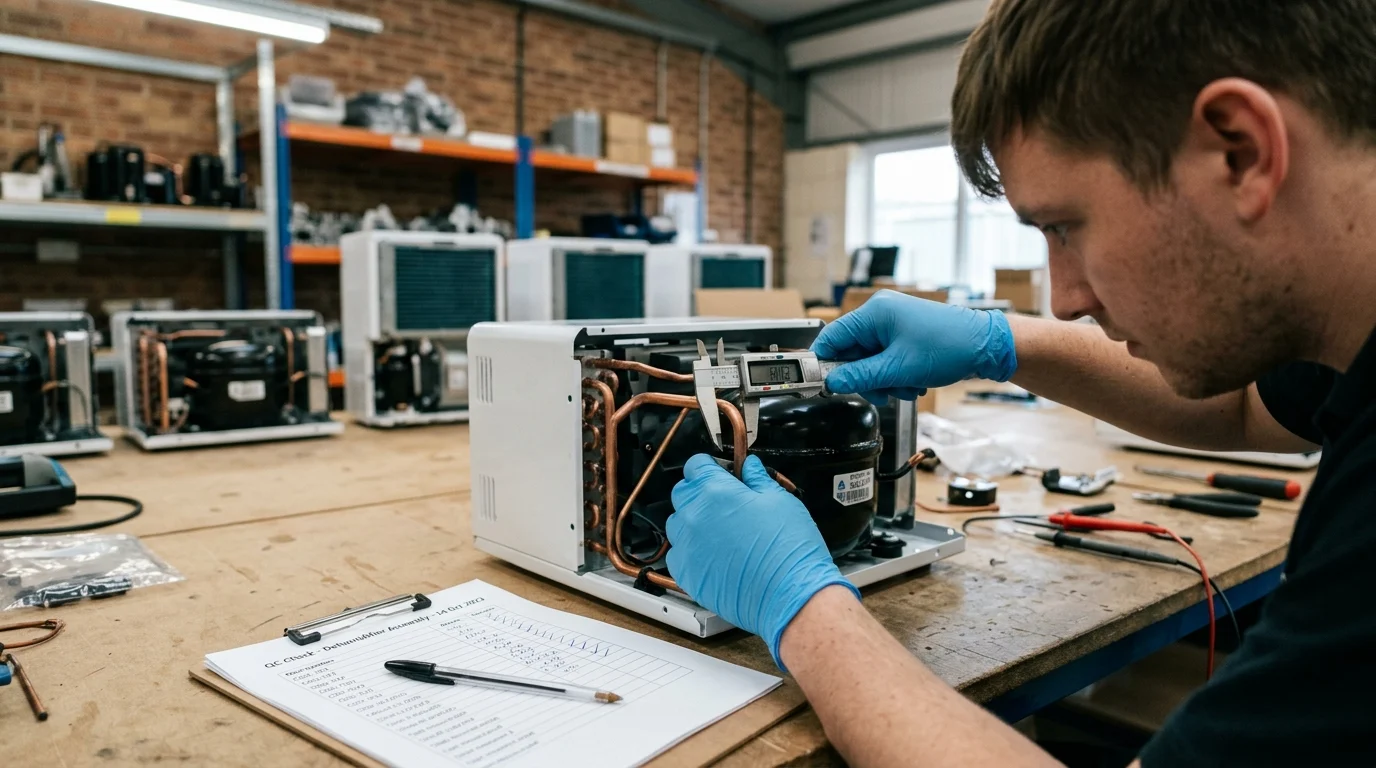
Because compressor dehumidifiers rely on creating a temperature differential to achieve condensation, their operational viability is highly dependent on the environment in which they are deployed. They represent the most cost-effective and energy-efficient method for moisture control, provided the ambient conditions align with their thermodynamic requirements.
Best operating conditions and limitations
Compressor models achieve peak efficiency in warm, moderately to highly humid environments. The optimal operating temperature range for these units is between 65°F and 90°F (18°C to 32°C). Within this band, the temperature differential between the ambient air and the chilled evaporator coils is maximized without the risk of freezing, allowing the unit to continuously extract 50, 70, or even 150+ pints of water per day depending on its capacity rating.
The primary limitation of compressor technology is its inability to function efficiently in cold climates. When ambient temperatures drop below 41°F (5°C), standard compressor units become virtually inoperable. The continuous formation of frost on the coils forces the unit into perpetual defrost mode, meaning the compressor remains off and no active moisture extraction occurs. Even commercial-grade compressor units equipped with hot-gas bypass defrost systems experience a significant drop in extraction efficiency at temperatures below 50°F (10°C).
Real-world moisture control applications
In real-world applications, compressor dehumidifiers are the standard choice for spaces that remain consistently warm or at room temperature. They are extensively used in residential basements, indoor pool enclosures, commercial warehouses, and manufacturing facilities where ambient temperatures rarely drop below 60°F. For example, maintaining a 5,000-square-foot warehouse at 45% to 50% RH to prevent cardboard degradation and metal corrosion is an ideal use case for a high-capacity commercial compressor unit.
Greenhouses and indoor agricultural setups also heavily rely on compressor units. During the lights-off cycle in a grow room, temperatures often hover around 70°F (21°C) while plant transpiration causes massive spikes in humidity. A properly sized compressor dehumidifier processing 300+ CFM of air can rapidly pull tens of gallons of water from the air per day, preventing the onset of powdery mildew and crop loss.
Compressor vs desiccant dehumidifiers
When evaluating moisture control solutions, industry professionals frequently weigh compressor dehumidifiers against desiccant dehumidifiers. While compressors utilize a refrigeration cycle to condense water, desiccant systems use a specialized rotor coated with silica gel or similar hygroscopic materials to adsorb moisture directly from the air.
Key differences in efficiency and moisture removal
The most critical difference between the two technologies lies in how efficiency scales with temperature. Compressor dehumidifiers are highly efficient at removing large volumes of water at high temperatures, often achieving extraction rates of over 100 pints per day at 80°F/60% RH. However, their efficiency plummets in cold air.
Desiccant dehumidifiers, by contrast, rely on chemical adsorption rather than condensation. They do not have evaporator coils and therefore do not suffer from frost buildup. A desiccant unit can operate efficiently in temperatures well below freezing, continuously extracting moisture even at 0°F (-18°C). Furthermore, desiccant systems can achieve extremely low relative humidity levels—often driving ambient conditions down to single-digit RH percentages and achieving sub-zero dew points, which is physically impossible for standard compressor systems.
How to compare performance metrics
Comparing these units requires looking at specific performance metrics, primarily the Energy Factor (EF), measured in liters of water removed per kilowatt-hour (L/kWh) of electricity consumed.
| Metric | Compressor Dehumidifier | Desiccant Dehumidifier |
|---|---|---|
| Optimal Temp Range | 65°F to 90°F (18°C to 32°C) | 0°F to 100°F (-18°C to 38°C) |
| Energy Factor (L/kWh) | 1.8 to 3.0+ (High efficiency in warmth) | 1.0 to 1.5 (Lower efficiency overall) |
| Minimum Achievable RH | ~35% to 40% | < 10% |
| Defrost Requirement | Yes (below 60°F) | No |
While compressor units boast a much higher Energy Factor in standard conditions—making them cheaper to operate per liter of water removed—desiccant units maintain a flat, predictable performance curve regardless of how cold the air gets.
When each type is the better choice
A compressor dehumidifier is the better choice for the vast majority of standard residential, commercial, and industrial applications where temperatures are controlled and remain above 60°F. They offer superior moisture removal per dollar of electricity spent and have a lower upfront capital cost for high-volume extraction.
Conversely, desiccant dehumidifiers are the mandatory choice for cold storage facilities, unheated winter environments, pharmaceutical manufacturing requiring strictly controlled sub-40% RH environments, and archival storage facilities. If the target environment regularly drops below 50°F or requires a dew point below 40°F, a desiccant system is required.
Performance factors and maintenance
To ensure a compressor dehumidifier meets its rated extraction capacity, operators must understand the specifications that drive performance and adhere to a strict maintenance schedule. Neglecting the mechanical components of a refrigeration circuit inevitably leads to reduced airflow, increased energy consumption, and premature equipment failure.
Specifications that affect capacity and airflow
The two primary specifications that dictate a unit's real-world performance are its moisture extraction capacity (measured in pints or liters per day) and its volumetric airflow rate (measured in CFM). The compressor's displacement determines the cooling power applied to the coils, while the CFM dictates how much air interacts with those coils.
| Rated Capacity (AHAM) | Recommended Airflow | Typical Coverage Area |
|---|---|---|
| 30 Pints / Day | 100 – 150 CFM | Up to 1,000 sq. ft. |
| 50 Pints / Day | 150 – 250 CFM | Up to 2,000 sq. ft. |
| 100+ Pints / Day (Commercial) | 300 – 500+ CFM | 3,000+ sq. ft. |
If a unit is placed in an environment with high moisture loads but has an insufficient CFM rating, it will over-dry the air immediately surrounding the unit while leaving distant corners of the room humid. Proper air circulation is just as critical as the compressor's raw cooling power.
Common issues that reduce effectiveness
The most common issue that reduces a compressor dehumidifier's effectiveness is restricted airflow caused by dirty air filters. A clogged filter can reduce CFM by up to 30%, which prevents adequate ambient heat from reaching the evaporator coils, accelerating frost buildup even in warm temperatures.
Another frequent issue is micro-leaks in the refrigeration lines. A loss of refrigerant lowers the system's operating pressure, causing the evaporator coils to freeze over rapidly and permanently degrading the Energy Factor. Additionally, a drifting or failing humidistat sensor can cause the unit to short-cycle or fail to engage, leading to humidity variances of ±10% RH beyond the target setpoint.
Maintenance steps that preserve performance
Preserving performance requires routine, preventive maintenance. Air filters should be vacuumed or washed every 30 to 90 days, depending on dust levels in the environment. Operating a unit in a dusty workshop will require far more frequent filter changes than operating one in a clean residential basement.
Operators should also inspect the condensate drain lines biannually. Because the extracted water is cold and lacks chlorination, algae and mold can easily accumulate in the drain tube, causing blockages and internal flooding. Flushing the line with a mild bleach or vinegar solution prevents this. Finally, the evaporator and condenser coil fins should be inspected annually; if they are bent or caked with debris, they must be gently combed and cleaned with a foaming coil cleaner to maintain optimal thermodynamic heat transfer.
How to choose the right compressor dehumidifier

Procuring the correct compressor dehumidifier involves more than simply buying the unit with the highest capacity rating. Facility managers and homeowners must carefully calculate the specific moisture load of their environment and analyze the total cost of ownership over the equipment's lifespan.
Application-specific selection criteria
Selecting a unit requires calculating the moisture load based on the volume of the space (cubic feet) and the infiltration rate, commonly measured in Air Changes per Hour (ACH). A tightly sealed modern building might have an ACH of 0.3, while an older, drafty warehouse might exceed 1.0 ACH. Higher infiltration rates mean outdoor humidity is constantly replacing the dry air inside, requiring a dehumidifier with a significantly higher CFM and extraction capacity to keep up.
Additionally, buyers must consider the target relative humidity for their specific application. Preventing basic mold growth in a basement only requires maintaining 50% to 55% RH, which is easily achieved by standard units. However, specialized applications—such as a printing facility requiring exactly 45% RH to prevent paper warping—demand units equipped with precision digital humidistats and continuous drainage capabilities to prevent the unit from shutting off when a bucket fills.
How to balance upfront and operating costs
Balancing upfront capital expenditure (CapEx) against long-term operational expenditure (OpEx) is crucial.
Key Takeaways
- The most important conclusions and rationale for compressor dehumidifier work
- Specs, compliance, and risk checks worth validating before you commit
- Practical next steps and caveats readers can apply immediately
Frequently Asked Questions
How does a compressor dehumidifier remove moisture from air?
A fan pulls humid air over cold evaporator coils, where water vapor condenses into liquid. The water drains away, and the air is reheated across condenser coils before returning drier to the room.
Why does a compressor dehumidifier blow slightly warm air?
After moisture condenses on the cold coils, the air passes over warm condenser coils. This reheats the air by a few degrees, so it leaves drier but slightly warmer than it entered.
What temperature range is best for a compressor dehumidifier?
They work best in warm spaces, typically around 65°F to 90°F. In this range, moisture removal is faster and more efficient than in cooler conditions.
Do compressor dehumidifiers work poorly in cold rooms?
Yes. Below about 60°F, frost can form on the evaporator coils, forcing defrost cycles that reduce water removal and overall efficiency.
Where should I use a compressor dehumidifier for best results?
Use one in warm, humid areas such as basements, living spaces, laundry rooms, or large rooms that stay above roughly 65°F for most of the day.