
Living in a high-humidity environment is far more than just “a little uncomfortable.” Moisture in the air can quietly trigger a series of chain reactions: moldy walls, unpleasant odors on clothes, dust mite infestations, and even worsen respiratory problems. Especially during the rainy season or in coastal areas, indoor humidity can easily exceed 70%, significantly exceeding the human comfort range (ideal humidity is 40%–60%).
This is why more and more families are starting to consider dehumidifiers as a “long-term essential appliance.” However, the problem lies in the complexity of dehumidifier types, the difficulty in understanding their specifications, and the wide price range. Without a clear decision-making logic, it’s easy to make the wrong choice.
This “Dehumidifier Decision Center” will serve as your complete guide, helping you understand home dehumidifiers step-by-step and make a rational choice.
Differences in Working Principles
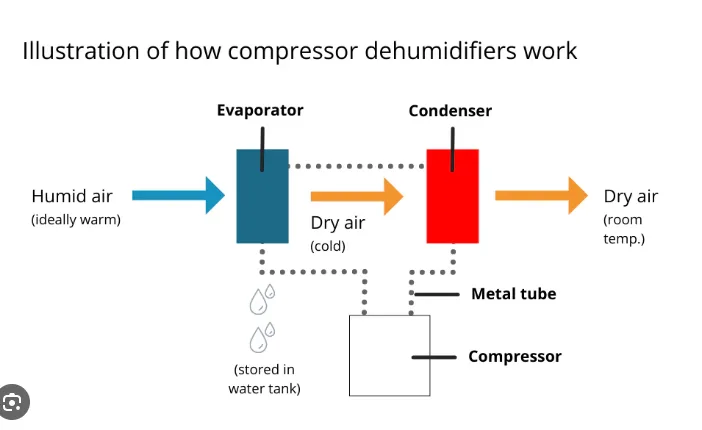
Compressor Dehumidifier
Working Principle: Imagine it as a “mini air conditioner.” It cools the air, causing water vapor to condense into water droplets, which are then collected in a water tank.
Advantages:
Highly efficient dehumidification: Suitable for environments with humidity consistently above 65%
Superior energy efficiency: Especially suitable for long-term daily operation
Wide applicability: Can cover areas from bedrooms to living rooms
Strong stability: Mature technology, typically longer lifespan
Limitations:
Efficiency decreases significantly at low temperatures (winter or below 10°C)
Larger size: Not suitable for frequent movement
Slight compressor noise during operation
More suitable for:
Southern/coastal areas
Long-term use during the rainy season
Dehumidification needs for living rooms and whole-house use
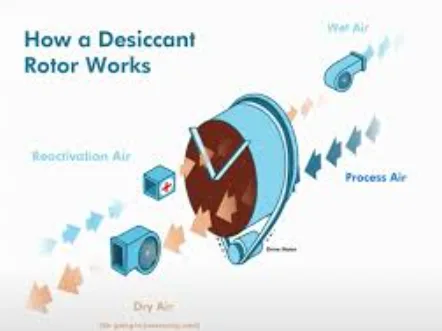
Desiccant Dehumidifier
Working Principle: Absorbs moisture through absorbent materials, then releases and expels the water vapor through heating.
Advantages Explained:
Excellent performance in low-temperature environments, remaining stable even in winter
Compact structure and lighter weight
Quieter operation, suitable for bedroom use
Many models have a clothes drying function
Limitations:
Higher power consumption (especially during long-term operation)
Lower dehumidification capacity (not suitable for large spaces)
Slight warm air during operation
More Suitable for:
Winter or cold regions
Small apartments or localized spaces
Primarily for clothes drying
Capacity Difference
Many people choose the wrong dehumidifier, often not because of the brand, but because of the wrong dehumidification capacity.
Small or Mini Type of Dehumidifier
Key Features:
Dehumidification capacity is usually <10L/day
Small size, even suitable for desktop placement
Low noise, suitable for close-range use
Suitable Scenarios:
Single bedroom
Wardrobe, shoe cabinet, dehumidifying cabinet
Office desk or small space
High-Capacity of Dehumidifier
Key Features:
Dehumidification capacity… 20L–50L/day or even higher
Supports continuous dehumidification over large areas
Most support continuous drainage
Suitable for:
Living rooms or entire apartments
Basements, warehouses
Long-term humid environments
Recommended by Top Cetus Home Dehumidifier List
If you don’t want to look at too many parameters, this section can help you quickly get a feel for what to buy.
The Best Dehumidifier for Small Rooms
The selection logic is not just “small,” but also consider:
Whether it supports automatic humidity control (to avoid over-dehumidification)
Whether it has automatic shut-off when full
Whether it is easy to move (with handles/wheels)
Recommended direction: Lightweight + Quiet + Smart Control
The Quietest Dehumidifier
Noise is often overlooked, but it is very important in actual use, especially in bedrooms.
Key indicators: ≤40dB: Almost no impact on sleep, automatically reduces fan speed in night mode, no compressor structure
Comparison with other home appliances: Dehumidifier vs. Air Conditioner Dehumidification Mode
Key Differences:
Air conditioner dehumidification is an “add-on function,” not a dedicated feature.
Dehumidifiers can precisely control humidity (e.g., set to 50%). Air conditioners can only dehumidify in cooling mode (significant limitations).
Practical Recommendation: For short periods in summer → air conditioner can be used as an alternative; for year-round humidity → a dehumidifier is necessary.