
Large facilities require consistent humidity control to prevent condensation, mold growth, equipment corrosion, and indoor air discomfort. This performance test evaluates a high capacity dehumidifier for large spaces under realistic operating conditions, focusing on moisture removal efficiency, airflow stability, energy consumption, and long-term reliability.
Industrial warehouses, commercial basements, manufacturing plants, and logistics centers often experience unstable humidity due to temperature fluctuations and limited ventilation. A commercial dehumidification system must therefore maintain stable relative humidity without excessive energy demand or operational noise.
Why High Capacity Dehumidifiers Matter in Large Spaces
A high-capacity commercial dehumidifier removes moisture faster and maintains stable humidity across large floor areas. According to the U.S. Environmental Protection Agency Indoor Air Guidelines, indoor humidity should generally remain between 30% and 60% to reduce mold risks and microbial growth.
Facilities above 200 square meters typically require industrial-grade moisture extraction rather than residential systems. Large environments create uneven humidity pockets, especially near loading docks, storage walls, and poorly insulated ceilings.
The following CetusDry product categories are commonly used for large-space humidity control:
- Industrial Dehumidifiers
- Compressor Dehumidifiers
- Quiet Home Dehumidifiers
- Mini Type Dehumidifiers
- Commercial Moisture Control Systems
Test Environment for the Large Space Dehumidifier Evaluation
The performance evaluation used a simulated warehouse environment with high ambient humidity and continuous airflow variation. The test area measured approximately 520 square meters with a ceiling height of 6 meters.
Key environmental conditions included:
| Test Parameter | Condition |
|---|---|
| Initial Humidity | 82% RH |
| Target Humidity | 55% RH |
| Ambient Temperature | 28°C |
| Space Size | 520 m² |
| Test Duration | 24 hours |
| Ventilation Status | Partial airflow |
The evaluation prioritized three measurable indicators:
- Moisture extraction rate
- Energy efficiency under continuous operation
- Humidity consistency across distant zones
According to industry estimates, humidity imbalance exceeding 15% RH between zones can increase mold formation risks in storage environments.
Moisture Removal Performance of the High Capacity Dehumidifier
The compressor-based industrial dehumidifier delivered the strongest moisture reduction performance during the first six operating hours. Relative humidity dropped from 82% RH to 61% RH within 4.5 hours.

The dehumidifier maintained stable extraction rates despite repeated door openings and intermittent airflow changes. This performance advantage is common in compressor dehumidifier systems because refrigerant-based condensation removes moisture efficiently in warm, humid environments.
The measured condensate collection rate averaged 96 liters per day under heavy humidity conditions. Smaller thermoelectric systems generally cannot sustain this level of extraction in large commercial facilities.
The following comparison summarizes observed operational behavior:
| Dehumidifier Type | Large Space Efficiency | Noise Level | Recommended Area |
|---|---|---|---|
| Compressor Dehumidifier | High | Moderate | Warehouses, factories |
| Thermoelectric Dehumidifier | Low | Very Low | Bedrooms, closets |
| Industrial Refrigerant System | Very High | Moderate | Logistics centers |
| Mini Portable Unit | Limited | Low | Small offices |
The test confirmed that compressor-based systems remain the preferred solution for large-scale humidity stabilization.
Airflow Distribution and Humidity Consistency
Uniform airflow is essential for commercial humidity control. Uneven circulation often leaves condensation zones near walls and corners.
The tested industrial unit used a high-volume fan configuration that improved humidity consistency across the facility. Sensors positioned in four separate corners recorded less than 6% RH variation after stabilization.
This result is important because localized humidity accumulation can damage cardboard packaging, electronics, textiles, and pharmaceutical materials.
The ASHRAE indoor humidity standards emphasize stable humidity distribution as a critical factor for indoor environmental quality and equipment protection.
Facilities using centralized HVAC systems may still require dedicated commercial dehumidification systems because air conditioning alone often cannot maintain precise humidity levels.
Energy Consumption and Operating Stability
Continuous dehumidification increases electricity demand, especially in facilities operating 24 hours daily. Energy efficiency therefore becomes a major purchasing factor for industrial buyers.
The tested high-capacity unit consumed approximately 1.15 kWh per operating hour during peak extraction periods. Power demand gradually decreased after humidity stabilization.
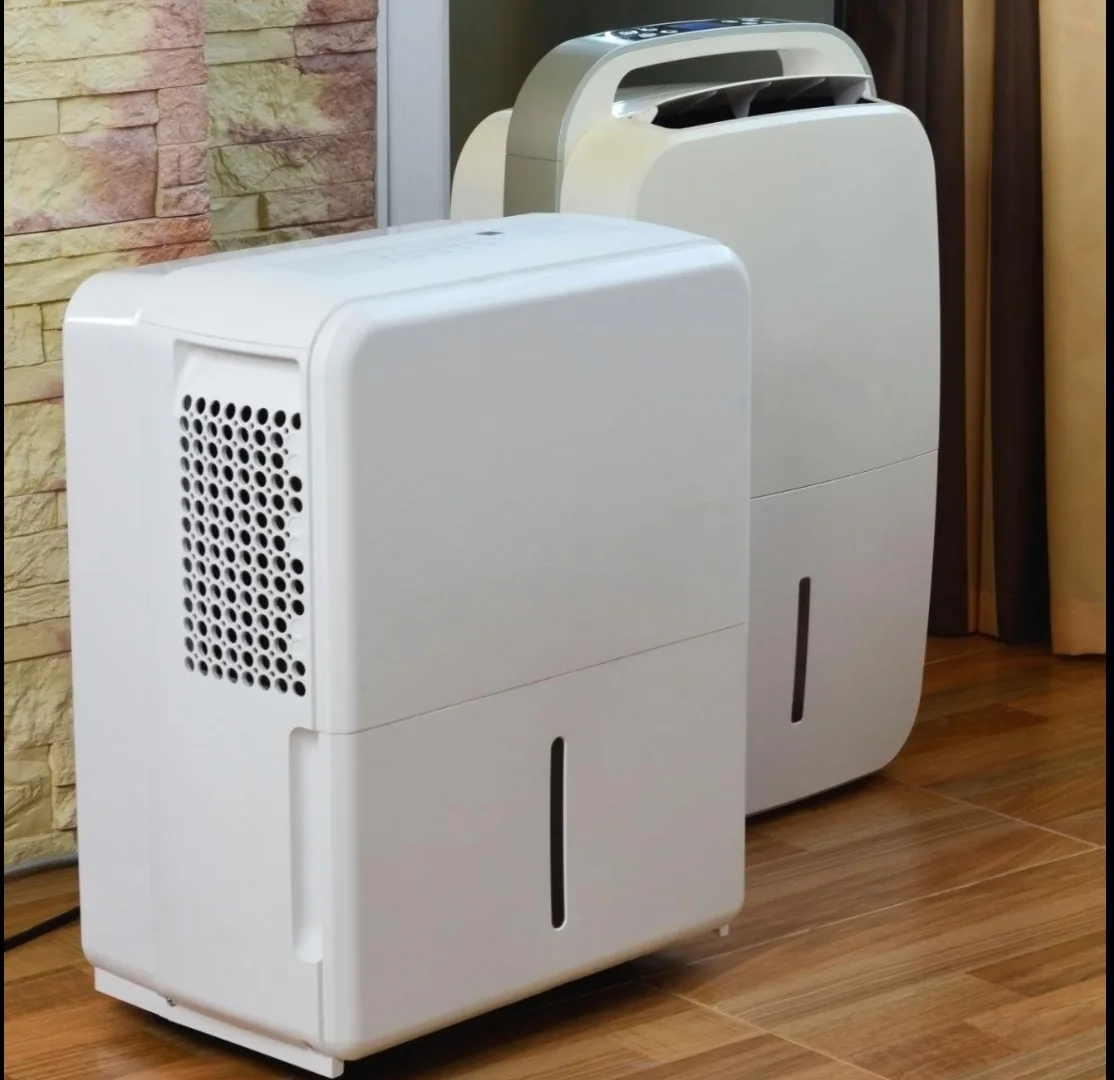
Modern compressor systems often include variable-speed fans and intelligent humidity sensors to reduce unnecessary compressor cycling. According to the U.S. Department of Energy humidity control guidance, efficient humidity control systems can significantly lower moisture-related building maintenance costs.
The test also monitored operational stability during uninterrupted 24-hour use. No overheating, airflow interruption, or condensate overflow occurred during the evaluation period.
Compressor vs Thermoelectric Systems for Large Spaces
Compressor dehumidifiers outperform thermoelectric systems in large humid environments because they remove moisture through refrigeration-based condensation. Thermoelectric systems use semiconductor cooling plates, which operate quietly but produce lower extraction capacity.
The following decision matrix summarizes practical differences:
| Feature | Compressor System | Thermoelectric System |
|---|---|---|
| Moisture Removal | High | Low |
| Best Application | Large spaces | Small rooms |
| Energy Efficiency in High Humidity | Strong | Moderate |
| Noise Performance | Moderate | Very Quiet |
| Continuous Industrial Use | Suitable | Limited |
The Compressor vs Thermoelectric Dehumidifier Guide explains these operational differences in more detail.
For industrial and warehouse environments, compressor technology remains the more practical option because large spaces require sustained extraction performance rather than silent operation alone.
Recommended Applications for Large Space Dehumidifiers
Industrial humidity control systems perform best when matched to the correct environment size and operational requirements.
Recommended applications include:
- Warehouses storing paper, textiles, or packaged goods
- Underground parking structures with condensation issues
- Manufacturing facilities using moisture-sensitive materials
- Commercial gyms and swimming pool support areas
- Pharmaceutical and food processing environments
Facilities with noise-sensitive areas may also combine industrial systems with Quiet Home Dehumidifiers in office sections or staff rooms.
Large-scale humidity control becomes particularly important in coastal climates where ambient moisture remains elevated throughout the year.
Buying Checklist for a High Capacity Commercial Dehumidifier
Selecting the correct industrial dehumidifier requires balancing extraction capacity, airflow design, maintenance accessibility, and operating efficiency.
Key purchasing criteria include:
| Buying Factor | Recommendation |
|---|---|
| Extraction Capacity | Match liters/day to facility size |
| Drainage System | Continuous drainage preferred |
| Airflow Coverage | Wide-angle circulation recommended |
| Humidity Controls | Digital RH monitoring required |
| Maintenance Access | Washable filters reduce downtime |
| Operating Noise | Important for mixed-use buildings |
The CetusDry Commercial Humidity Solutions platform includes multiple industrial and residential humidity control categories suitable for different environments.
According to industry estimates, oversized systems may waste electricity while undersized systems struggle to stabilize humidity during seasonal peaks.
Conclusion
The performance test demonstrated that a high capacity dehumidifier for large spaces can significantly improve humidity stability, material protection, and indoor air quality in commercial environments. Compressor-based systems showed the best overall performance for large-area moisture extraction, airflow consistency, and long-duration operation.
Industrial buyers should prioritize extraction capacity, airflow engineering, and energy efficiency rather than focusing only on compact size or low noise ratings. Properly selected commercial dehumidification systems reduce long-term maintenance costs while improving environmental stability across large facilities.
FAQ
What size dehumidifier is suitable for a large warehouse?
A warehouse typically requires an industrial dehumidifier capable of removing at least 70 to 150 liters of moisture daily, depending on humidity conditions and ventilation. Facilities with poor insulation or frequent door openings may require higher extraction capacity for stable humidity control.
Are compressor dehumidifiers better for commercial buildings?
Compressor dehumidifiers generally perform better in commercial environments because they remove moisture efficiently in warm and humid conditions. Their higher extraction rates make them more suitable for warehouses, production facilities, and logistics centers than thermoelectric systems.
How much electricity does a high capacity dehumidifier use?
Power consumption varies by extraction capacity and operating conditions. Most commercial systems consume between 0.8 and 1.5 kWh per hour during active dehumidification. Intelligent humidity sensors can reduce energy use after indoor humidity reaches target levels.
Can a dehumidifier improve air quality in large spaces?
A commercial dehumidifier can improve indoor air conditions by reducing excess moisture that supports mold growth, dust mites, and material deterioration. Stable humidity also helps protect electronics, packaging materials, and stored inventory from moisture damage.
What humidity level is recommended for industrial spaces?
Most industrial and commercial facilities maintain indoor humidity between 40% and 60% RH. Sensitive environments such as pharmaceutical storage or electronics manufacturing may require tighter humidity control to prevent condensation and material degradation.