
How to Improve Dehumidifier Efficiency with Proper Placement and Settings
Optimizing your moisture removal system requires strategic device positioning and precise calibration to achieve maximum energy savings. Improving dehumidifier efficiency ensures lower electricity consumption, extends equipment operational lifespan, and maintains a healthy indoor relative humidity balance. Implementing proper placement and settings transforms basic moisture control into a highly cost-effective climate management strategy.
Strategic Dehumidifier Placement for Maximum Airflow
Positioning your moisture extraction equipment correctly remains the primary factor determining overall operational efficiency. Commercial dehumidifiers require a minimum clearance of 18 to 24 inches from walls, furniture, and obstructions to prevent restricted air intake and exhaust. Restricting airflow forces the compressor to operate longer cycles, increasing energy consumption by up to 15 percent according to HVAC industry data.
Air circulation patterns dictate that moisture removal systems function best when placed near the center of the moisture source. For localized dampness, position basement dehumidifiers away from open windows or exterior doors to prevent the continuous intake of outdoor ambient humidity. Placing the device on a level surface eliminates operational vibration, protects internal condensate pumps, and ensures uniform drainage through gravity-fed hoses.
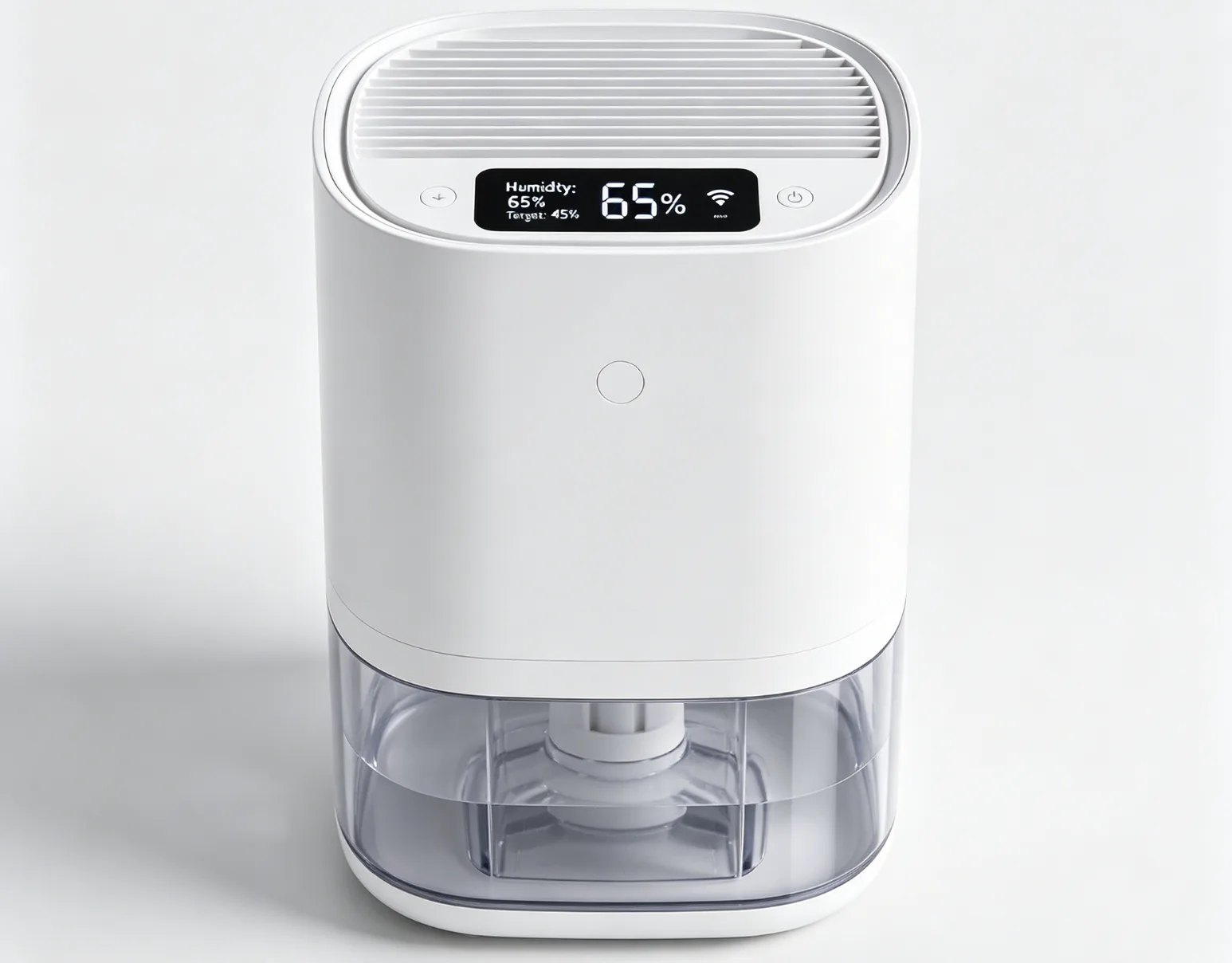
Elevating a crawl space dehumidifier off the ground prevents the intake of heavy floor-level dust and debris. Elevated positioning facilitates a more efficient downward drainage angle for condensate management systems, reducing pump failure risks. Adequate clearance allows the internal fan to pull humid air across the evaporator coils evenly, maximizing moisture condensation rates per kilowatt-hour.
Optimal Dehumidifier Settings for Energy Efficiency
Calibrating your humidity control settings directly regulates household energy consumption and indoor air quality parameters. The United States Environmental Protection Agency (EPA) recommends maintaining indoor relative humidity levels between 30 and 50 percent to inhibit mold growth. Setting a residential or industrial dehumidifier to 45 percent relative humidity provides an optimal balance between human comfort and electrical efficiency.
Operating the equipment at unnecessarily low humidity settings, such as 30 percent, causes continuous compressor operation without proportional comfort benefits. Continuous compressor cycles accelerate component wear and significantly inflate monthly utility costs. Modern smart dehumidifiers utilize built-in humidistats that automatically deactivate the compressor once the targeted relative humidity threshold is achieved.
| Operational Setting | Recommended Range | Efficiency Impact | Purpose / Target |
|---|---|---|---|
| Relative Humidity (RH) | 45% – 50% | High Efficiency | Inhibits mold growth, reduces compressor runtime |
| Fan Speed Configuration | High (Initial) / Low (Maintenance) | Medium Optimization | Maximizes rapid removal, minimizes sustained draw |
| Ambient Temperature | 65°F – 85°F (Standard Units) | Critical Threshold | Prevents frost formation on evaporator coils |
Fan speed modulation represents another critical vector for optimizing daily moisture extraction performance. Utilize the high fan speed setting during initial operation to rapidly lower extreme moisture levels in saturated spaces. Transition the equipment to low fan speed once the space stabilizes to maintain the target humidity while reducing energy usage.
Quantitative Maintenance and Operational Matrix
Regular maintenance routines directly correlate with the sustained efficiency of industrial dehumidifiers and residential systems alike. A clogged air filter restricts ambient air delivery across the cooling coils, reducing moisture extraction capacity by 20 to 30 percent. Clean reusable filters every 250 hours of operation or at minimum once per month during peak humid seasons.
Accumulated dust on evaporator coils acts as an insulator, preventing efficient heat transfer and moisture condensation. This thermal insulation effect forces the refrigeration system to run colder, triggering frequent automated defrost cycles. Frequent defrost cycles consume electricity to melt ice accumulation rather than extracting ambient water vapor from the indoor atmosphere.

| Maintenance Task | Frequency Requirement | Expected Efficiency Gain | System Component Affected |
|---|---|---|---|
| Filter Sanitation | Every 2-4 Weeks | 10% – 15% Power Savings | Air Intake & Fan Motor |
| Coil Inspection | Bi-Anually | 20% Evaporator Optimization | Compressor & Refrigerant |
| Drainage Line Flush | Monthly | Prevents Automated Shutoff | Condensate Pump / Gravity Drain |
Ambient operating temperatures significantly influence how efficiently a standard refrigerant dehumidifier removes airborne water molecules. Standard refrigeration-based systems experience declining efficiency when operated in environments below 60 degrees Fahrenheit. Low ambient temperatures cause water vapor to freeze instantly upon contact with the coils, necessitating low-temperature specialized equipment.
Comparative Selection and Performance Framework
Selecting the appropriate equipment capacity prevents efficiency losses caused by under-sizing or over-sizing units for specific environments. An under-sized unit operates continuously without ever reaching the target humidity, leading to premature compressor burnout and high energy bills. Conversely, an oversized unit undergoes rapid cycling, which lowers efficiency and fails to provide uniform moisture extraction.
| Space Coverage (Sq. Ft.) | Damp Conditions (50-60% RH) | Very Damp Conditions (60-70% RH) | Saturated / Wet Conditions (70-100% RH) |
|---|---|---|---|
| 500 – 1,500 | 20 – 30 Pints / Day | 30 – 45 Pints / Day | 50 – 60 Pints / Day |
| 1,500 – 2,500 | 30 – 45 Pints / Day | 45 – 60 Pints / Day | 60 – 75 Pints / Day |
| 2,500 – 4,000+ | 50 – 70 Pints / Day | 70 – 90 Pints / Day | 100+ Pints / Day (Industrial) |
Integrating external circulation fans can drastically improve the performance coverage of a single commercial dehumidifier unit. Air movers assist by pushing stagnant, humid air from isolated corners toward the dehumidifier’s centralized intake grille. This symbiotic airflow configuration reduces the total runtime required to achieve a homogeneous humidity level across large spaces.
Conclusion
Maximizing dehumidifier efficiency requires a balanced combination of strategic physical placement, accurate humidistat configuration, and routine filter maintenance. By ensuring unrestricted airflow clearance and setting target relative humidity levels near 45 percent, operators reduce unnecessary power consumption. Investing in appropriately sized systems protects building structural integrity while minimizing long-term utility expenditures.
Frequently Asked Questions
Where is the absolute best place to put a dehumidifier for maximum efficiency?
The most efficient placement is near the center of the room or closest to the primary moisture source, such as a sump pump or damp wall. Ensure the unit has at least 18 inches of open space around all sides to guarantee unrestricted airflow for the intake and exhaust grilles.
Will keeping a dehumidifier on the floor reduce its overall moisture extraction capacity?
Placing a unit on the floor is standard, but elevating it can improve gravity drainage and prevent it from sucking in heavy floor-level dust. For crawl spaces or basements, elevation improves air circulation by drawing air from higher, more representative zones of the enclosed environment.
What is the most energy-efficient humidity setting for a residential basement?
Setting your built-in humidistat between 45% and 50% relative humidity provides maximum energy efficiency while completely inhibiting mold germination. Setting the target below 40% forces the compressor to run continuously, which dramatically increases electricity costs without providing additional structural or comfort benefits.
How does a dirty air filter affect the electricity consumption of a dehumidifier?
A dirty filter restricts the volume of air flowing across the internal cooling coils, forcing the fan motor and compressor to work harder. This restriction reduces moisture extraction capacity by up to 30%, meaning the unit runs longer and consumes significantly more electricity to achieve the same humidity reduction.
Should I run my dehumidifier continuously or use an automated timer setting?
You should utilize the automated humidistat setting rather than continuous operation mode so the unit shuts off when reaching target humidity. If your unit lacks an integrated humidistat, using an external timer to run the device during off-peak electrical hours can optimize overall utility expenses.tandards.
- Examine structural humidity recommendations via the [American Society of Heating, Refrigerating and Air-Conditioning Engineers (ASHRAE)]