
Achieving proper indoor humidity control is vital for protecting architectural structures, maximizing energy efficiency, and maintaining healthy breathing environments. This operational manual outlines how to configure professional moisture extraction parameters across various residential, commercial, and industrial architectural layouts. By tailoring your custom humidity level to specific regional variables, users can eliminate biological growth risks while avoiding unnecessary power consumption.
Every architectural space maintains a unique moisture equilibrium based on its structural materials, occupancy rates, and localized thermal fluctuations. Standard residential settings often fail when applied uniformly, leading to either localized mold outbreaks or excessive energy waste. Implementing a precise configuration strategy transforms an appliance from a simple seasonal tool into an integrated component of an indoor climate management matrix.
Fundamental Scientific Standards for Indoor Humidity Management
Atmospheric moisture retention capacity changes dynamically with temperature variations, making standard fixed configurations ineffective across fluctuating climates. According to data compiled by the Building Research Establishment (BRE), maintaining indoor relative humidity (RH) between 40% and 60% prevents dust mite proliferation and structural wood decay. When relative humidity exceeds 60%, ambient air triggers latent spore germination on organic substrates like drywall and wood frameworks. Conversely, dropping below 30% induces respiratory discomfort, exacerbates sinus irritation, and causes structural wood components to split or warp.
To maintain structural equilibrium, target thresholds must shift in response to seasonal external temperature drops to prevent window condensation. The table below details recommended targets based on specific operational areas and external atmospheric conditions:
Table 1: Recommended Relative Humidity Targets by Environmental Condition
| Structural Area / Condition | Target Relative Humidity (RH) | Primary Operational Objective | Recommended Fan Speed |
|---|---|---|---|
| Subgrade Basements & Cellars | 45% – 50% | Prevents subterranean vapor transmission | Medium to High |
| Standard Living Areas & Bedrooms | 45% – 55% | Maximizes occupant respiratory health | Low (Acoustic Comfort) |
| High-Vapor Zones (Bathrooms/Kitchens) | 35% – 40% (During usage spikes) | Fast clearing of high-volume localized vapors | Turbo / Maximum |
| Commercial & Industrial Facilities | 40% – 50% | Protects stored inventories and machinery | High / Continuous |
| Sub-Zero Winter Environments | 30% – 40% | Prevents structural window condensation | Low |
Achieving these targets requires matching equipment capacity with the specific moisture load of the environment. Industrial settings rely on high-capacity commercial dehumidifiers to process thousands of cubic feet of air per minute. Residential spaces, however, utilize compact home appliances designed for quiet, localized moisture extraction. Selecting the correct machinery classification ensures the compressor operates within its optimal thermal cycle, preventing premature mechanical fatigue.
Room-Specific Dehumidifier Configurations
Subgrade basements demand aggressive moisture extraction setups due to persistent hydrostatic pressure from surrounding soils and lower foundational temperatures. Because cold air retains less moisture, a basement at 60°F (15.5°C) with 60% RH can quickly breed mold on flooring materials. Operators should utilize dedicated basement dehumidifiers configured to a target threshold of 45% to counter sub-floor vapor drive. Activating continuous drainage via a dedicated garden hose or internal condensate pump bypasses manual bucket limitations, ensuring uninterrupted performance.
Main-level living rooms and bedrooms require configurations that balance human physiological health with low acoustic output. For these living spaces, setting an automated target of 50% RH prevents airborne allergens while keeping ambient noise levels below 45 decibels. Utilizing a unit with an integrated humidistat enables smart cycling, turning off the compressor once the room reaches its target. This automated cycle prevents over-drying, which can irritate mucous membranes and dry out sensitive skin during overnight hours.
Kitchens and domestic bathrooms experience rapid, short-term moisture spikes from cooking appliances and hot showers. These localized zones require responsive equipment settings that can rapidly clear heavy steam before it condenses on cold walls. Users should run high-capacity systems on maximum fan speed during these activities, setting the target down to 35% or 40%. Leaving the equipment running for twenty minutes post-activity ensures that lingering moisture hidden in porous cabinetry is fully extracted.
Industrial warehouses, data centers, and indoor agricultural facilities require specialized commercial dehumidification systems capable of continuous grain-load reduction. These vast spaces face constant moisture influxes from loading docks, processing machinery, and plant transpiration. Facilities must install heavy-duty commercial dehumidifiers integrated with external HVAC monitoring arrays to maintain strict compliance standards. Precise environmental control protects electronic components from corrosion, prevents cardboard packaging from collapsing, and secures industrial inventory.
Seasonal and External Environmental Adjustments
Peak summer conditions bring high ambient temperatures and elevated outdoor dew points, driving massive quantities of moisture indoors through open doors and structural gaps. During extended heatwaves, indoor climate systems face high latent cooling loads that can easily overwhelm standard air conditioning units. Homeowners should configure their moisture control systems to 50% RH while utilizing a high fan speed setting to maximize air turnover. Combining mechanical dehumidification with standard cooling lowers the heat index inside the property, allowing occupants to raise thermostat settings without sacrificing comfort.
Winter operations present a different mechanical challenge: low indoor temperatures can cause frost to form on the evaporator coils of a dehumidifier. When ambient air drops below 60°F (15.5°C), moisture extracted from the air can freeze instantly upon contact with cold metal coils. To protect the compressor from liquid slugging, users must verify that their equipment includes an automated hot-gas or passive defrost cycle. Adjusting winter humidity targets upward to 50% or 55% reduces total runtime, preventing the appliance from operating in frost-prone conditions.
Monsoon seasons, coastal sea breezes, and sudden rainstorms cause rapid atmospheric changes that require adaptive, real-time equipment adjustments. Modern climate control devices use built-in microprocessors that measure changes in ambient temperature and humidity every few seconds. Selecting an “Auto Mode” or “Smart Mode” allows the machine to dynamically scale its fan speed and compressor runtime based on real-time data. This automation ensures optimal moisture levels during sudden storms while conserving electricity when outdoor conditions dry out.
Technical Best Practices for Maximizing Mechanical Efficiency
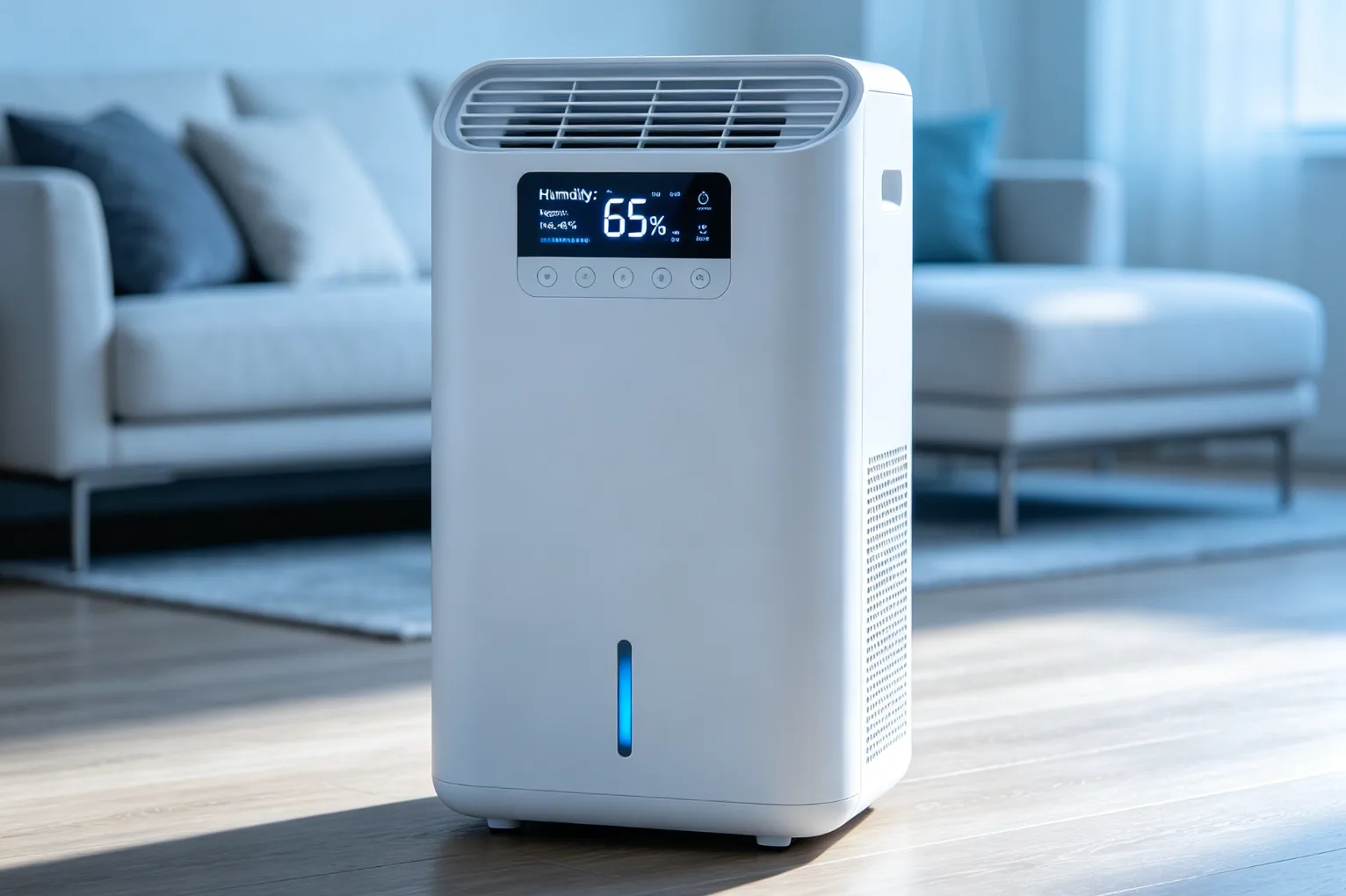
Proper equipment placement is critical; positioning a moisture extraction unit incorrectly can restrict airflow and reduce its efficiency by up to 50%. Dehumidifiers require at least 18 inches of clear space around all intake and exhaust grilles to ensure proper air circulation. Placing an appliance too close to walls, heavy drapes, or large furniture pieces creates localized microclimates that mislead built-in sensors. Additionally, keeping windows and doors firmly closed isolates the treated zone, preventing the machine from trying to dry out the entire neighborhood.
Table 2: Comparative Analysis of Moisture Extraction Technologies
| Technological Parameter | Refrigerant / Compressor Systems | Desiccant Rotor Systems | Electronic (Peltier) Modules |
|---|---|---|---|
| Optimal Temperature Range | 60°F to 95°F (15.5°C to 35°C) | 33°F to 100°F (0.5°C to 38°C) | 70°F to 90°F (21°C to 32°C) |
| Energy Consumption Scale | Moderate to High (Compressor Driven) | High (Thermal Re-activation) | Low (Very Low Extraction Output) |
| Primary Structural Match | Standard residential & commercial areas | Unheated spaces, cold storage, basements | Small closets, cabinets, wardrobes |
| Relative Humidity Limits | Struggles below 35% RH | Efficient down to 1% RH | Ineffective in large rooms |
Routine maintenance is essential to maintain high moisture extraction rates and extend the operational life of your equipment. Dust and airborne particulates accumulate on intake filters over time, restricting airflow and forcing the compressor to run hotter. Users should wash removable pre-filters every two weeks using warm water and a mild, neutral detergent. For commercial applications, checking internal coils for debris and verifying that the condensate drain line is clear prevents water damage and system shutdowns.
Leveraging modern smart-home ecosystems and programmable timers can significantly lower the monthly utility costs associated with continuous moisture control. Running heavy appliances during off-peak energy hours—typically late evening or early morning—takes advantage of lower electricity rates. Additionally, linking your smart dehumidifier to external hygrometer sensors placed across the room ensures more accurate data readings. This distributed sensing network prevents the short-cycling common when units rely solely on sensors located inside their own chassis.
Frequently Asked Questions (FAQs)
What is the ideal humidity level to stop mold growth in a basement?
To stop mold growth in a basement, set your dehumidifier between 45% and 50% relative humidity. Keeping the space within this target range stops fungal spores from germinating on organic surfaces like wood and drywall. It also prevents musty odors without overworking your equipment or consuming excessive electricity.
Can I run a standard home dehumidifier in an unheated room during winter?
Running standard residential units in cold winter rooms below 60°F often causes ice to build up on the evaporator coils. If your space lacks heating, select a specialized low-temperature model or an industrial desiccant system. These units feature dedicated defrost cycles that clear frost automatically, preventing compressor failure.
How often should I clean my dehumidifier’s air filter to keep it running efficiently?
Clean your equipment’s air filter every two weeks under normal conditions, or more frequently in dusty environments like basements. Clogged filters restrict airflow, reduce moisture extraction rates, and strain the compressor. Washing the filter in warm, soapy water maintains peak efficiency and helps lower energy consumption.
Is it better to use a manual water bucket or a continuous gravity drain hose?
Using a continuous gravity drain hose or an integrated condensate pump is highly recommended for high-humidity areas like crawl spaces. Continuous drainage allows your system to run uninterrupted, avoiding shutdowns when a manual bucket fills up. This setup is essential for maintaining stable humidity levels when you are away.
Why does my dehumidifier keep turning off and on within short time periods?
Frequent short-cycling usually happens when a dehumidifier is placed too close to walls or obstructions, which traps dry exhaust air around the sensor. Move your equipment at least 18 inches away from walls to ensure proper air circulation. Alternatively, connect it to an external hygrometer for more accurate room readings.