
Why Choosing the Right Dehumidifier Size Matters?
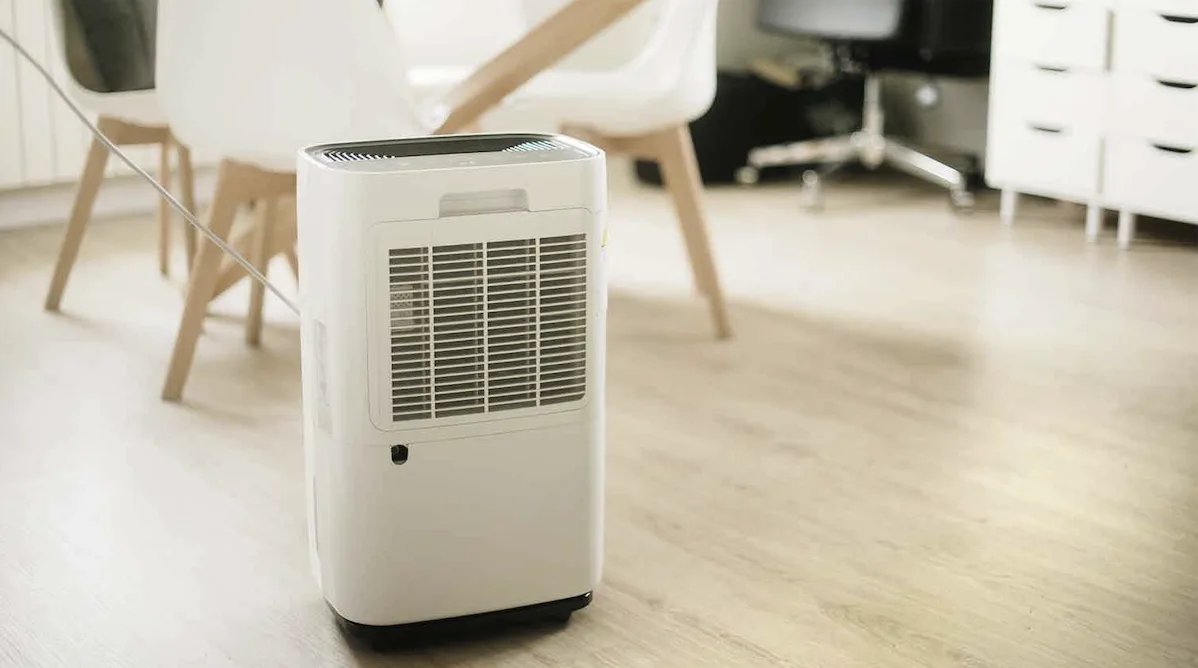
Choosing the right size dehumidifier is crucial, as a properly sized dehumidifier can more effectively control indoor humidity, reducing mold, odors, and dampness, while improving living comfort and protecting furniture, clothing, and walls from moisture. A dehumidifier with too small a capacity will run for extended periods without achieving optimal results, increasing power consumption and equipment strain; a dehumidifier with too large a capacity may require frequent start-stop cycles, affecting energy efficiency and lifespan. Therefore, selecting the correct size based on room size, humidity level, and usage environment is essential to achieving a good balance between dehumidification efficiency, energy savings, and long-term operating costs.
How Room Size Dictates Dehumidifier Capacity?
The dimensions of your space are the primary blueprint for your purchase. When calculating the necessary room size dehumidifier, consider the following:
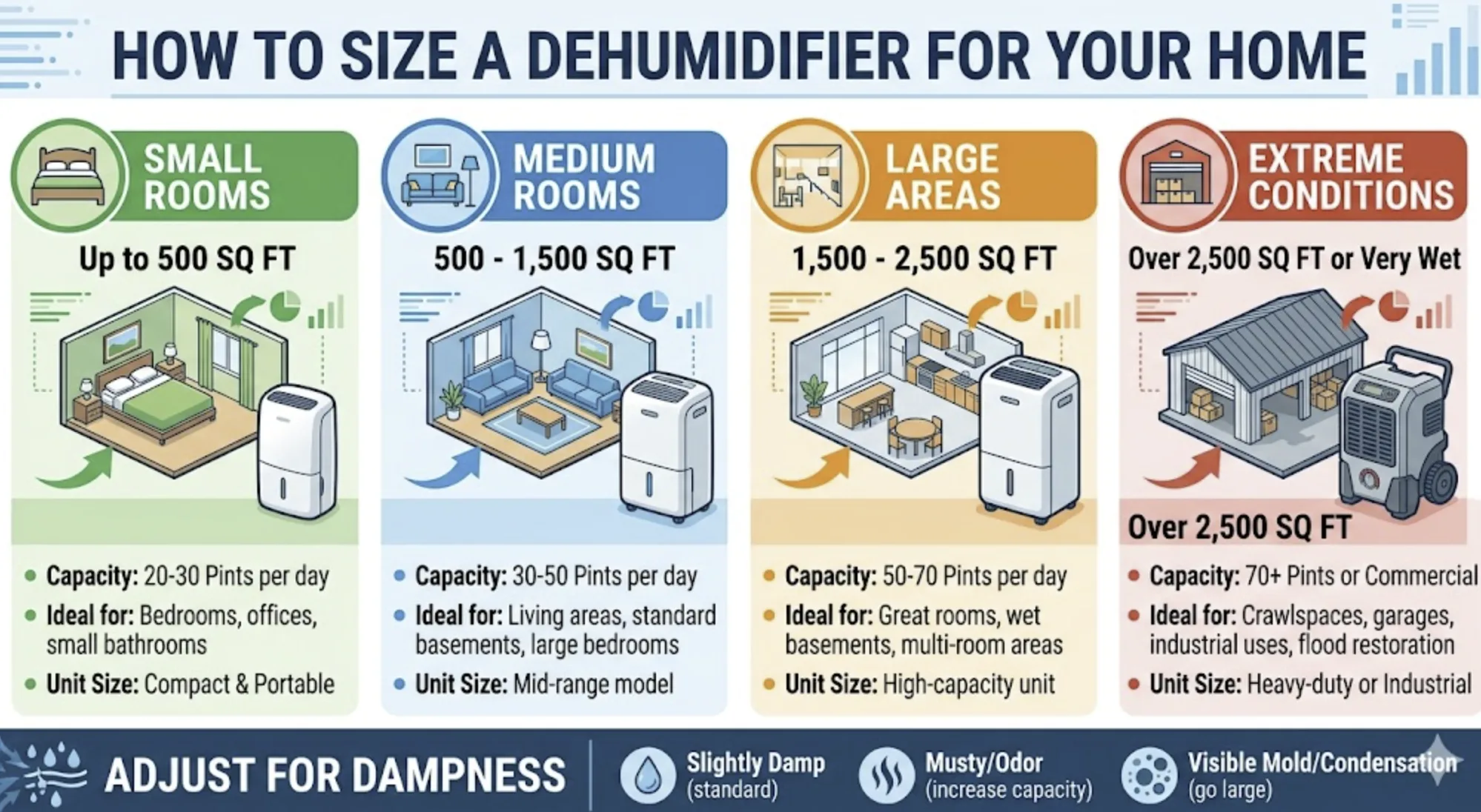
Small Spaces (Up to 500 sq. ft.): Ideal for compact areas like nurseries, home offices, or walk-in closets. These usually require portable dehumidifiers with a capacity of 20–30 pints.
Medium-Sized Areas (500 – 1,500 sq. ft.): Common for master suites or standard living rooms. A mid-range unit (30–50 pints) is typically the “sweet spot” here.
Large or Open-Plan Layouts (1,500+ sq. ft.): Great rooms and basements demand high-capacity dehumidifiers (50+ pints) to move enough air volume effectively.
Factor in Volume: Remember that high ceilings (vaulted ceilings) increase the total cubic feet, requiring a slightly more powerful unit than the floor area alone suggests.
Adjusting for Humidity Levels and Environmental Conditions
Square footage is only half the story; the severity of the dampness is the other half. You must adjust your capacity needs based on the “wetness” of the room:
Damp (Musty smell only in humid weather): Standard capacity based on room size is usually sufficient.
Very Damp (Persistent musty odors, damp spots on floors/walls): Increase the capacity by one size bracket.
Wet (Visible moisture beads or “sweating” on walls): Requires a heavy-duty unit designed for high-performance moisture removal.
Extremely Wet (Standing water or mold growth): For these conditions (often found in laundry rooms or crawlspaces), a commercial-grade dehumidifier or a specialized basement model is recommended.
General Sizing Guidelines & Benchmarks
To simplify your search for the best energy-efficient dehumidifier, use these general industry benchmarks:
Low Capacity (20-30 Pints): Best for small, mildly damp rooms.
Medium Capacity (30-50 Pints): Best for average-sized rooms with moderate humidity.
High Capacity (50-70+ Pints): Best for large basements, warehouses, or very wet conditions.
Commercial/Industrial: Designed for 2,000+ sq. ft. or areas with significant water intrusion.
Tips for Maximizing Dehumidifier Performance
Once you’ve selected the right size, follow these best practices to ensure your humidity control system operates at peak efficiency:
Strategic Placement: Position the unit centrally where air can circulate freely. Avoid placing it directly against walls or furniture.
Seal the Environment: Keep windows and doors closed. Operating a dehumidifier with a window open is like trying to air-condition the outdoors.
Routine Maintenance: Clean the air filters every two weeks to prevent dust buildup, which can restrict airflow and strain the motor.
Utilize Smart Features: Opt for models with built-in hygrometers (auto-shutoff) and continuous drainage options (hose bypass) to reduce manual labor.
FAQ
What happens if my dehumidifier is too small?
It will operate 24/7 without ever reaching your desired humidity level, leading to high energy bills and potential overheating.
Can a dehumidifier be too big for a room?
Yes. It will “short-cycle,” which prevents it from properly cleaning the air and puts unnecessary wear on the compressor.
How do I calculate the right size?
Measure your square footage and assess your dampness level (Damp, Very Damp, Wet, or Extremely Wet) to find the corresponding pint rating.
Is a higher-capacity unit always better?
No. It costs more upfront and may consume more power than necessary if the space doesn’t require that much moisture removal.
Why Choose CetusDry Solutions?
CetusDry is a leading global manufacturer specializing in advanced humidity control technology. Whether you need a sleek home dehumidifier or a rugged industrial moisture control system, CetusDry offers two types dehumidifier include traditiona one that suitable for families and mini type.Cetus home dehumidification solutions have the following features:
Precision Engineering: Units designed for maximum pint-removal with minimum energy consumption.
Versatile Range: From portable residential models to large-scale commercial units.
Customized Solutions: Tailored moisture control setups for specialized environments like grow rooms, warehouses, and labs.