
Why Choosing the Right Home Dehumidifier Capacity Matters?
In 2026, energy efficiency and precise humidity control make choosing the right dehumidifier size more important than ever. Selecting the appropriate dehumidifier capacity for different rooms is crucial because each space has different area, humidity levels, usage frequency, and ventilation conditions, resulting in significantly different dehumidification requirements. A dehumidifier with too small a capacity may run for extended periods without effectively reducing humidity, leading to persistent dampness, mold, and odor problems; while a model with too large a capacity may require frequent start-stop cycles, increasing energy consumption and shortening the machine’s lifespan. Choosing the right capacity dehumidifier for the specific room allows for more efficient humidity control, improved living comfort, reduced operating costs, and extended machine lifespan.
Many homeowners search for information on how to calculate the capacity of a home dehumidifier, the optimal home dehumidifier capacity for humid climates, or room dehumidifier size selection guides to ensure they make the right choice.
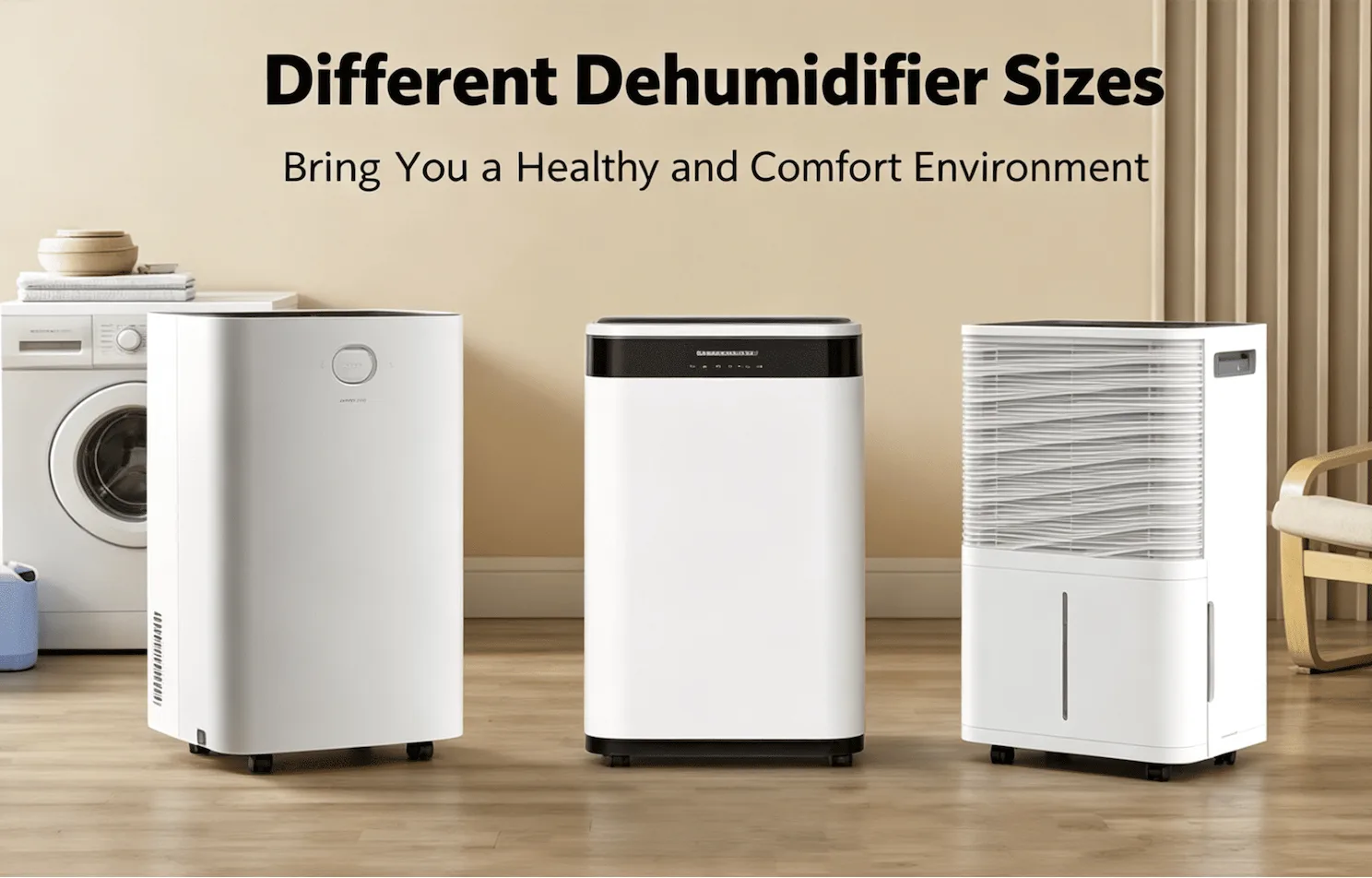
Understanding Dehumidifier Capacity and Room Size
A Home Dehumidifier’s capacity is typically measured in pints of moisture removed per day. To determine the right size, you need to consider room square footage and humidity level. For example, a small room home dehumidifier capacity guide may suggest 10–20 pints per day, while a large room or basement dehumidifier capacity calculation may require 30–50 pints or more. Spaces with visible dampness, musty odors, or water damage often need higher-capacity units. Matching capacity to your environment ensures optimal performance and efficiency.
Key Factors That Affect Home Dehumidifier Sizing
When determining the best capacity for a Home Dehumidifier, it is important to look beyond just square footage. The following variables dictate how much moisture extraction your space actually requires:
Spatial Dimensions & Structural Integrity
Total Room Size: The primary metric; larger areas require a higher pints-per-day (PPD) rating to circulate air effectively.
Ceiling Height: High or vaulted ceilings increase the total volume of air (cubic feet), often requiring a unit one size larger than the floor area suggests.
Insulation Quality: Well-insulated homes retain controlled air better, while poorly sealed spaces allow outdoor humidity to seep in constantly, increasing the load on the device.
Environmental Moisture Load
Specific High-Humidity Zones: Areas like basements and crawlspaces naturally trap more moisture and require specialized, high-capacity moisture control.
Regional Climate: Homes in coastal regions or rainy climates face consistently elevated outdoor humidity, necessitating a heavy-duty system to maintain indoor comfort.
Visible Dampness Levels: If you notice window condensation, musty odors, or mold growth, you should opt for the best capacity dehumidifier available for your specific square footage to combat active water intrusion.
Operational & Occupancy Variables
Number of Occupants: People add moisture to the air through breathing, cooking, and showering. For households with more than three people, adding 5–10 pints to your capacity estimate is recommended.
Ventilation Quality: Rooms with poor airflow or no windows (like interior laundry rooms) rely entirely on the dehumidifier for air exchange, requiring a more robust motor.
Internal Moisture Sources: Frequent use of humidifiers, indoor plant collections, or unvented clothes dryers will significantly increase the required dehumidification strength.
Targeted Search Trends for Sizing
For users searching for specific solutions, here is how to categorize these needs:
For High-Humidity Areas: Focus on units with built-in hygrometers that can automatically adjust to spikes in moisture level.
For Basements & Large Spaces: Look for “commercial-grade” features such as continuous drainage (pump systems), which are essential for managing large-scale water removal without manual tank emptying.
For Energy Efficiency: Seek out Energy Star-rated models that provide high moisture extraction while minimizing electricity consumption—a critical factor for units running in damp coastal climates.
Step-by-Step Guide to Calculating the Right Capacity
To calculate the correct Home Dehumidifier capacity, start by measuring your room’s square footage. Then assess the humidity level—moderately damp, very damp, or extremely wet. For instance, a dehumidifier size calculator for home use would recommend increasing capacity as moisture levels rise. A 500 sq ft moderately damp room may need a 20-pint unit, while the same space with high humidity could require 30 pints or more. This approach ensures you choose a properly sized home dehumidifier for efficient moisture removal without overworking the device.
About CetusDry
CetusDry is a professional manufacturer specializing in advanced humidity control solutions, offering a full range of Home Dehumidifier systems for residential, commercial, and industrial applications. Visit our official website at https://www.cetusdry.com/ to learn more about our innovative products and services.
We provide solutions such as high-capacity home dehumidifiers for large spaces, energy-efficient dehumidifiers for residential use, and custom industrial moisture control systems. CetusDry integrates cutting-edge compressor technology with intelligent humidity sensors to deliver precise and reliable performance. Our products are designed for durability, low noise operation, and smart automation, making them ideal for modern homes and businesses. With a strong focus on innovation and quality, we help customers achieve optimal humidity control in any environment.
FAQ
How do I calculate the right Home Dehumidifier size?
Measure room size and humidity level, then match them to the recommended pint-per-day capacity.
What happens if my Home Dehumidifier is too small?
It will run continuously and still fail to reduce humidity effectively.
Can a larger Home Dehumidifier be better?
Not always; oversized units may waste energy and reduce efficiency.
What capacity Home Dehumidifier is best for basements?
Basements usually require 30–50+ pint units due to higher moisture levels.
Does climate affect Home Dehumidifier capacity needs?
Yes, humid climates require higher-capacity units for effective moisture control.