
What Is a Home Dehumidifier?What is its function?
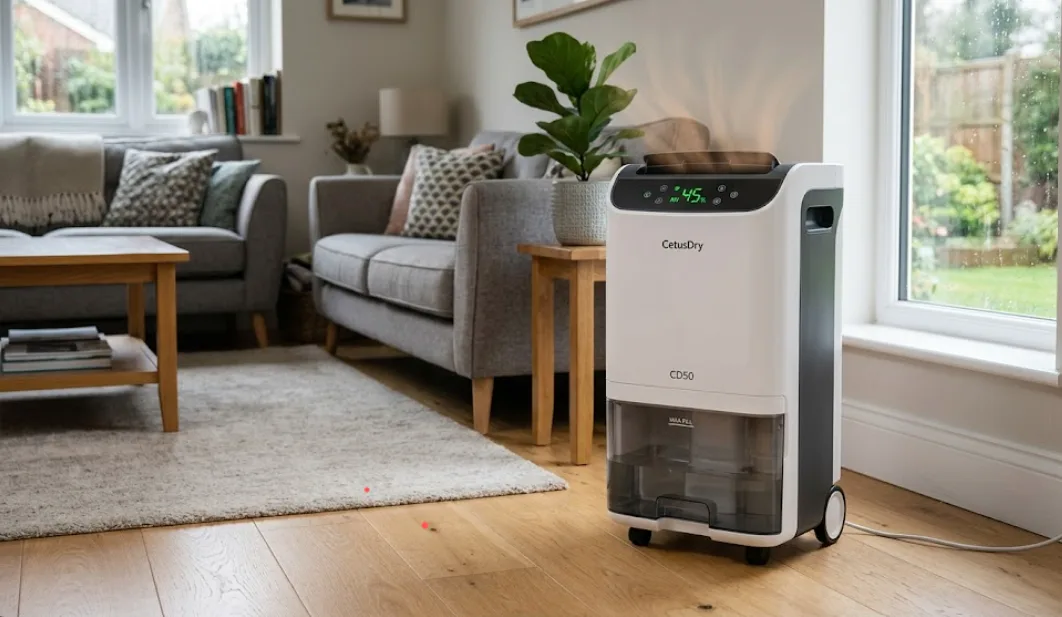
A home dehumidifier is a household appliance designed to lower and maintain optimal indoor humidity levels. It works by removing excess moisture from the air, thus helping to create a healthier and more comfortable living environment. It can also improve the performance of older air conditioners. This can be done even when you’re not using the air conditioner for cooling.
This article discusses an introductory guide to whole-house dehumidifiers, specifically the product offered by Cetus, a Chinese standard company.
How does a dehumidifier work?
Household dehumidifiers work similarly to air conditioners, removing moisture by cooling the water vapor in the air. They draw warm, humid air into an evaporator coil. This coil contains refrigerant, which cools the air. As the air cools, condensation occurs, collecting at the bottom of the coil. This water then flows into a reservoir and is eventually drained outdoors through a drain pipe.
Do You Really Need a Home Dehumidifier in 2026?
Whether you need a Home Dehumidifier in 2026 largely depends on your environment and lifestyle. If you live in a region with high humidity, or have areas like basements, bathrooms, or storage rooms prone to dampness, a dehumidifier can be essential. It is also highly beneficial for individuals with allergies or respiratory sensitivities, as it helps reduce mold spores and dust mites. With increasing climate variability, maintaining proper indoor humidity is becoming a standard part of home care rather than a luxury.
The Advantages of a Dehumidifier
Improve Indoor Air Quality
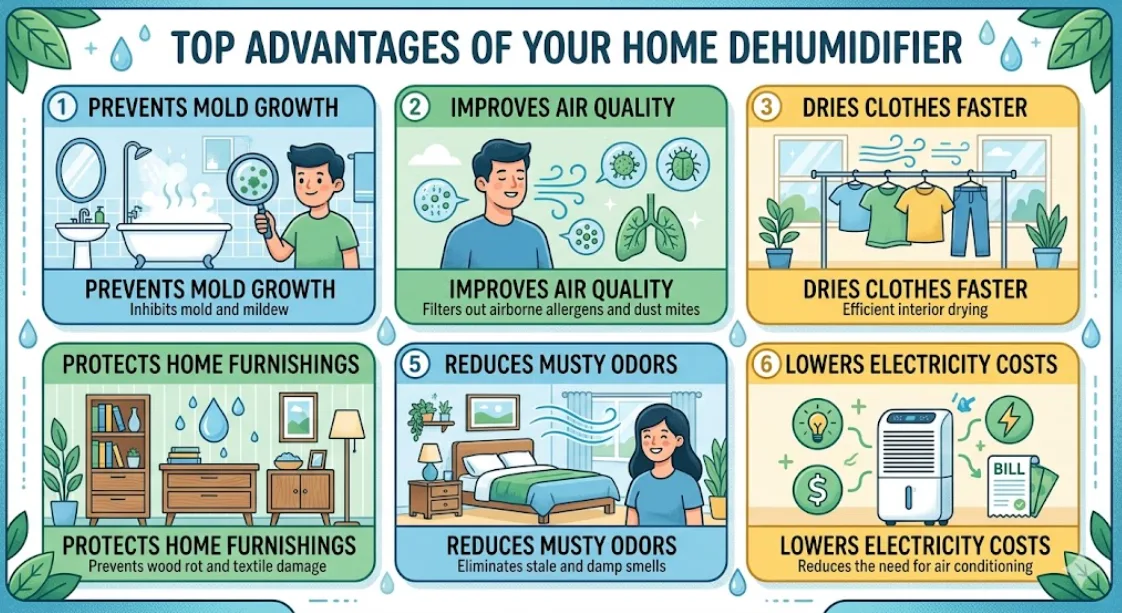
The advantage of using a dehumidifier at home is its ability to effectively reduce air humidity, creating a drier and more comfortable environment, reducing stuffiness and stickiness, and improving the overall living experience, especially during the rainy season or in humid areas.
Prevent Mold and Bacterial Growth
A household dehumidifier can inhibit the growth of mold on walls, ceilings, and furniture, reducing problems such as black spots and musty odors, and lowering the risk of bacterial growth.
Protect Furniture and Building Structure
Another advantage of using a dehumidifier is that it prevents wooden floors and furniture from warping due to moisture, extends the lifespan of home appliances and electronic products, and avoids damage such as peeling paint and mold on walls.
Improve Health
If family members are at risk of dust mite allergies or respiratory discomfort, a dehumidifier can effectively provide a healthier indoor air environment.
Accelerate Clothes Drying
Another undeniable advantage of dehumidifiers is that they accelerate moisture evaporation on rainy days or when drying clothes indoors, reducing odors and musty smells on clothes, essentially acting as a “clothes drying aid.”
Benefits of Using a Home Dehumidifier
Using a Home Dehumidifier offers multiple advantages beyond just moisture control. It helps prevent mold and mildew, eliminates unpleasant odors, and protects furniture, electronics, and clothing from moisture damage. Maintaining indoor humidity between 40% and 60% can significantly improve comfort and health. Additionally, many 2026 models come with smart features such as automatic humidity sensors, app control, and continuous drainage systems, making them more convenient and efficient for daily use.
Choosing the Right Home Dehumidifier Tips
Home dehumidifier choose requires considering room size, humidity levels, and intended use. You need to know the normal humidity level for your entire home beforehand, and then select the appropriate type of dehumidifier based on its additional features.
What is a healthy indoor humidity level?
Home humidity is crucial for comfort. Too high humidity feels sticky and damp; too low humidity results in dry air and static electricity when touching light switches. Ideal humidity is just right, creating a comfortable and pleasant feeling. The U.S. Environmental Protection Agency (EPA) has made several recommendations for improving indoor air quality, and controlling humidity is one of them. The EPA states that a healthy and comfortable indoor humidity range is 30% to 50%.
Different Types of Home Dehumidifier
Small dehumidifiers are suitable for small spaces, while larger capacity models are more suitable for whole-house or commercial use. Energy efficiency ratings and quiet operation are also important factors affecting long-term user satisfaction. Additional features of dehumidifiers, such as automatic shutdown, digital controls, and smart connectivity, can further enhance ease of use, making it easier for users to maintain an optimal indoor environment.
Key Maintenance Points for Home Dehumidifiers:
Regularly clean the water tank.
Clean or replace the air filter.
Inspect the condenser and evaporator.
Keep the air inlet and outlet unobstructed.
Maintain the drainage system (including the water tank/drain pipe).
Prevent frost formation at low temperatures.
Cleaning and storage before long-term shutdown.
Pay attention to abnormal operating signals.
In summary, dehumidifier maintenance mainly comes down to keeping it clean, well-ventilated, and ensuring proper drainage.
Following these maintenance practices can resolve most common dehumidifier issues.
FAQ
Which is better at dehumidifying, a dehumidifier or an air conditioner?
In household use, Dehumidifier vs Air Conditioner: a dehumidifier is generally more efficient and stable at removing humidity than an air conditioner.
What size Home Dehumidifier do I need?
The size depends on your room area and humidity level; larger spaces require higher-capacity units.
Are Home Dehumidifiers energy efficient in 2026?
Yes, most modern models are designed with energy-saving technology to reduce electricity consumption.
Can a Home Dehumidifier improve air quality?
Yes, it helps reduce mold, mildew, and allergens, improving overall indoor air quality.
How often should I run a Home Dehumidifier?
It depends on humidity levels; many users run it continuously or use auto mode for convenience.
Is a Home Dehumidifier worth it for every home?
Not always, but it is highly beneficial in humid environments or for health-related needs.