
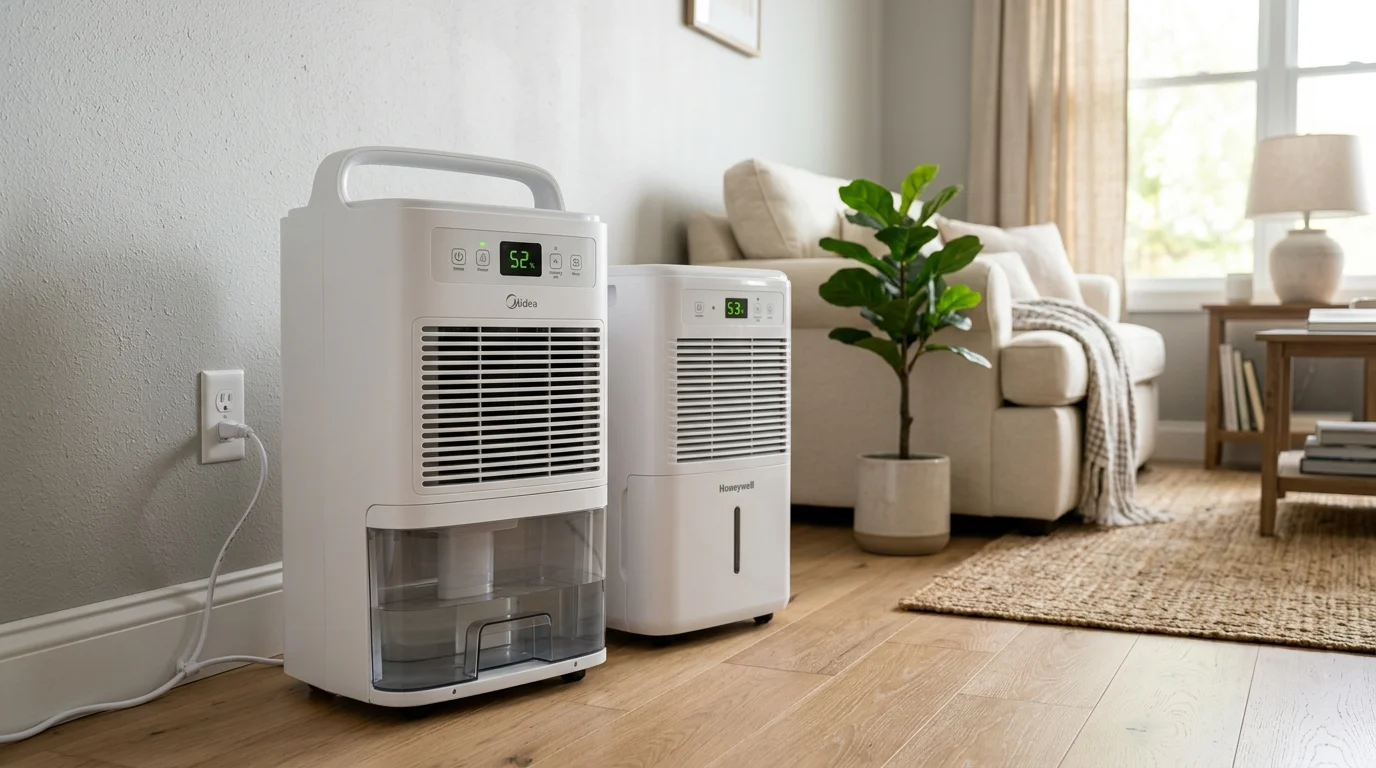
What exactly is a dehumidifier?
Good question! Let’s start with the basics. A dehumidifier is a machine used to reduce indoor humidity.
If your home has excessively high humidity—especially a common problem in southern regions—you can set up a dehumidifier to lower the indoor relative humidity (RH) to an ideal threshold. In many homes, relative humidity typically ranges between 65% and 80% from spring to fall. Using a dehumidifier, you can reduce the relative humidity to a more comfortable 50% to 55%.
A dehumidifier is a device designed to control indoor humidity beyond the capabilities of a household air conditioner.
How Home Dehumidifiers Work?
Understanding the technical mechanisms of home dehumidifiers is essential for B2B wholesale buyers, distributors, and procurement teams. A thorough grasp of how these appliances operate allows importers to evaluate manufacturer specifications critically, ensuring the selected units meet the precise environmental and performance demands of their target markets.
When a dehumidifier is running, the dehumidification process is as follows:
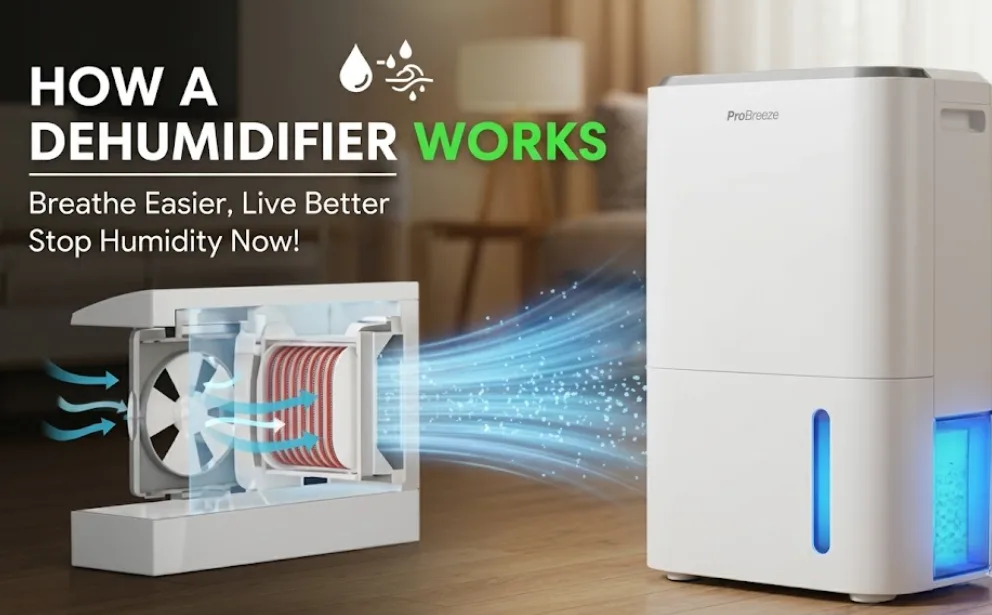
The fan inside the dehumidifier draws air into the machine.
Inside the dehumidifier, the moisture in the air condenses into water vapor on the outside of the internal coils; this is very similar to the working principle of an air conditioner.
The humidity of the air leaving the dehumidifier is lower than when it entered.
The humid indoor air is gradually replaced by the dry air discharged from the dehumidifier.
The condensate formed inside the dehumidifier flows into a container; if you are using a whole-house dehumidifier, it will flow into a drain pipe or duct and eventually be discharged outdoors.
You might ask, “Can’t our air conditioners already do this?” Well, yes and no. Air conditioners are designed for two purposes: lowering temperature and lowering humidity. During the hottest days of the year, when air conditioners run for extended periods, they typically do a good job of keeping indoor air dry and comfortable. The longer the air conditioner runs, the more humidity it removes.
The Advantages of Using Home Dehumidifier
Core moisture removal process
Most residential dehumidifiers remove moisture by drawing in humid air and cooling it below its dew point, causing water vapor to condense into liquid that is collected or drained away. The dried air is then reheated and released back into the room. To ensure consistent performance comparisons, extraction capacity is typically tested under standardized conditions, such as 30°C and 80% relative humidity.
Key components and their functions
The reliability of a dehumidifier depends heavily on the quality of its internal components. The evaporator (cold coil) and condenser (hot coil) are central to the heat exchange process, typically constructed from copper tubing with aluminum fins to maximize surface area and thermal conductivity. The compressor acts as the engine of the system, pumping refrigerant gas through the coils to maintain the necessary temperature differentials. Complementing these thermal components is the fan motor, which must balance high airflow volume (measured in cubic meters per hour, or m³/h) with low acoustic output. Finally, an integrated digital humidistat serves as the unit’s sensory hub, continuously monitoring ambient moisture levels and signaling the compressor to cycle on or off to maintain the user’s desired humidity setpoint.
Compressor vs thermoelectric models
Procurement teams must distinguish between compressor-driven and thermoelectric (Peltier) architectures, as each serves entirely different market segments. Compressor models dominate the residential and light commercial sectors due to their high extraction rates and energy efficiency in larger spaces. Conversely, thermoelectric models use the Peltier effect—passing an electrical current through two distinct semiconductors to create a temperature gradient without refrigerant gas. While Peltier units are whisper-quiet and mechanically simple, their extremely low extraction rates limit their viability to micro-spaces.
| Specification Category | Compressor Dehumidifiers | Thermoelectric (Peltier) Models |
|---|---|---|
| Daily Extraction Capacity | 10L to 50L+ | 0.2L to 2L |
| Power Consumption | 200W to 600W+ | 20W to 60W |
| Noise Level | 35 dB(A) to 55 dB(A) | < 30 dB(A) |
| Ideal Target Application | Basements, living rooms, entire apartments | Wardrobes, small bathrooms, RV cabinets |
Which type of dehumidifier should I buy?
Most homeowners will be choosing between two different types of dehumidifiers: whole-house and freestanding portable models.
Freestanding Portable Dehumidifiers
Freestanding dehumidifiers are very practical in certain situations. They are a good choice if you only need to control the humidity
in one room. You’ll see them in offices, waiting rooms, and similar places.
Whole-House Dehumidifiers
Whole-house dehumidifiers don’t have the above problems. They connect to the existing ductwork of your central air conditioning
system and drain all the condensate into the duct. Aside from periodic air filter replacements (usually twice a year) and annual
maintenance, they require virtually no maintenance!
Specifications Buyers Should Compare
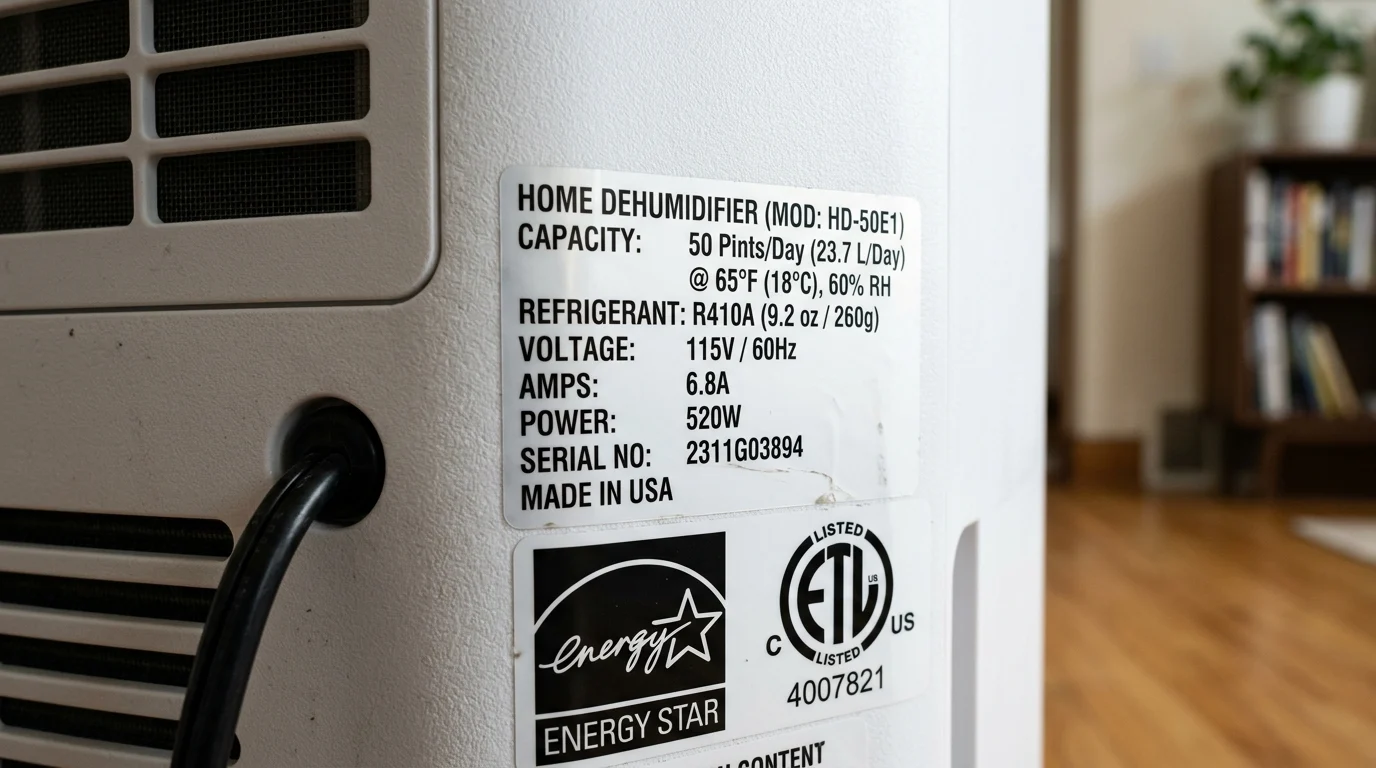
When sourcing dehumidifiers for regional distribution, comparing technical specifications is a mandatory step in the procurement cycle. Wholesale buyers must align the hardware capabilities of the product with the specific architectural layouts, climate profiles, and consumer expectations of their target demographic.
Capacity and coverage area
Capacity dictates the volume of moisture a unit can extract within a 24-hour period, directly correlating to the maximum coverage area. For light residential use, leading OEM manufacturers often focus on units with a 6L to 25L daily capacity, designed to service spaces ranging from 25 to 125 square meters. A standard 12L/day dehumidifier is typically optimized for 25 to 45 square meter spaces, making it a highly versatile SKU for apartments and mid-sized residential rooms.
Energy use and noise level
Energy consumption and acoustic performance are critical selling points in the consumer market, directly influencing product reviews and return rates. A highly efficient 12L/day unit should remove moisture effectively while drawing no more than 240W of power. For noise levels, models intended for bedrooms or living areas should utilize advanced compressor insulation and aerodynamic fan blade designs to keep operational noise below 45 dB(A). Units exceeding 50 dB(A) are generally only acceptable for basement or garage applications where ambient noise is less disruptive.
| Daily Capacity | Recommended Coverage | Average Power Draw | Target Noise Level |
|---|---|---|---|
| 10L – 12L | 25 – 45 ㎡ | 200W – 240W | < 45 dB(A) |
| 16L – 20L | 45 – 80 ㎡ | 300W – 350W | < 48 dB(A) |
| 25L – 30L | 80 – 125 ㎡ | 400W – 450W | < 52 dB(A) |
Controls, drainage, and display features
Modern consumers expect intuitive interfaces and automated moisture management. High-value SKUs feature digital LED displays paired with adjustable humidistats that allow users to set target relative humidity anywhere from 20% to 90% RH. Procurement teams should look for units offering versatile operational programs, such as Powerful, Normal, and Auto modes, to accommodate fluctuating seasonal humidity.
FAQ
What is a home dehumidifier?
A home dehumidifier is an appliance that removes excess moisture from indoor air to reduce humidity, prevent mold, and improve comfort.
How to choose a right dehumidifier?
Match capacity (L/day) to room size and humidity level, consider features (auto shutoff, drainage, noise), and choose an energy-efficient model.
Dehumidifier vs air conditioning?
A dehumidifier removes moisture only, while an air conditioner cools the air and also reduces humidity as a secondary effect.
How to use a home Dehumidifier?
Place it in a central area, keep doors/windows closed, set desired humidity (around 40–60%), and empty or drain the water tank regularly.
How does a home dehumidifier remove moisture from the air?
A fan pulls humid air over cold evaporator coils, where water vapor condenses into droplets. The collected water drains into a tank or hose, and the drier air is reheated and released back into the room.
What size dehumidifier do I need for my room?
Match capacity to room size and dampness. Cetus units from 6L–25L/day are designed for about 25–125㎡, while a 12L/day model typically fits 25–45㎡ spaces.
What humidity level should I set on a home dehumidifier?
A practical target is 40%–60% RH for comfort and mold prevention. On models like Cetus with a 20%–90% RH humidistat, start around 50% RH and adjust by season.