
Introduction
Maintaining optimal indoor humidity is crucial for both your health and the structural integrity of your home. Too much moisture can lead to mold growth, dust mites, and discomfort, while too little can cause dry skin, respiratory issues, and damage to wooden furniture. Understanding how to accurately measure the humidity levels in your living space, whether you have a dedicated device or need to rely on DIY methods, empowers you to create a healthier and more comfortable environment. This comprehensive guide will explore various techniques for measuring indoor humidity, from using modern hygrometers to simple household tests, ensuring you can effectively monitor and manage your home’s moisture balance.
Why is Measuring Indoor Humidity Important for Your Home and Health?
Monitoring the moisture content in your air, often referred to as relative humidity, is more than just a comfort preference; it’s a vital aspect of maintaining a healthy living environment and preserving your property. Fluctuations in indoor humidity levels can have significant consequences.
Health Implications of Imbalanced Humidity
When the air in your home is either too dry or too damp, it can directly impact your well-being:
•High Humidity: Excessive moisture creates an ideal breeding ground for allergens and irritants such as mold, mildew, and dust mites. These can exacerbate allergies, asthma, and other respiratory conditions. High humidity can also lead to a stuffy feeling, making it harder for sweat to evaporate and cool the body, thus increasing discomfort and the perceived temperature.
•Low Humidity: Conversely, overly dry air can lead to dry skin, chapped lips, and irritated nasal passages and throat. It can also make you more susceptible to colds and flu by drying out the protective mucous membranes in your respiratory system. Static electricity becomes more prevalent, which can be annoying and even damaging to electronics.
Home Maintenance and Structural Integrity
Your home itself is also vulnerable to improper humidity:
•High Humidity: Persistent high moisture can cause structural damage, including warping of wooden floors, doors, and furniture. It can also lead to peeling paint, wallpaper, and the growth of mold and mildew on walls, ceilings, and fabrics, resulting in unpleasant odors and costly repairs.
•Low Humidity: Dry air can cause wood to shrink and crack, affecting furniture, musical instruments, and even the structural beams of your house. It can also lead to gaps in flooring and trim, compromising the aesthetic and integrity of your home.
Ideal Humidity Levels for Comfort and Health
Experts generally recommend maintaining relative humidity levels between 30% and 50% for optimal comfort, health, and home preservation . The U.S. Environmental Protection Agency (EPA) advises keeping indoor humidity within this range to prevent issues like mold growth and dust mites . Similarly, the American Society of Heating, Refrigerating and Air-Conditioning Engineers (ASHRAE) recommends controlling relative humidity to less than 65% to reduce conditions that can lead to microbial growth .
By understanding and actively managing your home’s humidity, you can prevent a host of problems and ensure a more comfortable and healthier living space for everyone.
How to Measure Humidity Accurately with a Hygrometer?
For the most precise and convenient way to monitor the moisture content in your air, a hygrometer is the go-to device. A hygrometer is an instrument used for measuring humidity, specifically the amount of water vapor in the atmosphere, air, or other gases. These devices provide quick and reliable readings, making them an essential tool for effective humidity management.
Types of Hygrometers
There are primarily two types of hygrometers commonly used in homes:
•Digital Hygrometers: These are the most popular choice for homeowners due to their ease of use, clear digital displays, and often additional features like temperature readings, historical data, and comfort level indicators. They typically use electronic sensors to detect changes in electrical resistance or capacitance caused by moisture absorption.
•Analog Hygrometers: These traditional devices often use a coil spring attached to a needle, which moves in response to changes in humidity. While aesthetically pleasing, they are generally less accurate and slower to respond than their digital counterparts and may require more frequent calibration.
How to Use a Digital Hygrometer
Using a digital hygrometer is straightforward:
1.Placement: Place the device in the center of the room you wish to measure, away from direct sunlight, vents, windows, or sources of moisture (like bathrooms or kitchens) that could skew readings. Allow it to acclimate for at least 30 minutes, or up to a few hours, for an accurate reading.
2.Reading: Simply read the displayed relative humidity percentage. Many digital hygrometers also show the temperature, which is an important factor in understanding humidity.
3.Monitoring: Regularly check the readings throughout the day and in different rooms to get a comprehensive understanding of your home’s humidity patterns.
Calibration Tips for Hygrometers
Even digital hygrometers can drift over time. Regular calibration ensures their accuracy. A common and effective method is the salt test:
1.Materials: You’ll need a small, airtight container (like a zip-top bag or small plastic container), table salt, and a bottle cap or small dish.
2.Preparation: Mix two tablespoons of table salt with one tablespoon of water to create a thick paste. Place the paste in the bottle cap or small dish.
3.Setup: Put the salt paste and your hygrometer inside the airtight container. Seal it tightly.
4.Wait: Leave the container undisturbed for 8-12 hours at room temperature.
5.Read: After the waiting period, the humidity inside the container should stabilize at approximately 75% relative humidity. Compare this to your hygrometer’s reading. If it’s off, adjust your hygrometer according to its instructions (some digital models have a calibration button, while analog ones may have a screw on the back).
Using a calibrated hygrometer provides the most reliable data for managing your home’s moisture levels.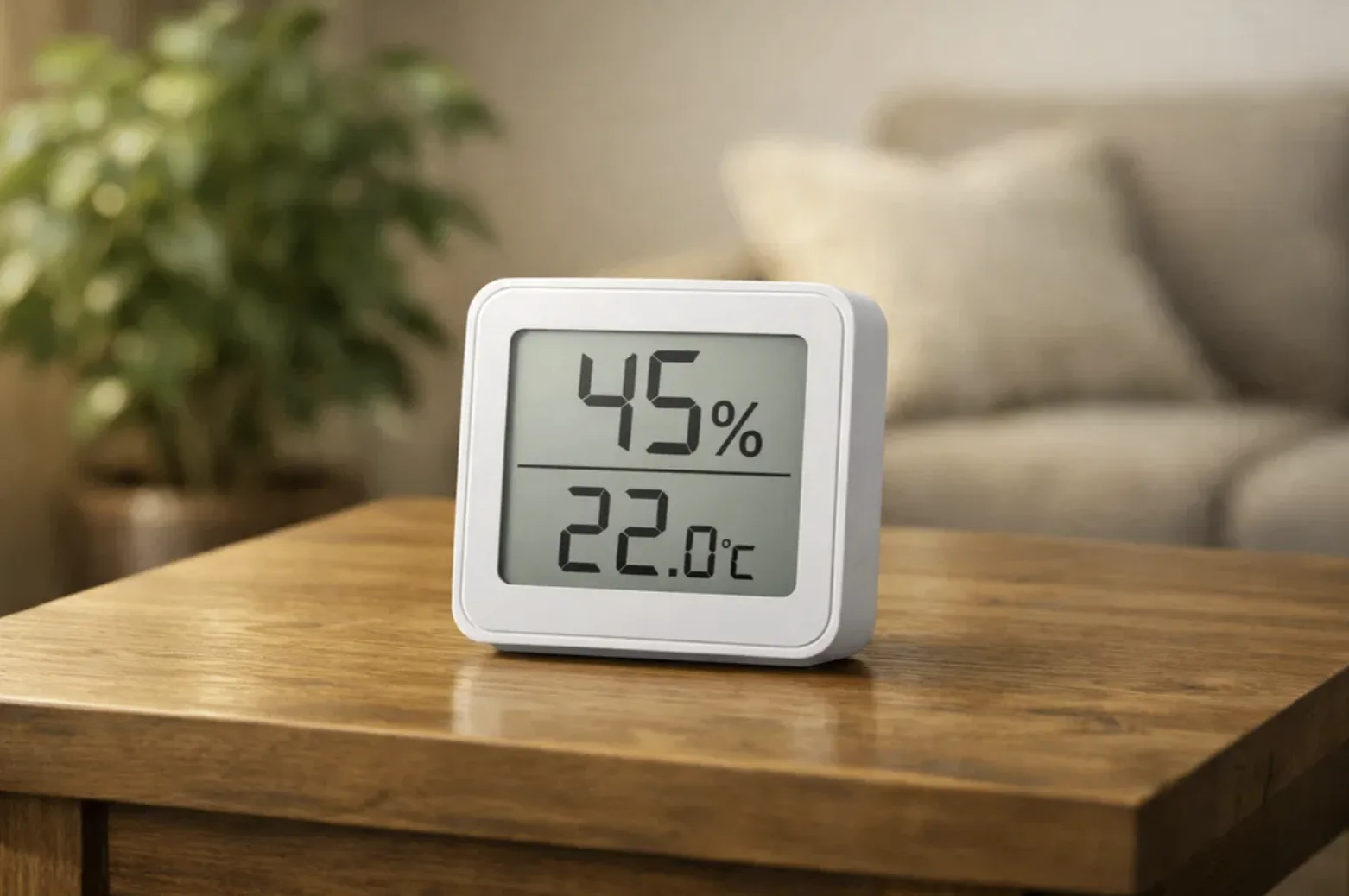
How to Measure Humidity Without a Hygrometer: DIY Methods
Even without a dedicated humidity gauge, you can still get a good indication of the moisture levels in your home using simple household items. These DIY methods, while not as precise as a calibrated hygrometer, can help you identify if your home’s air is excessively dry or humid.
The Ice Cube Test: A Simple Indicator
The ice cube test is a quick and easy way to gauge if your indoor air is too humid. It relies on the principle of condensation.
Steps for the Ice Cube Test:
1.Prepare: Fill a glass with water and add 3-4 ice cubes.
2.Placement: Place the glass in the room you want to test, away from direct sunlight, vents, or heat sources.
3.Wait: Let the glass sit undisturbed for 5-10 minutes.
4.Observe: After the waiting period, observe the outside of the glass.
Interpreting the Results:
•Heavy Condensation: If a significant amount of condensation forms on the outside of the glass, it indicates that your indoor humidity is likely high (above 50-55%). The moisture in the air is condensing rapidly on the cold surface of the glass.
•Light Condensation: A small amount of condensation might suggest moderate humidity levels.
•No Condensation: If no condensation forms, or only a very thin film appears, your indoor air is likely too dry (below 30-35%).
This test provides a qualitative assessment, giving you a general idea of whether your home’s air is on the drier or more humid side.
The Wet and Dry Bulb Thermometer (Psychrometer): A More Scientific Approach
For a more quantitative DIY measurement, you can create a basic psychrometer using two thermometers. This method measures the cooling effect of evaporation.
How a Psychrometer Works:
A psychrometer consists of two thermometers: a
dry-bulb thermometer, which measures the ambient air temperature, and a wet-bulb thermometer, which has its bulb covered in a wet cloth. As water evaporates from the wet cloth, it cools the wet-bulb thermometer. The difference in temperature between the dry-bulb and wet-bulb thermometers (known as the wet-bulb depression) can be used to determine the relative humidity.
Steps to Create and Use a DIY Psychrometer:
1.Materials: You will need two identical thermometers, a small piece of cotton cloth or gauze, a rubber band or string, and a small container of water.
2.Prepare Wet Bulb: Wrap the bulb of one thermometer with the cotton cloth. Secure it with a rubber band or string, ensuring the cloth covers the entire bulb. Dip the cloth into the water, making sure it is thoroughly saturated.
3.Placement: Place both thermometers side-by-side in the room you want to measure. Ensure they are exposed to the same airflow but not in direct sunlight or near heat sources.
4.Readings: After about 5-10 minutes, read the temperature from both thermometers. The dry-bulb thermometer will show the ambient air temperature, and the wet-bulb thermometer will show a lower temperature due to evaporative cooling.
5.Calculate Relative Humidity: Use a psychrometric chart or an online calculator to determine the relative humidity based on the dry-bulb temperature and the wet-bulb depression (dry-bulb temperature minus wet-bulb temperature). Many resources are available online to help with this calculation .
While more involved than the ice cube test, the psychrometer method offers a more accurate, albeit still approximate, measurement of relative humidity without specialized equipment.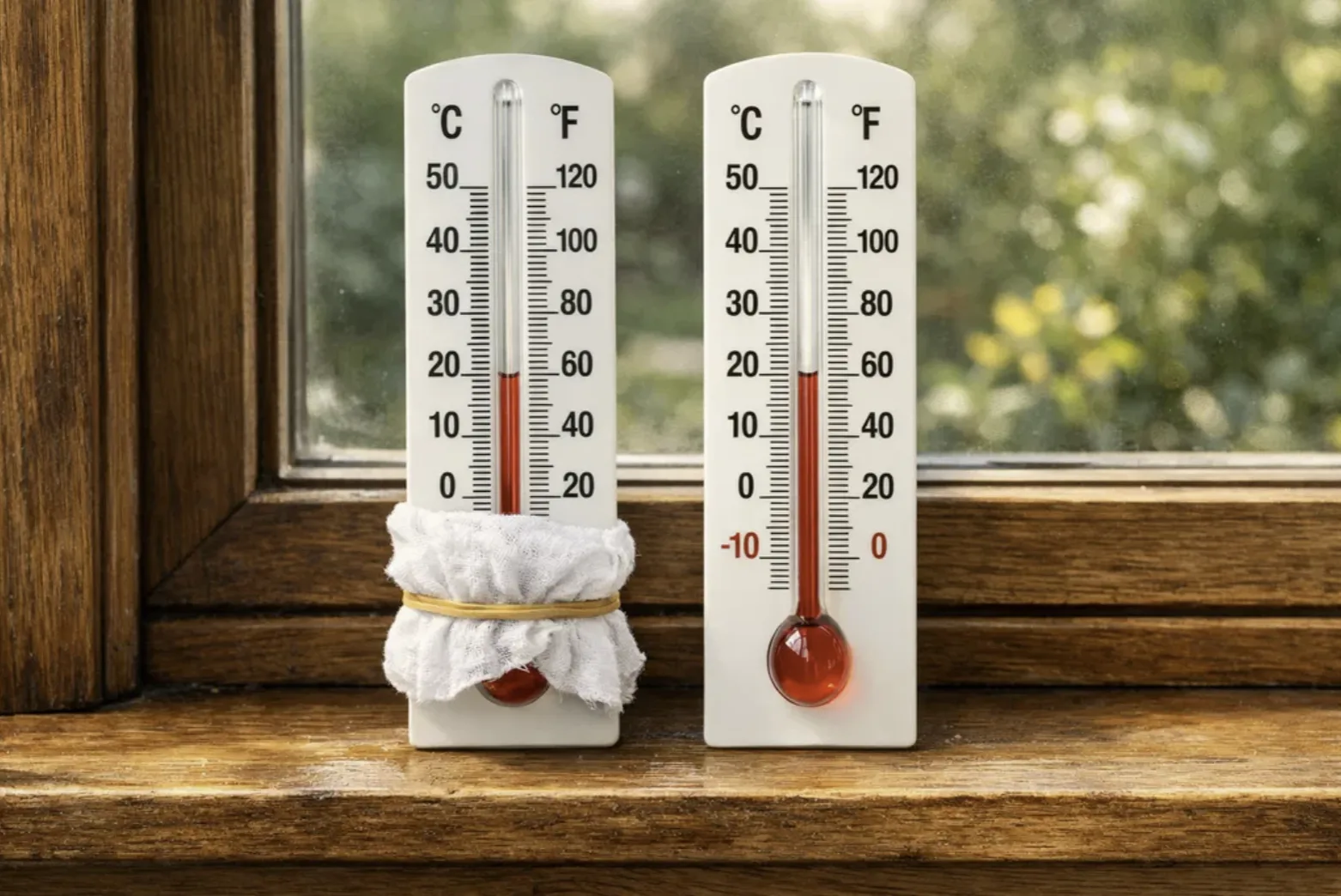
Other Indicators of High or Low Humidity
Beyond these tests, your senses and observations around your home can also provide clues about your indoor air quality and humidity levels:
Signs of High Humidity:
•Condensation: Foggy windows, mirrors, or cold surfaces.
•Musty Odors: A damp, earthy smell, often indicating mold or mildew growth.
•Sticky Feeling: Air feels heavy and sticky, making you feel warmer than the actual temperature.
•Mold Growth: Visible mold spots on walls, ceilings, or fabrics.
•Peeling Paint/Wallpaper: Moisture causing finishes to lift or bubble.
Signs of Low Humidity:
•Dry Skin and Hair: Persistent dryness, itching, or static electricity.
•Cracked Wood: Gaps in wooden floors, furniture, or trim.
•Static Electricity: Frequent static shocks.
•Respiratory Issues: Dry throat, nasal passages, or increased susceptibility to colds.
•Houseplants Wilting: Plants showing signs of distress due to lack of moisture in the air.
These indicators, combined with the DIY tests, can help you decide if further action is needed to adjust your home’s moisture balance.
Maintaining Optimal Home Humidity: Tips and Solutions
Once you’ve measured your home’s humidity and identified any imbalances, the next step is to take action. Maintaining the recommended humidity range of 30-50% is key to a healthy and comfortable living environment.
Solutions for High Humidity
If your home’s humidity is consistently too high, consider these strategies:
•Dehumidifiers: A portable or whole-house dehumidifier can effectively remove excess moisture from the air. This is particularly useful in basements, bathrooms, and other damp areas.
•Ventilation: Ensure proper ventilation in bathrooms and kitchens by using exhaust fans during and after showering or cooking. Opening windows when outdoor humidity is low can also help.
•Air Conditioning: Air conditioners naturally remove moisture from the air as they cool, making them effective tools for reducing humidity during warmer months.
•Fix Leaks: Repair any plumbing leaks or roof issues that might be introducing unwanted moisture into your home.
•Houseplants: While plants release some moisture, an excessive number of houseplants in a humid environment can contribute to the problem. Consider relocating some or ensuring good air circulation around them.
Solutions for Low Humidity
If your home’s air is too dry, these solutions can help add essential moisture:
•Humidifiers: Portable room humidifiers or whole-house humidifiers can add moisture back into the air. Be sure to clean them regularly to prevent mold and bacteria growth.
•Indoor Plants: Certain houseplants, like ferns and peace lilies, release moisture into the air through transpiration, naturally increasing ambient humidity.
•Air Drying Laundry: Instead of using a dryer, air-dry your clothes indoors, especially during dry seasons. The evaporating water will add moisture to your home.
•Boil Water: Simmering a pot of water on the stove or leaving a bowl of water out can slightly increase humidity, though this is a less controlled method.
•Seal Leaks: Seal any drafts or gaps around windows and doors to prevent dry outdoor air from entering and moist indoor air from escaping.
By implementing these solutions, you can actively manage your home’s moisture content and ensure it stays within a healthy range, protecting both your family’s health and your property.
Conclusion
Understanding and managing the humidity levels in your home is a fundamental aspect of creating a healthy, comfortable, and well-maintained living space. Cetus specializes in developing professional dehumidification solutions for both residential and commercial use, achieving efficient humidity control while prioritizing energy efficiency, convenience, and reliability. From compact residential models to powerful commercial models, each product is meticulously designed to effectively address humidity issues and enhance living/working comfort.
FAQs
What is the ideal relative humidity for a home?
The ideal relative humidity for a home is generally between 30% and 50%. This range is recommended by organizations like the EPA and ASHRAE for optimal comfort, health, and to prevent issues such as mold growth, dust mites, and structural damage to your home .
How often should I check my home’s humidity?
It’s advisable to check your home’s humidity levels regularly, especially during seasonal changes or if you notice any signs of discomfort or potential humidity-related problems. If you have a digital hygrometer, a quick glance daily or a few times a week is sufficient. For DIY methods, checking once a week or when conditions feel off can be helpful.
Can high humidity affect my health?
Yes, high indoor humidity can significantly affect your health. It creates an environment conducive to the growth of mold, mildew, and dust mites, which are common allergens and can trigger or worsen asthma and other respiratory issues. High humidity can also make the air feel stuffy and uncomfortable, hindering the body’s natural cooling process through sweat evaporation.
Are DIY humidity tests accurate enough?
DIY humidity tests, such as the ice cube test or a homemade psychrometer, provide a good indication of whether your home’s moisture content is too high or too low. While they are not as precise as a calibrated digital hygrometer, they are useful for a general assessment and can help you decide if further investigation or action is needed. For exact measurements, a hygrometer is recommended.
What are the long-term effects of unchecked humidity in a house?
Unchecked humidity levels can lead to several long-term problems. Persistently high humidity can cause structural damage like wood warping, peeling paint, and extensive mold growth, leading to costly repairs and poor indoor air quality. Conversely, consistently low humidity can cause wood to crack, static electricity issues, and contribute to respiratory discomfort and increased susceptibility to illness. Maintaining a balanced ambient humidity is crucial for the longevity and health of your home.