
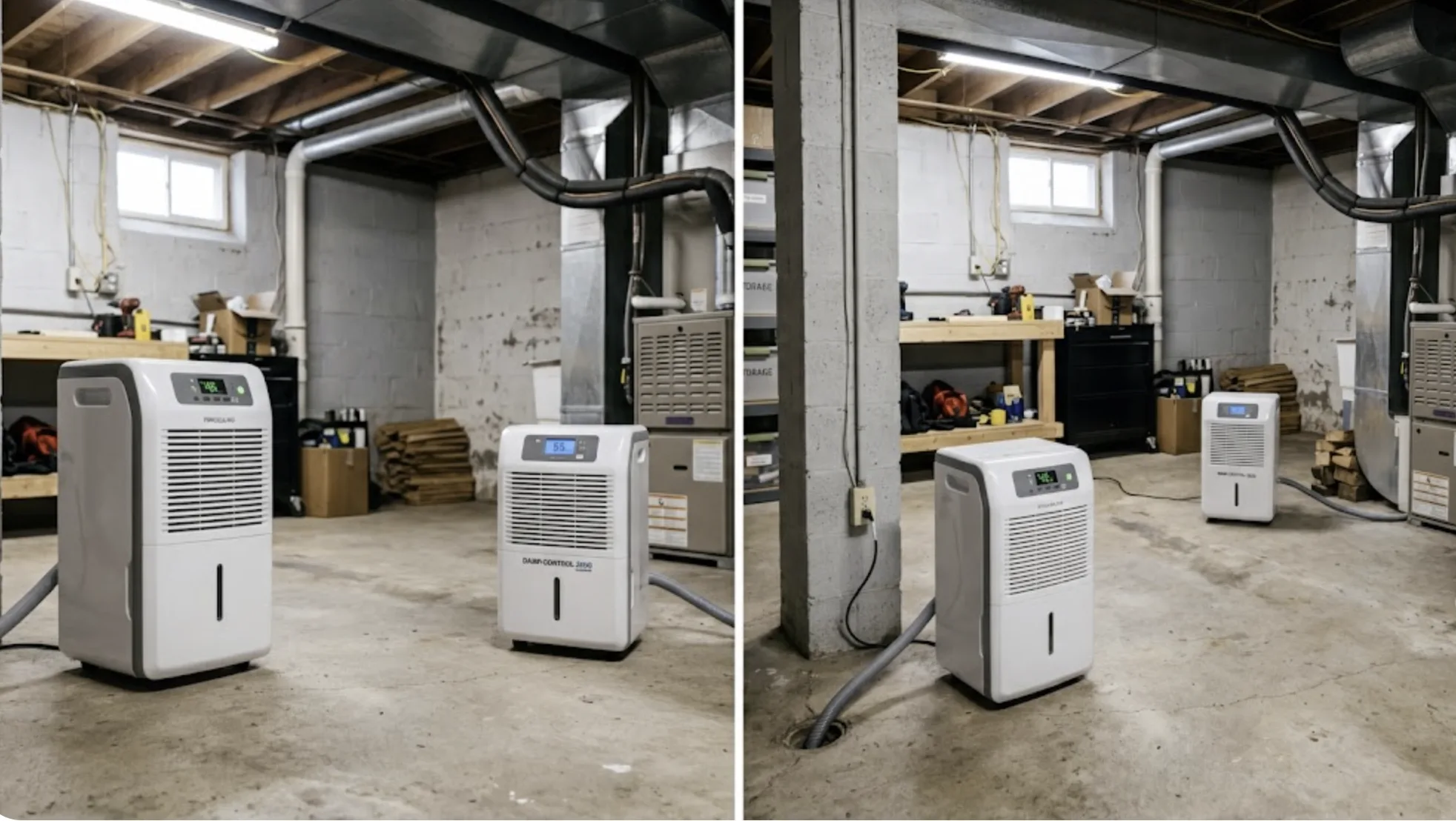
Dehumidifiers can extract excess moisture from the air in homes and basements, typically maintaining humidity at an optimal level of 35% to 50%. They effectively prevent the growth of mold, fungi, and musty odors, reduce structural damage such as wood rot, protect stored items, and improve air quality by reducing dust mites and allergens.
How a Dehumidifier Works: A Recap
A dehumidifier works by drawing in humid air and passing it over cold condensation coils, where water vapor condenses into liquid water. The dry air is then returned to the room. The collected water is either directed into a drain pipe or stored in a removable water tank.
5 Signs Your Basement Needs a Dehumidifier
-
Visible damp patches on walls, floors, or ceilings.
-
Persistent musty or moldy odors in the air.
-
Condensation forming continuously on windows.
-
Cardboard boxes, clothing, or fabrics feel damp to the touch.
-
Rust appearing on metal pipes or electronic equipment.
9 Benefits of Using a Dehumidifier in Your Basement
-
Prevent Mold Growth: By removing moisture, it eliminates the damp conditions that mold and fungi need to thrive.
-
Protect Building Structures: Helps prevent warping of wood furniture, flooring, and support beams caused by excess moisture.
-
Improve Air Quality: Lower humidity reduces dust mites, pests (like cockroaches), and allergens, enhancing indoor air quality.
-
Increase Comfort: Dehumidifiers eliminate the heavy, sticky, and damp feeling in the air, especially noticeable in basements.
-
Enhance HVAC Efficiency: Reducing humidity lessens the load on air conditioning systems, potentially lowering energy costs.
-
Protect Personal Belongings: Prevents moisture-related damage to electronics, clothing, books, vinyl records, and other stored items.
-
Extend the Lifespan of Stored Items: Damp air can damage cardboard, important documents, photo albums, seasonal clothing, fabrics, and books. By keeping the basement less humid, these items remain in good condition longer.
-
Reduce Rust and Corrosion: Excess moisture can severely damage metal objects in the basement, including water heaters, tools, appliances, and electronics. Removing humidity protects these valuable items and slows down wear and tear.
-
Prevent Structural Damage: Prolonged dampness increases the likelihood of moisture-related structural issues. Humidity can seep into tiny cracks in concrete, erode mortar, and corrode wooden support beams, potentially causing costly repairs if left unchecked.
Consider Basement Waterproofing for a Longer-Term Solution
While dehumidifiers can address minor humidity problems, they are not a permanent solution. Without longer-lasting measures, you may need to operate a dehumidifier continuously throughout the life of the home. Waterproofing provides a more durable solution.
Installing a waterproof layer in your basement prevents moisture from entering at the source, keeping the basement dry. Waterproofing helps maintain long-term air quality and protects the foundation from damp-related damage.
Achieving Lasting Moisture Control for Your Basement
Not all homes have basements, but many older houses do. It’s essential to take proper measures to protect your basement from humidity problems, as moisture can lead to costly structural damage. While a dehumidifier can help, a more permanent solution ensures peace of mind.
Cetus dehumidifiers offer simple and effective solutions to protect your basement, helping you finally eliminate the nuisance of damp air.