
Living in humid areas can affect our health in many ways, and humidity is one of the key factors. Addressing humidity issues is essential—not only to control moisture but also because it significantly impacts the comfort of everyone living in the space.
How Does a Dehumidifier Work?
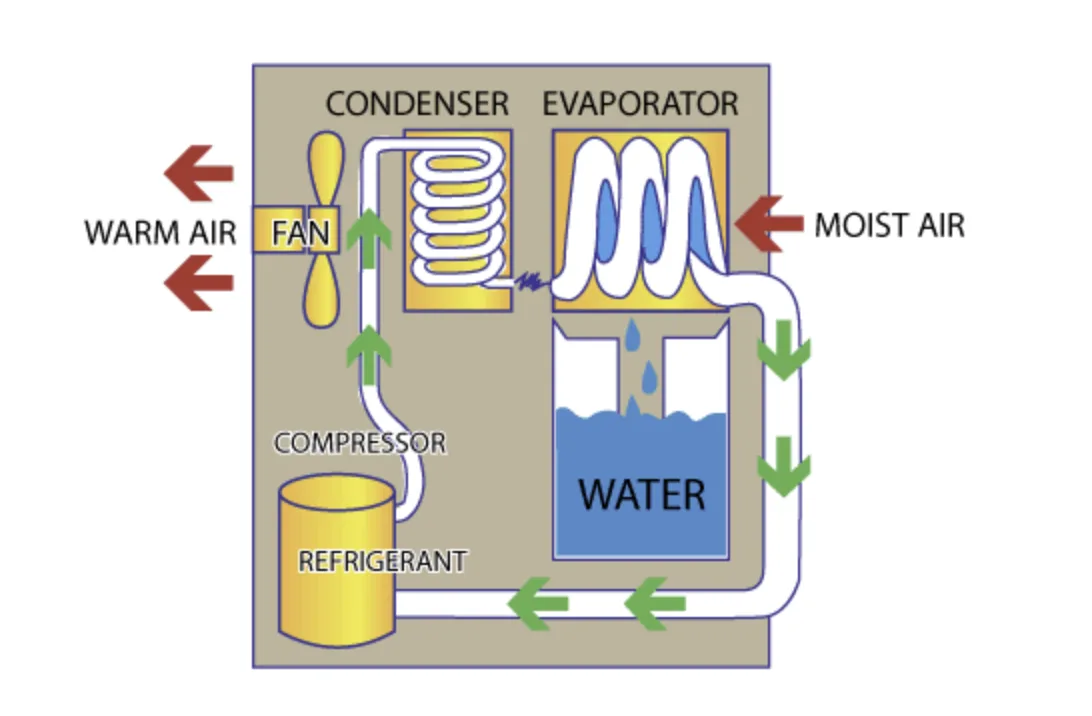
A dehumidifier draws moisture from the air onto cold coils, where the water condenses and drips into a collection tank, effectively removing moisture from the air. Its function is similar to that of a refrigerator or air conditioner: it cools the air to extract moisture, slightly reheats it, and then blows the dry, warm air back into the room.
Step-by-Step Process of How a Home Dehumidifier Works
The Principle Follows Two Steps:
-
Remove moisture from the air
-
Reheat the dry air
-
Air Intake: A fan draws humid indoor air through a dust-catching filter into the device.
-
Cooling and Condensation: The air passes over coils filled with refrigerant (evaporator coils). Cold air cannot hold as much moisture as warm air, so the water vapor condenses on the coils into liquid droplets.
-
Water Collection: The droplets fall into a reservoir or water tank.
-
Reheating: The now dry air passes over warmer coils (condenser) to return to a comfortable temperature.
-
Exhaust: Warm, dry air is blown back into the room.
Main Components of a Dehumidifier
-
Fan and compressor
-
Reheater
-
Compressor cooling coils
-
Water tank
-
Humidistat
Types of Cetus Dehumidifiers
-
Home & Commercial Dehumidifiers: Equipped with high-quality compressors and multiple practical functions, suitable for a variety of environments including homes, basements, commercial spaces, and modern offices.
-
Mini Portable Dehumidifiers: Lightweight and portable with LED display screens, ranging from 6 to 16 liters, made of corrosion-resistant materials.
When the collection tank is full, most devices automatically shut off to prevent overflow. These components work together to create a simple yet effective process: the fan and compressor draw in humid air, which passes over the cooling coils. As the air cools, moisture condenses into water that collects in the tank. The air is then reheated and returned to the room, while moisture remains inside the device.
Most dehumidifiers have removable water tanks that need to be emptied when full. Cetus offers both home and mini portable options.
Benefits of Using a Dehumidifier
-
Prevent and Inhibit Mold Growth: One of the most obvious benefits is suppressing mold. People living in damp, moldy homes are more prone to respiratory illnesses, allergies, and, in severe cases, immune system issues.
-
Prevent Dust Mite Infestation: Dust mites are tiny pests related to ticks and spiders. They commonly inhabit furniture, mattresses, and carpets, and are common but often overlooked allergens. Dehumidifiers reduce indoor humidity, creating an environment unsuitable for dust mites.
-
Improve Clothes Drying: Dehumidifiers lower indoor humidity, allowing clothes to dry faster and more efficiently.
-
Reduce Energy Costs: High humidity at home accelerates mold growth, which can damage clothing, furniture, bed linens, towels, curtains, and other fabrics.
-
Protect Electronics: By removing moisture from the air, dehumidifiers reduce the load on air conditioners, helping maintain a comfortable temperature while protecting electronic devices.
Conclusion
Dehumidifying helps maintain indoor humidity at a healthy level, ensuring the well-being of family members. It creates cleaner, healthier air, ultimately promoting a healthier living environment.If you need a dehumidifier,just contact us directly!
If you are considering purchasing a dehumidifier, visit our website to find the model that best suits your home!
FAQ
1. What are the downsides of a dehumidifier?
The main downsides include increased electricity costs, noise levels (especially from compressor models), and the maintenance required to regularly empty the water tank and clean filters. Additionally, over-drying the air can cause dry skin, irritated nasal passages, or itchy eyes.
2. How long does a dehumidifier take to dry a room?
It typically takes 2 to 3 days of continuous operation to reach a stable, healthy humidity level (usually between 30% and 50%). The exact time depends on the room size, the unit’s capacity, and the initial moisture levels in the environment.
3. Would a dehumidifier help with COPD?
Yes, it can. High humidity makes air “heavy” and harder to breathe, which often triggers COPD symptoms. By maintaining an ideal humidity level, a dehumidifier can reduce respiratory strain and prevent the growth of common triggers like mold and dust mites.
4. Is it healthy to sleep in a room with a dehumidifier?
Yes, generally it is healthy, provided the humidity doesn’t drop too low (below 30%). It can improve sleep quality by making the air feel fresher and less “stuffy,” though the humming noise might be a minor disturbance for light sleepers.
5. What is the number one thing a person must do if they have COPD?
The most critical action is to stop smoking (if applicable) and strictly avoid secondhand smoke or environmental pollutants. Following this, consistent adherence to a prescribed medical treatment plan is essential for managing the condition.