
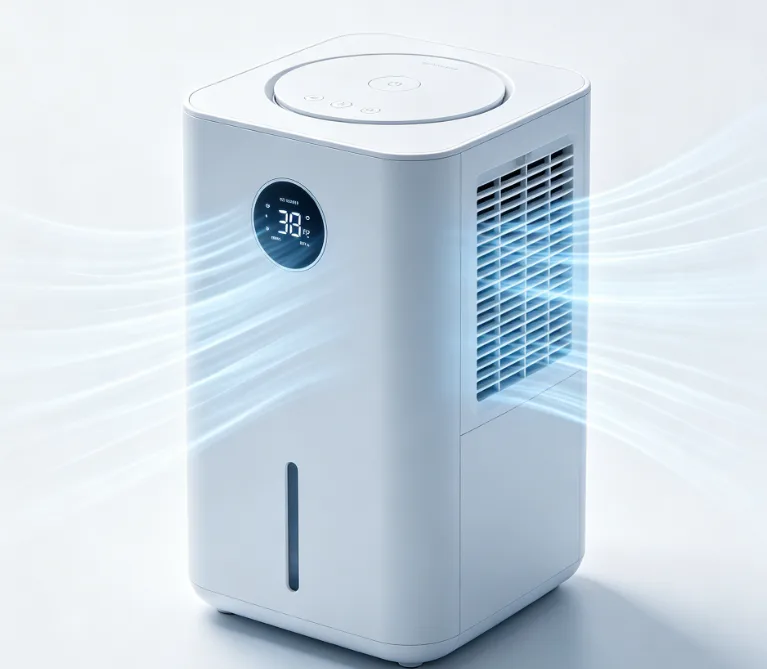
What Is the Working Principle of a Dehumidifier and Why Is It Important?
A dehumidifier removes excess moisture from indoor air by condensing water vapor into liquid water and releasing drier air back into the room. Proper humidity control improves indoor comfort, protects property, and helps reduce mold growth.
According to the U.S. Environmental Protection Agency (EPA), indoor relative humidity should generally remain between 30% and 50% to minimize mold growth and moisture-related damage. When humidity consistently exceeds 60%, conditions become favorable for mold, dust mites, condensation, and unpleasant odors.
In many homes, especially basements, laundry rooms, bathrooms, and coastal properties, excess moisture is an invisible problem. Furniture warps, walls develop mildew stains, electronics suffer corrosion, and indoor air feels uncomfortable. Understanding how a dehumidifier works helps homeowners choose the right moisture control solution and maintain a healthier indoor environment.
Recommended External Sources
- EPA Indoor Air Quality: https://www.epa.gov/mold
- CDC Mold Prevention: https://www.cdc.gov/mold
- ENERGY STAR Dehumidifier Guide: https://www.energystar.gov
Why Humidity Control Matters More Than Most Homeowners Realize
Excess humidity affects both health and property.
Many people notice symptoms before recognizing humidity as the cause:
- Persistent musty odors
- Condensation on windows
- Mold spots on walls
- Damp clothing in closets
- Allergic reactions caused by dust mites
- Warped wood flooring
- Peeling paint
Humidity problems often develop gradually. A room may feel comfortable for months while moisture accumulates behind furniture, inside walls, or beneath flooring materials.
According to building science experts, long-term moisture exposure is one of the leading contributors to indoor mold development and material degradation.
What Is a Dehumidifier?
A dehumidifier is an appliance designed to remove water vapor from the air and maintain a target humidity level.
Modern dehumidifiers continuously monitor humidity and automatically extract excess moisture when needed.
Common types include:
| Dehumidifier Type | Typical Capacity | Best Applications | Technology |
|---|---|---|---|
| Mini Dehumidifier | 0.5-5L/day | Closets, RVs, bedrooms | Thermoelectric |
| Home Dehumidifier | 10-30L/day | Living rooms, basements | Compressor |
| Commercial Dehumidifier | 30-100L+/day | Warehouses, offices | Compressor |
| Industrial Dehumidifier | 100L+/day | Factories, construction sites | High-capacity refrigeration |
For residential environments, a Home Dehumidifier often provides the best balance between performance, energy efficiency, and convenience.
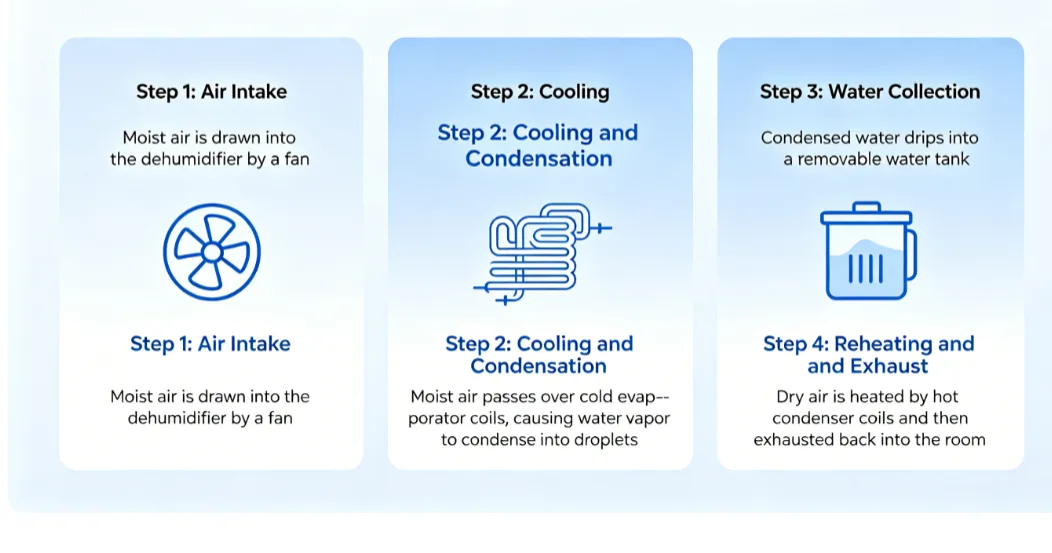
The Working Principle of a Dehumidifier Explained
The core principle is simple: cool moist air, condense water vapor, remove the water, and return dry air to the room.
Most modern compressor dehumidifiers use a refrigeration cycle similar to an air conditioner.
Step 1: Air Intake
The process begins when humid air is drawn into the unit.
A built-in fan continuously pulls moist air across internal cooling components.
At this stage, the air contains invisible water vapor suspended throughout the room.
Step 2: Condensation of Moisture
Condensation is the heart of the dehumidification process.
As air passes over cold evaporator coils, the temperature drops below the dew point.
Water vapor transforms into liquid droplets, similar to moisture forming on a cold beverage glass during summer.
This process physically separates moisture from the air.
Step 3: Water Collection and Drainage
Collected water must be removed from the environment.
Most systems use one of two methods:
- Internal water tank
- Continuous drainage hose
| Drainage Method | Advantages | Best For |
|---|---|---|
| Water Tank | Simple installation | Bedrooms, living rooms |
| Continuous Drain | No manual emptying | Basements, commercial use |
Continuous drainage is especially useful for high-humidity environments where moisture removal occurs around the clock.
Step 4: Reheating and Releasing Dry Air
The final stage returns conditioned air back into the room.
After moisture removal, the air passes over condenser coils.
The air becomes slightly warmer but significantly drier.
This dry air mixes with room air and gradually lowers overall humidity levels.
The cycle then repeats continuously until the desired humidity setting is reached.
Compressor vs Thermoelectric vs Commercial Dehumidifiers
Different technologies perform better in different environments.
Comparison Table
| Feature | Thermoelectric | Compressor | Commercial Compressor |
|---|---|---|---|
| Noise Level | Very Low | Low | Moderate |
| Capacity | Low | Medium | High |
| Energy Efficiency | Moderate | High | High |
| Room Size | Small | Medium-Large | Large Facilities |
| Continuous Operation | Limited | Excellent | Excellent |
| Cost | Low | Medium | High |
Mini units are ideal for wardrobes and bathrooms, while larger compressor models perform better in homes and offices.
Commercial units are designed for warehouses, construction sites, and industrial humidity control.
Why Excess Humidity Creates Problems Indoors
Humidity above recommended levels creates conditions for biological growth and material damage.
Mold Growth
Mold thrives in damp environments.
Common locations include:
- Basements
- Bathrooms
- Laundry rooms
- Storage spaces
- Window frames
Dust Mites
Dust mites multiply rapidly when humidity remains elevated.
Lower humidity can significantly reduce their population.
Property Damage
Excess moisture may cause:
- Wood swelling
- Paint blistering
- Wallpaper peeling
- Metal corrosion
- Electronic equipment deterioration
Poor Indoor Comfort
High humidity often makes rooms feel warmer than they actually are.
Reducing humidity frequently improves perceived comfort without lowering thermostat settings.
Key Benefits of Using a Dehumidifier
The primary benefit is maintaining a stable indoor environment.
Benefit 1: Prevent Mold and Mildew
Keeping humidity between 40% and 50% helps reduce mold-friendly conditions.
Benefit 2: Improve Indoor Air Quality
Lower moisture means fewer allergens and airborne irritants.
Benefit 3: Protect Furniture and Electronics
Stable humidity helps preserve:
- Wooden furniture
- Musical instruments
- Documents
- Electronic equipment
Benefit 4: Increase HVAC Efficiency
Air conditioning systems often operate more efficiently in lower-humidity environments.
Benefit 5: Create a More Comfortable Home
Dry air generally feels cooler and fresher than humid air.
How to Choose the Right Dehumidifier for Your Space
Capacity is the most important purchasing factor.
Quick Selection Guide
| Room Type | Recommended Capacity |
|---|---|
| Closet | Mini Dehumidifier |
| Bedroom | 10L Dehumidifier |
| Living Room | 12L-20L Dehumidifier |
| Basement | 20L+ Dehumidifier |
| Warehouse | Commercial Dehumidifier |
Additional features worth considering include:
- Auto humidity control
- Timer settings
- Continuous drainage
- Auto defrost
- Washable filters
- Energy-saving operation
For residential applications, a modern Compressor Dehumidifier usually offers the highest efficiency.
Common Mistakes When Using a Dehumidifier
Proper placement directly affects performance.
Avoid these common mistakes:
- Placing the unit against a wall
- Blocking air intake vents
- Ignoring filter cleaning
- Setting humidity below 30%
- Using undersized equipment
- Forgetting continuous drainage setup
- Running units in excessively cold conditions
Regular maintenance helps maintain long-term efficiency and moisture removal performance.
Future Trends in Home Humidity Control
Smart humidity management is becoming increasingly common.
Emerging technologies include:
- Wi-Fi monitoring
- Mobile app control
- AI-based humidity adjustment
- Smart home integration
- Energy consumption optimization
Many newer systems automatically adjust operating modes based on room conditions, reducing energy usage while maintaining comfort.
Conclusion
The working principle of a dehumidifier relies on cooling humid air, condensing water vapor, collecting moisture, and releasing dry air back into the room.
Although the technology is straightforward, the impact is substantial. Proper humidity control helps prevent mold growth, improves indoor air quality, protects valuable belongings, and creates a more comfortable living environment.
Whether choosing a Mini Dehumidifier for a closet, a Home Dehumidifier for daily comfort, or a Commercial Dehumidifier for large facilities, understanding how moisture removal works makes selecting the right solution much easier.
Suggested Internal Links
- Home Dehumidifier
- Mini Dehumidifier
- Commercial Dehumidifier
- Compressor Dehumidifier
- Industrial Moisture Control Solutions
Frequently Asked Questions
1. What humidity level should I set my dehumidifier to?
Most experts recommend maintaining indoor humidity between 40% and 50%.
2. Does a dehumidifier cool a room?
Not significantly. A dehumidifier removes moisture and may release slightly warmer air.
3. How long should a dehumidifier run each day?
Operation time depends on humidity levels. Many modern units run automatically when needed.
4. Can a dehumidifier prevent mold completely?
A dehumidifier helps reduce mold-friendly conditions but cannot eliminate mold caused by water leaks or structural issues.
5. What is the difference between a dehumidifier and an air purifier?
A dehumidifier removes moisture, while an air purifier removes airborne particles.
6. Is a compressor dehumidifier better than a thermoelectric model?
For medium and large rooms, compressor dehumidifiers are generally more effective and efficient.
7. How often should I clean my dehumidifier?
Clean filters every two to four weeks and inspect the water tank regularly to maintain optimal performance.